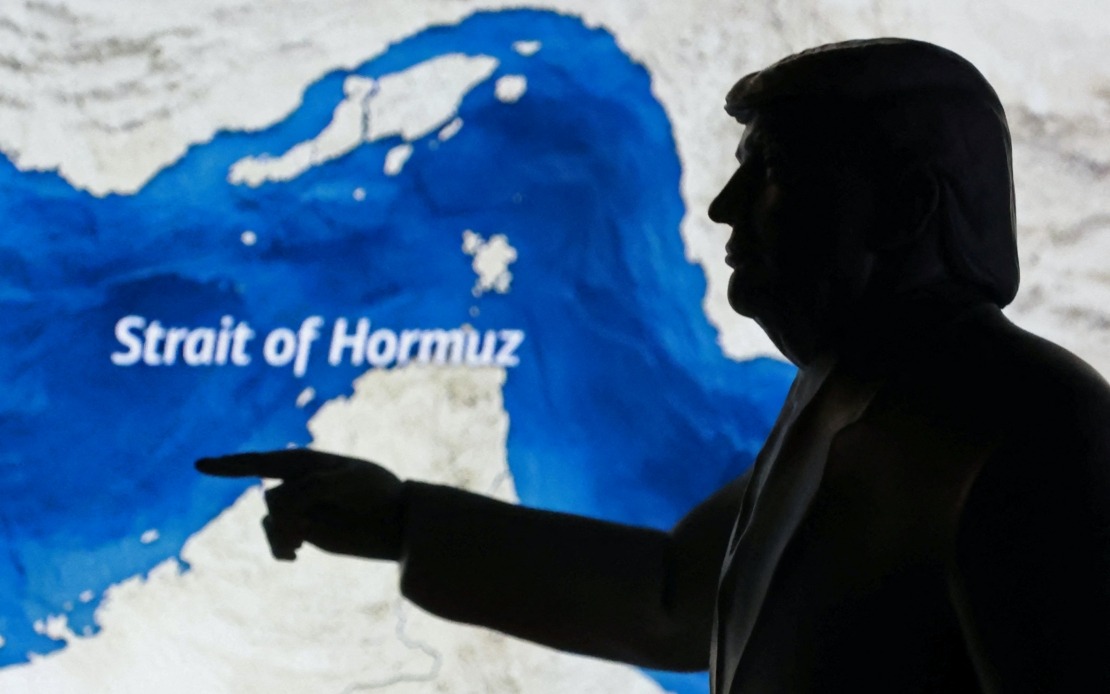
Tensions between Washington and Tehran have reached a critical juncture as US President Donald Trump issued an unprecedented warning on Wednesday, declaring that America will respond to Iranian attacks on commercial vessels in the Strait of Hormuz with systematic strikes against Iranian infrastructure. In a statement posted on his Truth Social platform, Trump specified that any attack—whether by missile, rocket, drone, or other weaponry—would trigger American bombing of Iranian bridges or power plants, including facilities near or within the capital city of Tehran.
The escalation represents a dramatic hardening of US rhetoric toward Iran at a moment when the region already faces significant instability. The Strait of Hormuz, a critical waterway through which roughly one-fifth of global maritime trade passes, has become a flashpoint for hostile activities between American forces and Iranian-backed actors. Commercial shipping in these waters has faced repeated incidents, creating uncertainty for international maritime commerce and raising concerns about potential disruptions to global energy supplies. For Malaysia and other Southeast Asian nations reliant on Middle Eastern oil and dependent on stable shipping lanes for trade, such tensions carry direct economic implications.
The threat follows a pattern of recent military escalations that have steadily intensified over the past week. The United States has conducted a series of strikes targeting Iranian positions and assets across the region, prompting retaliatory responses from Tehran. Iran has countered by launching its own strikes against facilities and military installations that Iranian officials claim are used by American armed forces, distributed across multiple countries throughout the Middle East. This tit-for-tat dynamic reflects a dangerous cycle of action and reaction that shows few signs of de-escalation.
Particularly significant is that these hostilities are persisting despite diplomatic efforts undertaken just weeks earlier. In June, Pakistan brokered a framework agreement between the United States and Iran, intended to halt the conflict that erupted in February and establish a pathway toward a comprehensive peace settlement. The fact that military operations have resumed and intensified despite this agreement suggests fundamental obstacles to achieving sustainable peace between the two nations. The collapse of the Pakistani-brokered framework raises questions about whether diplomatic channels remain viable or whether military confrontation has become the default mode of interaction.
Trump's specific targeting language—explicitly naming Tehran's capital infrastructure as potential targets—represents an unusual degree of specificity in such threats and marks an escalation beyond previous statements. The explicit mention of the capital city indicates a willingness to strike at the heart of Iranian power and prestige, rather than limiting operations to remote military facilities or peripheral infrastructure. Such rhetoric carries significant psychological weight within Iranian political circles and could further harden Tehran's negotiating position or trigger additional retaliatory measures.
The implications for Southeast Asia extend beyond simple concern for maritime stability. Malaysia, as a nation with significant economic interests in the Middle East and positioned along critical maritime trade routes, faces potential disruption to both energy supplies and shipping lanes. Any conflict that restricts access through the Strait of Hormuz would immediately impact oil prices globally and create logistical challenges for regional commerce. Additionally, the broader destabilization of the Middle East could affect the security of Southeast Asian nations, particularly regarding potential refugee flows and regional counterterrorism challenges.
The threat also carries implications for the broader international order and the precedent it sets for unilateral military escalation. If implemented literally, Trump's stated policy would essentially trigger automatic military strikes based solely on Iranian actions, effectively removing human discretion or diplomatic intervention from the escalation cycle. Such a mechanism could rapidly spiral into full-scale conflict between two nuclear-armed nations, with consequences for global stability far beyond the immediate Middle Eastern context.
Iranian officials will likely view this threat as confirmation of American aggression and justification for their own defensive preparations and potential counteractions. The rhetorical pattern of escalating threats followed by military action has characterized this administration's approach to Iran previously, lending credibility to Trump's warning within Iranian strategic calculations. Tehran may interpret this as indicating that traditional diplomatic channels have been exhausted and that military confrontation is now inevitable, potentially prompting preemptive Iranian actions.
For regional allies of the United States, particularly Gulf Cooperation Council members, Trump's unambiguous commitment to respond militarily provides reassurance of American backing but also raises concerns about being drawn into widening conflict. These nations balance their strategic interests in American military support against their economic dependence on maintaining working relationships with Iran. The explicit threat of infrastructure strikes targeting Tehran creates uncomfortable choices for regional actors attempting to maintain pragmatic engagement with multiple powers.
The maritime dimension of this conflict deserves particular attention for Southeast Asian stakeholders. Commercial shipping companies operating in the Persian Gulf and Strait of Hormuz face elevated insurance costs and operational risks. If hostilities escalate toward the explicit infrastructure strikes Trump threatened, energy markets would face serious disruption, with potential ramifications for global oil prices and Asian energy security. Malaysia's position as both an energy consumer and a maritime trading nation places it at the intersection of these risks.
While Trump's threat is framed as a deterrent—designed to discourage Iranian attacks rather than initiate new American strikes—the psychological impact may work differently than intended. Explicit threats of infrastructure destruction can sometimes trigger the very responses they aim to prevent, as adversaries may calculate that they face destruction regardless of their conduct and therefore have nothing to lose by escalating. This dynamic, familiar from conflict theory, suggests that such threats might produce outcomes contrary to stated objectives.
The broader context reveals a Middle Eastern region increasingly unstable and vulnerable to miscalculation. With multiple state and non-state actors possessing advanced weaponry, including missiles and drones, the potential for rapid escalation remains constant. For Southeast Asia, vigilance regarding developments in this critical region remains essential, as economic and security consequences could ripple across the Indian Ocean and into regional markets within days of any major conflict escalation.

