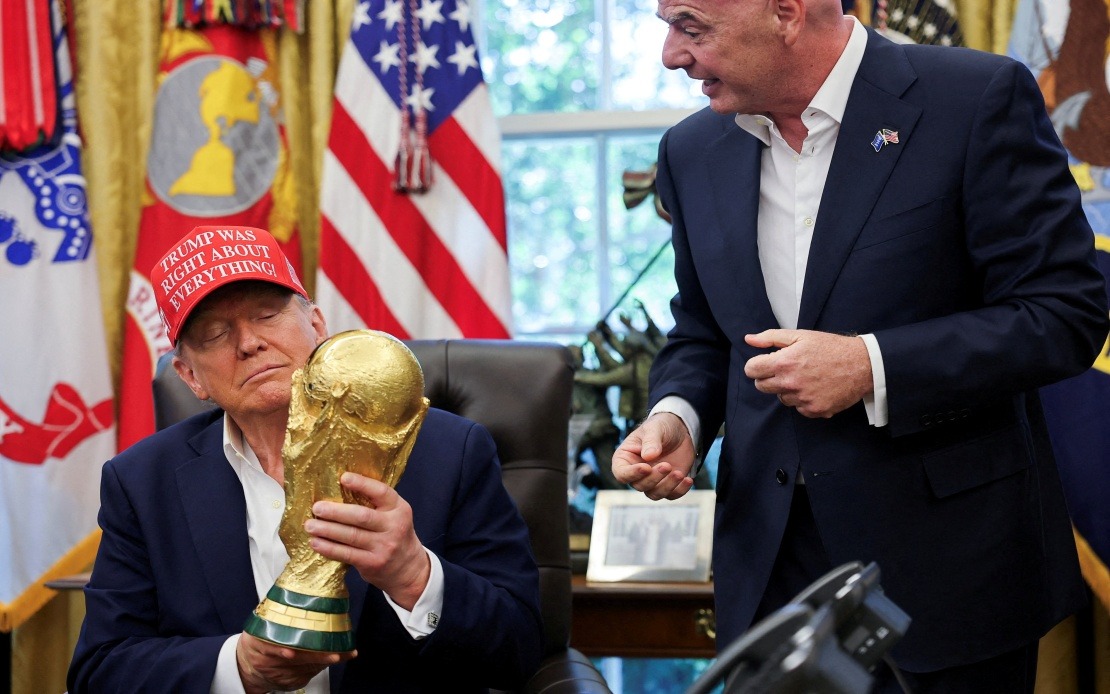
During remarks in Istanbul on Sunday, US President Donald Trump declared that he harbours no animosity toward Spanish Prime Minister Pedro Sanchez, a statement that carries considerable weight given his recent and severe condemnation of Madrid's government. The reversal follows Spain's dramatic 1-0 victory over Argentina in the FIFA World Cup final, with Trump acknowledging the Spanish team's superior performance in what he characterised as a closely contested match. His willingness to extend congratulations to Spanish officials represents a striking departure from the acrimonious language he deployed merely weeks earlier, raising questions about the durability of such diplomatic gestures and their relationship to international sporting outcomes.
The context underlying this apparent softening becomes clear when examining Trump's statements from the NATO summit held in Ankara, Türkiye, earlier in July. At that gathering, Trump had unleashed withering criticism of Spain, labelling the nation a "wasted cause" and characterising it as a "terrible partner in NATO." His grievances centred on Madrid's refusal to grant American military forces unrestricted access to Spanish bases amid heightened regional tensions involving Iran, as well as Spain's reluctance to meet NATO's defence spending target of five per cent of gross domestic product. These were not passing comments but deliberate policy positions delivered at a formal press conference, where Trump explicitly instructed aides to "cut off all trade with Spain, please, including visits" and urged officials to cease diplomatic engagement, describing Spanish leadership as "hopeless, bad people."
This dramatic swing in tone within such a compressed timeframe illustrates the volatility that has come to characterise international relations during Trump's tenure. The president's capacity to compartmentalise sporting achievements from strategic policy disputes suggests either a fundamental recalibration of his priorities or a recognition that maintaining working relationships with NATO allies requires a degree of rhetorical flexibility. For policymakers in Madrid and Brussels, the challenge lies in determining whether Sunday's friendly remarks carry any substantive weight or whether they represent purely situational posturing designed to manage the optics of celebrating a sporting event.
Spain's position within the NATO alliance has indeed become increasingly complicated. The nation hosts critical American military infrastructure, including significant naval and air capabilities stationed at bases that facilitate US operations throughout the Mediterranean and beyond. Madrid's reluctance to commit to higher defence spending reflects broader budgetary constraints and domestic political realities, as Spanish governments must balance military expenditure against pressing social needs. Yet from Washington's perspective, such considerations appear secondary to the perceived obligation of wealthy European allies to shoulder greater defence burdens, particularly as geopolitical tensions with Iran and other adversaries intensify.
The trade dimension of Trump's earlier threat carries substantial consequences for both nations. Spain maintains considerable economic ties with the United States across multiple sectors, including agriculture, automotive manufacturing, and pharmaceuticals. A comprehensive trade halt would inflict measurable damage on Spanish exporters and could trigger retaliatory measures from Madrid and the broader European Union. Such escalation would undermine the very NATO cohesion that Trump ostensibly seeks to strengthen through pressure on defence spending. The apparent contradiction between wielding trade restrictions as a coercive instrument and then abandoning such threats following a sporting victory suggests that Trump's approach to international diplomacy may lack the strategic consistency necessary for sustained policy implementation.
For Malaysian and Southeast Asian observers, this episode offers instructive lessons about managing relationships with powerful external actors. The willingness of a major geopolitical player to rapidly reverse course on significant policy matters introduces considerable uncertainty into international affairs. Nations throughout Asia that maintain complex relationships with the United States must grapple with the reality that strategic positions can shift unexpectedly, making long-term planning and investment decisions considerably more challenging. The precedent set by Trump's treatment of Spain demonstrates that military alliances and trade relationships do not guarantee immunity from sudden policy reversals or heated rhetoric.
Moreover, the incident highlights the tension between multilateral alliance frameworks and bilateral power dynamics. Spain, as a NATO member and European Union state, might have expected stronger support from allied nations or institutional mechanisms when facing trade threats from a fellow alliance member. The apparent absence of such coordinated responses suggests that transatlantic solidarity has limits when individual members find themselves targeted by Washington. For Southeast Asian nations operating within regional frameworks like ASEAN, such observations carry particular resonance, as they navigate their own balance between maintaining relationships with powerful external powers and preserving regional solidarity.
The World Cup final itself, though tangential to broader geopolitical concerns, provided Trump with a convenient occasion to reset relations without explicitly acknowledging the earlier harsh statements. By praising Spain's footballing prowess and characterising the match as exciting and well-played, the president created diplomatic space for reconciliation without requiring formal retractions or policy adjustments. This approach allows both sides to move forward without either party conceding ground on substantive issues like military base access or defence spending commitments. However, it remains unclear whether Spanish policymakers view this as a genuine resolution or merely a temporary respite in what may prove to be an ongoing pattern of American pressure.
The fundamental question raised by Trump's reversal concerns the basis upon which international agreements and alliance commitments ultimately rest. If relationships between major powers can oscillate so dramatically in response to sporting events or the need for positive publicity, then the stability of the broader international order becomes questionable. Spain cannot reasonably structure its defence policy or military spending around the expectation that American threats will be abandoned whenever a convenient opportunity for reconciliation presents itself. Similarly, other nations watching this interaction will draw conclusions about the reliability of American commitments and the extent to which policy pronouncements reflect genuine strategic intentions or merely reflect the immediate political and emotional circumstances of decision-makers.
Moving forward, the practical question for Spanish officials involves discerning whether Trump's conciliatory remarks signal a genuine change in policy direction or merely represent a tactical pause. Madrid's government must determine whether to assume that trade restrictions have been abandoned or to prepare defensive measures against potential future action. This uncertainty inherently complicates bilateral relations and makes the pursuit of mutually beneficial agreements more difficult. For the international community broadly, and for smaller nations in Southeast Asia particularly, the episode underscores the challenges of operating within an international system where major power actors retain considerable discretion to alter course based on shifting calculations or momentary political considerations.

