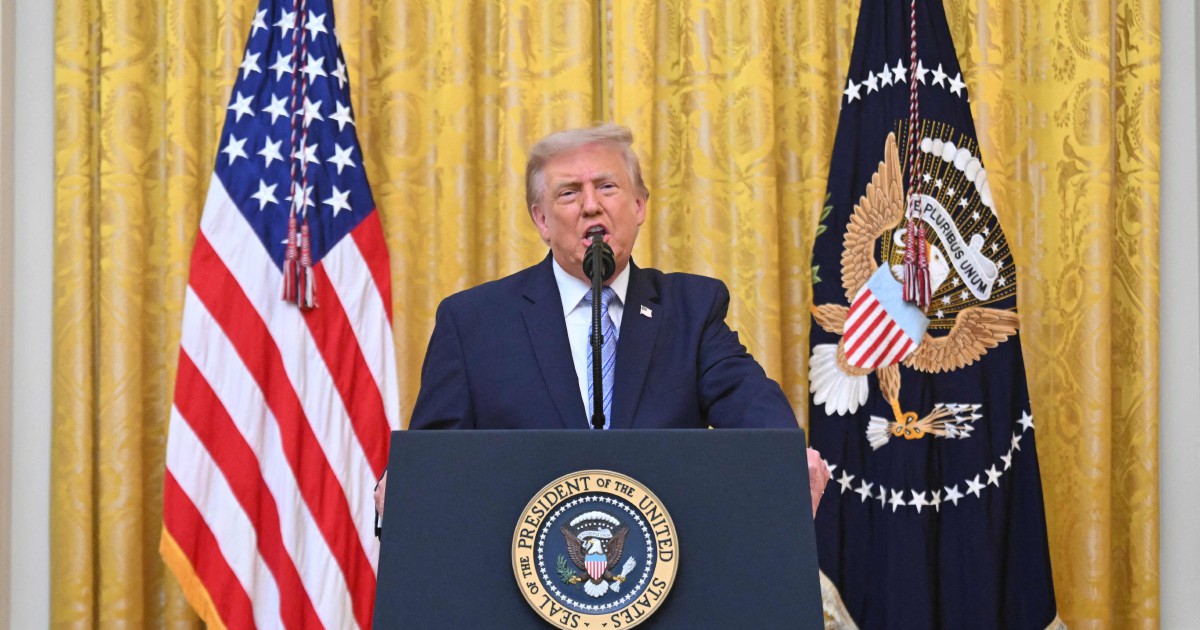
President Donald Trump has returned to contentious claims about the integrity of the 2020 presidential election, publicly reasserting allegations that courts, election officials across both political parties, and his own administration officials have thoroughly scrutinized and rejected. In remarks delivered Thursday, the sitting president alleged that China intercepted and stole millions of American voter records, a claim that contradicts findings from multiple comprehensive reviews of the election process conducted in the years following the vote.
The resurrection of these narratives represents a continuation of themes that have dominated Trump's political messaging since his 2020 electoral defeat. Despite serving as president at the time and having access to intelligence briefings and law enforcement resources, Trump did not present concrete evidence supporting the China allegations during his tenure. The Department of Homeland Security and the Cybersecurity and Infrastructure Security Agency, both operating under his administration, found no credible evidence of foreign nation-state involvement in altering election outcomes that cycle.
Beyond accusations regarding China, Trump also invoked Venezuela as a potential source of electoral manipulation, suggesting that the South American nation possessed the capability to compromise voting machines used across American jurisdictions. Cybersecurity experts and election officials have repeatedly documented that most voting equipment in the United States operates on closed networks without internet connectivity, making remote foreign manipulation technically implausible. Additionally, post-election audits and recounts in contested states produced substantially similar results to machine counts, a finding inconsistent with systemic tampering allegations.
For Malaysian and regional observers, Trump's continued promotion of these narratives carries particular significance in understanding broader questions about election integrity, democratic resilience, and the persistence of misinformation in contemporary politics. The sustained assertion of claims despite their rejection by establishment institutions—including Republican officials and judges appointed by Trump himself—illustrates how election-related allegations can transcend conventional fact-checking mechanisms and maintain traction in political discourse. This dynamic has become increasingly relevant across Southeast Asia, where election credibility and public trust in democratic institutions represent ongoing concerns.
The specific invocation of China as an electoral adversary reflects deepening US-China tensions that extend beyond domestic American politics. Trump's allegations, if accepted uncritically, would position foreign intervention as a plausible explanation for electoral outcomes rather than attributing results to voter preferences. However, election security experts emphasize that auditable systems and transparent counting procedures provide safeguards against the type of covert manipulation Trump describes. The vulnerability narratives he presents do not align with technical realities documented by cybersecurity professionals.
Venezuela's inclusion in these accusations appears connected to broader Trump administration and Republican Party positioning toward the Maduro government and its regional influence. By conflating the South American nation with election interference narratives, Trump constructs a geopolitical storyline where multiple adversaries supposedly conspire against American democratic processes. This framing, while politically resonant for certain audiences, lacks supporting evidence from intelligence agencies or independent investigators.
The persistence of these claims demonstrates how contested elections can generate long-term narrative frameworks that resist empirical contradiction. Even as each specific allegation encounters detailed rebuttal from election officials, cybersecurity specialists, and court determinations, the overarching narrative of a compromised election continues to circulate. This dynamic illustrates challenges facing democratic societies attempting to maintain shared factual foundations while navigating polarized information environments.
For Southeast Asian countries navigating their own election cycles and democratic transitions, Trump's approach offers a cautionary example of how executive figures can sustain electoral integrity challenges despite institutional rejection of underlying claims. Malaysia's own electoral processes have faced scrutiny and allegations from various political actors, making the American precedent relevant to regional considerations about election credibility and institutional legitimacy. The willingness of political leaders to reiterate debunked claims, particularly when possessing governmental resources to investigate them, raises questions about democratic accountability and information integrity.
Trump's Thursday remarks represent neither the first nor likely the final public iteration of these allegations. The recurring invocation of 2020 election fraud claims has become a consistent element of his political positioning and fundraising activities. Each repetition risks further legitimizing narratives that detailed investigations have not substantiated, potentially influencing supporters' confidence in electoral systems generally. This erosion of institutional trust presents challenges extending beyond the United States to international observers assessing the stability and credibility of American democratic processes.
The lack of actionable evidence accompanying these allegations contrasts sharply with the specificity of the claims themselves. Trump identifies China and Venezuela as perpetrators and describes millions of compromised voter files and manipulated machines with apparent precision, yet provides no documentation, intelligence briefings, or technical analysis supporting these assertions. Election officials from both parties in swing states have uniformly rejected fraud allegations and certified results, while federal judges appointed across the ideological spectrum dismissed legal challenges premised on similar claims.
Moving forward, the pattern established by Trump's continued assertion of these claims suggests that 2020 election narratives will remain embedded in American political discourse for years. Regional observers watching the American electoral process should recognize that institutional rejection of allegations—whether through courts, election authorities, or executive officials—does not automatically end public circulation of disputed narratives. This reality has implications for how emerging democracies construct transparent institutions capable of withstanding both genuine challenges and politically motivated allegations.

