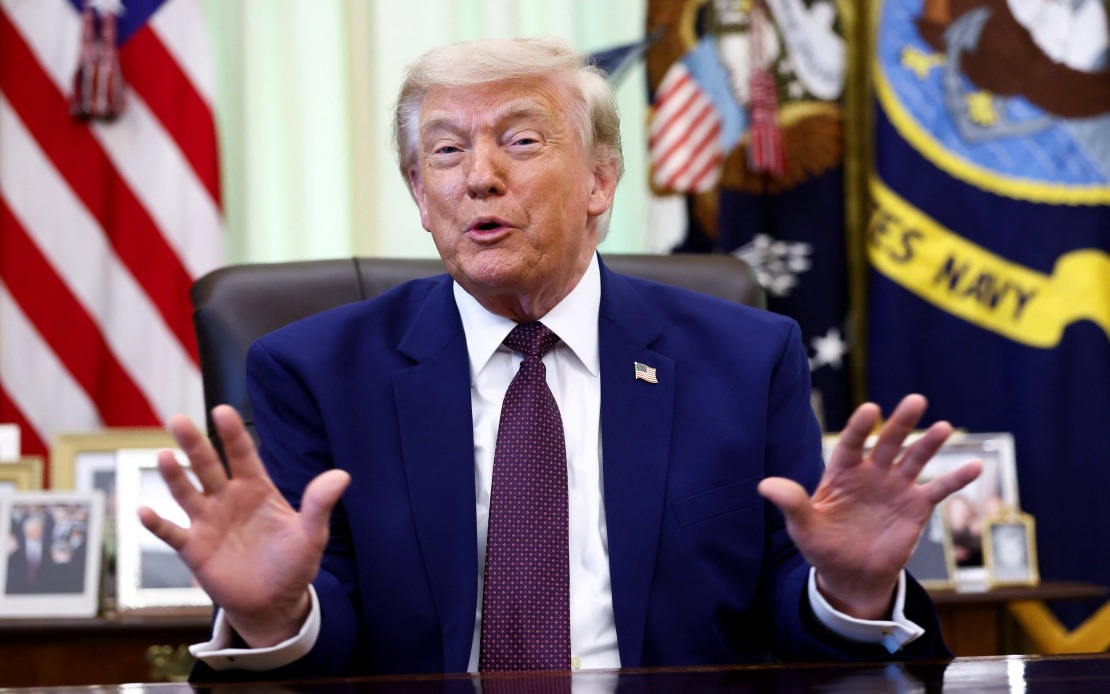
Donald Trump is escalating pressure on Republican senators to prioritise passage of the SAVE America Act before Congress adjourns for its August recess, signalling growing impatience with the legislative pace in Washington. The US president has turned to his Truth Social platform to demand action, employing characteristically emphatic language to urge lawmakers to eliminate the filibuster rule that currently allows Democrats to block legislation through extended debate, and to pass his voting restrictions package alongside other key measures including budget and debt ceiling negotiations.
The underlying tension reflects deep frustration within the Trump-aligned wing of the Republican Party over legislative gridlock. White House Press Secretary Karoline Leavitt has already signalled that the president's confidence in Senate Majority Leader John Thune is wearing thin, positioning the SAVE America Act as a test case for Republican unity and legislative effectiveness. For Malaysian observers, this internal Republican dynamic illustrates how even parties with control of both chambers can struggle to convert electoral dominance into concrete policy achievements, a phenomenon relevant across democracies grappling with polarisation and procedural complexity.
The SAVE America Act, formally titled the Safeguard American Voter Eligibility Act, proposes mandatory presentation of either a passport or birth certificate for voters registering in federal elections. This represents a significant tightening of voting access rules, targeting what Republicans argue is a vulnerability in current systems. The legislation essentially aims to prevent undocumented immigrants and foreign nationals from registering to vote, populations that the Republican Party contends have access to voter registration in multiple states without requiring documentary proof of citizenship or legal residency.
Trump's strategic framing relies on a calculated comparison with Democratic tactics. He argues that should Democrats regain control of Congress, they would immediately eliminate the filibuster to pursue their legislative agenda, and therefore Republicans should act preemptively. This argument contains rhetorical force for Trump's base and sympathetic Republicans, positioning filibuster elimination as defensive rather than aggressive action. However, it represents a significant departure from historical Senate norms and raises concerns among more institutionally minded Republicans about eroding procedural safeguards that protect minority interests.
For Southeast Asian readers, the stakes in this debate carry particular resonance regarding democratic governance and institutional balance. Malaysia's own parliamentary system, while structured differently from the American model, similarly relies on procedural rules to protect both majority and minority interests. The willingness of political actors to override these rules when frustrated with legislative pace reveals vulnerabilities in democratic systems generally, suggesting that institutional decay often begins with calculations of immediate tactical advantage rather than deliberate assaults on democratic structures.
The SAVE America Act specifically addresses voting registration procedures, one of the most contentious policy battlegrounds in contemporary American politics. Democrats argue that such requirements disproportionately impact legitimate voters and that non-citizen voting is statistically negligible. Republicans counter that elections require robust security measures and that current systems are inadequate. This fundamental disagreement over election integrity versus election access defines the legislative impasse Trump seeks to break through.
The August recess deadline Trump has set creates artificial but politically significant urgency. Congressional recesses provide windows for district-based outreach and fundraising, making them politically valuable periods for individual lawmakers. Trump's attempt to override this calendar reflects his assessment that the SAVE America Act warrants superseding normal legislative priorities and member scheduling preferences. The pressure tactic suggests confidence that Republican senators can be mobilised through presidential rhetoric and institutional loyalty rather than through persuasion or compromise.
The filibuster remains a critical element of this standoff. Requiring 60 votes to advance most legislation in a 100-member chamber means that even with Republican control of the Senate, routine legislation needs at least some Democratic cooperation. Trump's proposal to eliminate this requirement would allow Republicans to pass measures with their 53-seat majority. This represents a nuclear option in legislative terms, fundamentally altering the chamber's functioning and setting precedent for future reversals should power shift.
Historically, both parties have eliminated filibuster protections in limited contexts when frustrated with obstruction, but a complete abolition would mark a watershed moment in Senate procedure. The institutional consequences would likely extend far beyond the immediate legislative priorities, potentially affecting Trump's other agenda items including judicial confirmations, appropriations measures, and regulatory legislation. Once the threshold for such procedural warfare is crossed, escalation typically follows as each party seeks advantage.
The convergence of voting rights legislation with filibuster reform reveals how American political polarisation has deepened even as external security challenges persist. The sense of urgency surrounding both election security and legislative function reflects genuine concerns on both sides, yet the inability to find compromise on voting standards indicates how thoroughly elections have become partisan issues. For international observers including those in Malaysia, the American experience demonstrates how electoral procedures, once taken for granted, can become flashpoints when political trust erodes.
Trump's pressure campaign targets not merely legislative outcome but party unity and definition. Republican senators who resist his call risk being positioned as insufficiently committed to election security and party loyalty, creating political vulnerabilities in Republican primary contests. This dynamic explains why Senate Majority Leader Thune faces pressure despite his institutional position, having risen through regular party channels rather than representing Trump's favoured faction.
The outcome of this confrontation will likely shape how the Republican Party functions during what remains of the 118th Congress and potentially influence the 2024 election cycle. Should Trump succeed in forcing filibuster elimination and passage of voting restrictions, it would demonstrate presidential capacity to override Senate norms and leadership. Should senators resist, it would suggest limits to presidential pressure even within a party controlling both chambers. Either scenario carries implications for legislative governability and democratic procedure that extend well beyond American borders.

