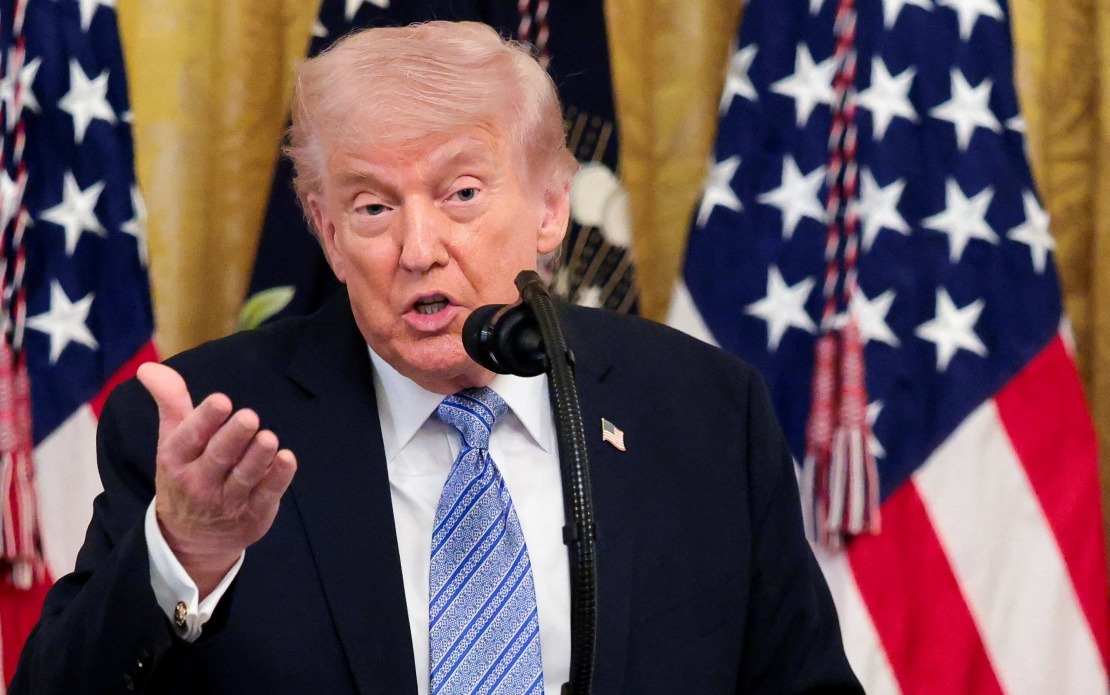
US President Donald Trump has abruptly terminated diplomatic engagement with Iran, declaring via his Truth Social platform that no talks are occurring or scheduled with the Islamic Republic. The announcement represents a dramatic reversal from weeks of relatively optimistic diplomatic signals emanating from Washington's top negotiating team, underscoring the unpredictable nature of American foreign policy under Trump's administration and raising fresh concerns about regional stability in the Middle East.
According to reporting from CNN citing US administration officials, Trump directly instructed his senior negotiating team—comprising Vice President JD Vance, special envoy Steve Witkoff, and senior advisor Jared Kushner—to terminate their engagement with Iranian counterparts. The directive comes after what multiple sources characterised as "positive discussions" between the two nations, suggesting that progress toward renewed negotiations may have triggered Trump's reversal rather than failure of diplomatic efforts.
The strategic recalibration marks a fundamental shift in how Washington intends to approach its adversarial relationship with Tehran. Rather than pursuing the "hammer Iran ASAP" approach that dominated earlier policy discussions, White House officials have now embraced what one source described to CNN as a "strangle them" strategy—a long-term campaign of economic strangulation designed to compel Iranian compliance through sustained pressure over an extended timeframe. This represents a calculated decision to forego immediate military action in favour of methodical pressure through sanctions, blockades, and diplomatic isolation.
Trump's statement emphasised continued American military dominance in the Persian Gulf region, asserting that the Strait of Hormuz remains operational under a full American naval blockade while declaring that all naval mines in the waterway have been removed or detonated. These assertions appear designed to project strength and reassure regional allies, particularly the Gulf Cooperation Council states and Israel, that Washington maintains unchallenged military supremacy over one of the world's most critical maritime chokepoints. The Strait of Hormuz carries roughly one-third of global seaborne oil trade, making its security a matter of enormous economic significance to energy-dependent nations across Asia and Europe.
The timing of Trump's intervention proves particularly significant given recent diplomatic momentum. Just one day before Trump's declaration, Kushner had travelled to Israel to confer with Prime Minister Benjamin Netanyahu regarding regional matters, including the ongoing Gaza conflict. Following that meeting, Kushner told Fox News that communications channels between Washington and Tehran had become "more robust" than ever, suggesting active, substantive engagement was occurring at high levels. This characterisation starkly contradicts Trump's immediate subsequent announcement that all talks had ceased.
The fractured history of US-Iran relations during Trump's current term provides essential context for understanding the current deadlock. Both nations had achieved a ceasefire agreement in April, followed by a more formal memorandum of understanding in June that explicitly targeted ending military conflict and establishing a lasting peace framework. However, this arrangement collapsed last month following renewed hostilities, with Iran and the United States exchanging military strikes for approximately two weeks. Trump ultimately halted the American bombardment campaign, citing efforts to resurrect the failed agreement, yet diplomatic progress apparently stalled despite these renewed efforts.
For Malaysian policymakers and Southeast Asian observers, Trump's policy gyrations on Iran carry substantial implications. The region's energy security depends significantly on stable oil flows through the Persian Gulf and Strait of Hormuz. Renewed tensions between Washington and Tehran raise the prospect of further disruptions to maritime commerce and energy supplies that ultimately affect regional economies. Malaysia, as an energy importer and major trading nation, faces potential ripple effects through global oil price volatility and maritime security challenges affecting the broader Indo-Pacific region.
The episode also illustrates broader patterns in contemporary American foreign policy that affect regional calculations across Asia. The dramatic reversal between Kushner's optimistic public statements and Trump's subsequent termination of negotiations suggests decision-making processes characterised by limited institutional coherence and potential conflicts between different power centres within the administration. Southeast Asian nations accustomed to working with more predictable bureaucratic structures may find such volatility complicating long-term strategic planning and alliance management.
The shift toward "strangulation" strategy rather than immediate military action carries ambiguous implications. On one hand, avoiding further military escalation reduces risks of wider regional conflict that could disrupt global commerce and energy markets. On the other hand, sustained economic pressure campaigns can sometimes provoke escalatory responses from targeted regimes, particularly when facing existential pressure. Iranian leadership may calculate that controlled escalation offers better outcomes than prolonged economic strangulation, potentially triggering precisely the military confrontation that Trump ostensibly seeks to avoid.
Regional actors including Israel, Saudi Arabia, and the United Arab Emirates will likely interpret Trump's latest move as confirmation of American commitment to constraining Iranian influence through sustained coercion. Conversely, Beijing and Moscow may view the perpetual oscillation in American policy as evidence of strategic incoherence, potentially embolding their own initiatives in the Middle East and beyond. The broader Middle Eastern balance of power remains fundamentally unstable given these dynamics.
The suspension of talks also carries domestic political dimensions relevant to American presidential politics. Trump may calculate that demonstrating toughness on Iran satisfies elements of his political base increasingly sceptical of diplomatic engagement, particularly following recent military escalations that temporarily boosted his administration's national security credentials. Whether this hardline posture proves durable or represents merely another temporary inflection point in the Trump administration's Iran policy remains an open question that regional powers must navigate with considerable uncertainty.

