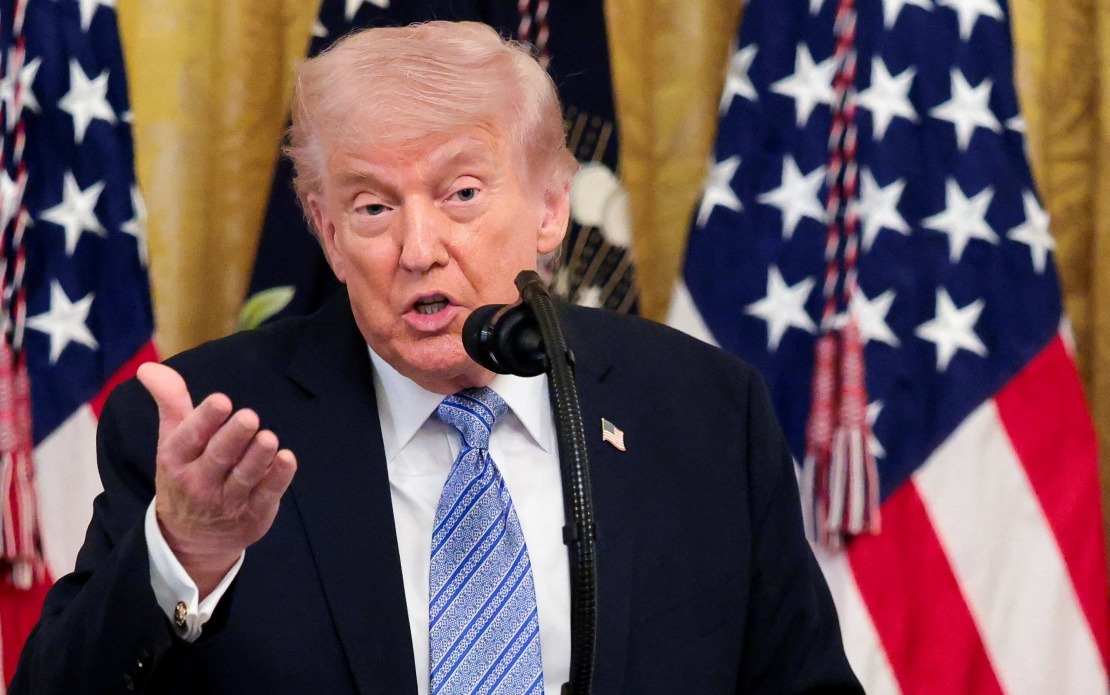
US President Donald Trump is considering an unconventional path for the succession of the United Nations' top position, with the New York Post reporting that he wants FIFA President Gianni Infantino to serve as the organisation's next secretary-general. According to sources familiar with Trump's thinking, the American leader sees the Swiss-born football administrator as an unusually talented consensus-builder who commands respect across international lines. This proposal would represent a dramatic departure from traditional recruitment patterns for the UN's highest office, introducing someone from the sports world into the organisation's diplomatic machinery when the search for Antonio Guterres' replacement intensifies ahead of the January 1, 2027 transition date.
The political logic behind Trump's endorsement of Infantino appears rooted in their deepening personal relationship. During this year's World Cup tournament, Infantino made deliberate overtures toward the American president, cultivating connections that culminated in the FIFA leader presenting Trump with the organisation's inaugural Peace Prize in December. This gesture and the broader courtship suggest Infantino recognised an opportunity to build leverage with an influential global figure and anticipated the diplomatic utility of maintaining Trump's favour. Such relationship-building reflects Infantino's instinct for navigating powerful personalities and understanding how institutional networks operate at elite levels—precisely the skills that Trump apparently believes would translate to UN management.
However, the path from speculation to actual appointment involves multiple institutional hurdles. The UN Charter's Article 97 establishes a formal process requiring that any secretary-general nominee first secure backing from the Security Council's fifteen member states before advancing to the General Assembly for final approval. This structural requirement proves especially restrictive because the Council includes five permanent members—the United States, China, Russia, France, and the United Kingdom—each possessing veto authority. Any of these nations could block Infantino's candidacy regardless of broader international sentiment. This means Trump's personal preference, while potentially influential, cannot unilaterally determine outcomes. The permanent members' competing geopolitical interests, particularly tension between Washington and Moscow or Beijing, could easily overshadow the merits of any individual candidate.
Infantino's biographical profile presents both strengths and vulnerabilities when assessed against traditional qualifications for UN leadership. The FIFA president brings extensive experience navigating fractious international governance structures, having managed football's global administration through crises ranging from corruption scandals to host nation controversies. At fifty-six years old, he possesses substantial professional seasoning and demonstrates fluency in multiple languages—practical assets in a role requiring constant diplomatic engagement across cultural and linguistic divides. Yet his sports industry background could provoke scepticism among governments and civil society organisations that view UN leadership as properly belonging to career diplomats, development professionals, or politicians with proven multilateral credentials. Non-governmental organisations working on human rights and governance issues might question whether sports administration experience adequately prepares someone for the UN's complex mandate spanning peacekeeping, humanitarian relief, sustainable development, and international law.
Trump's support for Infantino emerges within the context of the president's broader scepticism toward the United Nations as an institution. Throughout his current term, Trump has articulated repeated criticism of the UN's effectiveness in addressing major geopolitical crises, suggesting the organisation has failed to meaningfully influence outcomes in Middle Eastern conflicts, Ukraine, Gaza, and other flashpoints demanding international engagement. This dissatisfaction motivated Trump's establishment of a separate Board of Peace aimed at pursuing bilateral peace agreements, including his administration's pursuit of normalisation accords between Israel and various parties. Last year, Trump also substantially diminished American financial contributions to UN operations and withdrew US participation from several UN-affiliated bodies, most notably the World Health Organization. These decisions signal that Trump views institutional reform or replacement as preferable to working within existing UN structures.
Selecting a secretary-general sympathetic to Trump's institutional critiques would logically advance his strategic interests. An Infantino appointment would place someone in the UN's top position who maintains strong personal ties to the American president and might prove amenable to the administration's preferred approaches to international questions. Conversely, Trump's critics argue that inserting a leader perceived as aligned with Washington would compromise the secretary-general's traditional role as an independent voice representing broader UN membership interests. The position's legitimacy depends partly on the incumbent being viewed across geopolitical divides as reasonably impartial and committed to the organisation's founding charter rather than any single power's agenda.
The broader diplomatic landscape significantly complicates Infantino's prospects regardless of Trump's backing. Russia and China, permanent Security Council members with veto power, would likely scrutinise any candidate championed by the United States, viewing such advocacy with inherent suspicion. Historical patterns show that Moscow and Beijing frequently oppose candidates whom they perceive as advancing Western interests. Additionally, the African Union, the European Union, and other significant regional blocs typically expect consultation on UN leadership succession and might resist a process perceived as engineered by Washington without adequate inclusivity. The tradition of geographical rotation—whereby the secretary-general position circulates among global regions—also factors into succession discussions, creating expectations that the next appointment consider representation principles beyond individual qualifications.
For Malaysian and Southeast Asian observers, Trump's proposal raises pertinent questions about how great power competition shapes multilateral institutions. The UN Secretary-General wields influence over peacekeeping operations, development priorities, and agenda-setting that directly affect regional security and prosperity. Southeast Asia's interests in preserving ASEAN centrality, managing great power competition in the South China Sea, and maintaining access to international development resources all depend on UN leadership that respects multilateral processes and smaller nations' agency. An appointment driven primarily by bilateral US-Trump considerations might dilute the Secretary-General's capacity to serve broader membership interests or navigate disputes between Beijing and Washington with credible neutrality. The region's experience with institutions reflects awareness that legitimacy and effectiveness require inclusive decision-making rather than great power dictation.
Infantino himself has not publicly commented on speculation regarding UN leadership, maintaining focus on FIFA operations and upcoming tournaments. The FIFA president's diplomatic skills and networks clearly extend beyond sports administration—his ability to manage relationships with authoritarian and democratic governments, navigate corruption investigations, and broker consensus among competing national football federations demonstrates capacities relevant to international administration. Yet translating sports governance experience into effectiveness at the UN's scale and complexity remains uncertain. The secretary-general position demands understanding of international law, peacekeeping doctrine, humanitarian principles, and development economics at levels that football administration does not typically require.
The coming months will test whether Trump can actually advance Infantino's candidacy through Security Council approval, or whether the proposal remains an expression of presidential preference without translating into concrete diplomatic action. Building consensus among permanent members for any candidate proves notoriously difficult, and introducing a sports industry figure without traditional diplomatic pedigree adds implementation challenges. Should Infantino ultimately secure appointment, it would represent a significant rupture with post-Cold War patterns and raise fundamental questions about whether UN leadership belongs to specialists in international affairs or whether the position might benefit from non-traditional backgrounds. If the candidacy falters, the episode will nevertheless illuminate how Trump approaches UN reform and which other nations prioritise alignment with American preferences over institutional independence.

