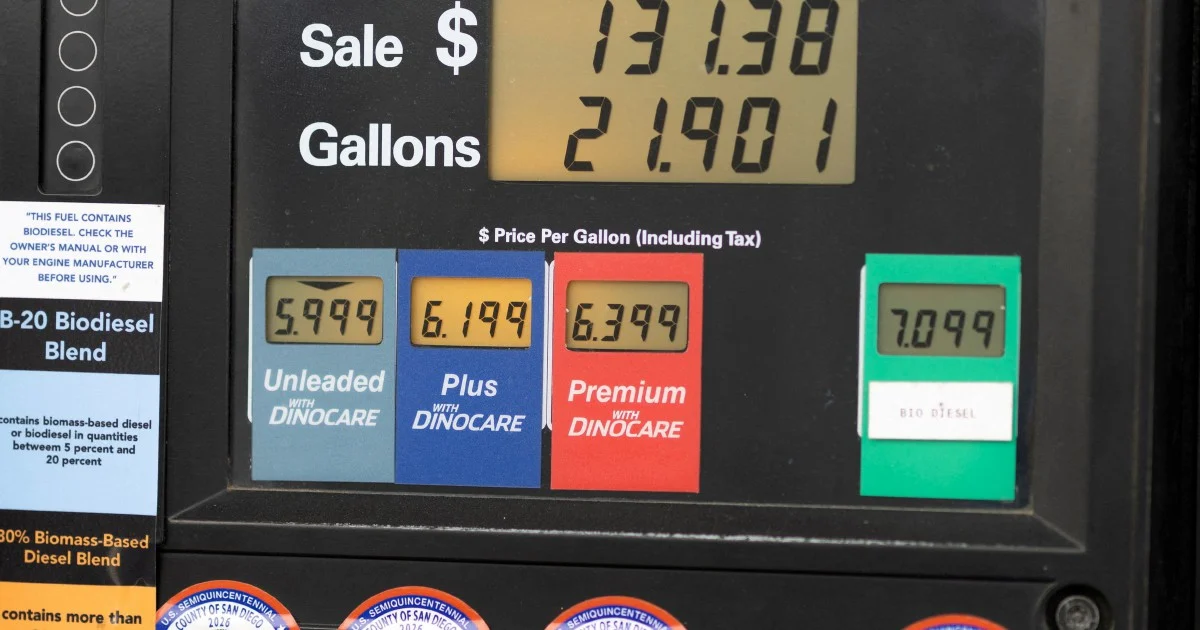
United States President Donald Trump announced on Wednesday that he has directed authorities to conduct a comprehensive investigation into major oil companies, citing concerns over the sluggish decline in petrol prices at the pump. The directive represents an attempt by the Trump administration to address public frustration over sustained fuel costs, a political vulnerability that has attracted growing criticism as regional tensions in the Middle East continue to influence global energy markets.
The timing of Trump's announcement reflects mounting pressure from constituencies worried about household expenses and transportation costs. Throughout recent months, petrol prices have remained stubbornly elevated relative to earlier forecasts, failing to provide the relief that consumers and policymakers anticipated. This lag between expectations and reality has created political headwinds for the administration, particularly as critics attribute some responsibility to existing policies and geopolitical decisions affecting energy supplies.
The Middle East conflict dimension adds significant complexity to the price dynamics affecting American consumers. Military operations, regional instability, and disruptions to shipping lanes through key chokepoints have all contributed to maintaining upward pressure on crude oil costs globally. Rather than addressing these structural factors directly, Trump's investigation approach targets the domestic oil industry itself, suggesting that perceived margin-setting or supply management practices may warrant scrutiny.
For Malaysian readers and regional energy observers, the developments carry considerable relevance. As a significant oil and gas producer with substantial refineries and petrochemical assets, Malaysia sits within the broader Asian energy ecosystem deeply affected by American policies and global crude pricing. The decision by the world's largest economy to investigate its own oil sector signals shifting political winds around energy policy and could influence international trading patterns and investment decisions affecting regional producers.
The investigation's scope remains somewhat unclear at this juncture, though such probes typically examine whether companies are manipulating supplies, engaging in anti-competitive behaviour, or failing to increase productive capacity to meet demand. The oil industry has consistently maintained that prices reflect legitimate market forces including geopolitical risks, refinery constraints, and genuine supply-demand imbalances rather than deliberate corporate actions designed to restrict output.
Previous administration investigations into energy companies have yielded mixed results. Historical precedent suggests that such inquiries often uncover limited evidence of direct price manipulation, instead revealing industry dynamics heavily influenced by global market forces beyond any single nation's immediate control. Nevertheless, the political symbolism carries weight, as administrations frequently use investigations to demonstrate responsiveness to constituent concerns about inflation and living costs.
The broader economic context deserves consideration. American consumers face fuel expenses that directly affect household budgets, transportation industries, and broader inflation concerns. When petrol prices remain elevated during peacetime periods without supply shocks, public expectations for swift remediation intensify. Trump's investigation represents a political response to this sentiment, even if the practical mechanisms for forcing price declines remain limited within traditional regulatory frameworks.
Regional implications extend beyond simple price effects. Middle Eastern geopolitical developments influence not just crude availability but also investor confidence in energy infrastructure globally. Southeast Asia, home to major shipping routes and petrochemical hubs, experiences downstream effects from such conflicts. Malaysia's position as both a producer and refiner means that global crude pricing dynamics and American policy responses filter through multiple supply chain layers affecting local industries.
The investigation also reflects broader American skepticism toward the energy sector, particularly when prices harm consumers. This sentiment occasionally emerges regardless of market fundamentals, driven by political cycles and public pressure. Companies face regulatory scrutiny partly as a function of their size and visibility rather than necessarily proportional to actual anti-competitive conduct. For international energy companies operating in multiple jurisdictions, such investigations create compliance and reputational risks requiring careful navigation.
Energy markets worldwide will likely monitor the investigation's findings closely. If American authorities identify coordination or artificial constraint practices, such findings could influence regulatory approaches in other jurisdictions, including Southeast Asia. Conversely, if the investigation concludes that pricing reflects legitimate market forces, it may provide some vindication for industry positions while disappointing those expecting direct intervention to reduce petrol prices quickly.
The episode underscores fundamental tensions between market-based energy systems and political expectations for price stability. While investigations represent a softer intervention than direct price controls or forced production increases, they signal that governments maintain oversight authority and willingness to exercise it when constituents suffer economic hardship. Malaysian policymakers watching these developments must consider how their own regulatory frameworks balance consumer interests against investment incentives for domestic and international energy producers.
Looking ahead, the investigation's conclusions will matter less than its political messaging. By ordering the probe, Trump addresses immediate criticism while preserving future policy flexibility. Whether the investigation yields actionable findings or simply documents familiar industry dynamics, the administration can claim it responded forcefully to public concerns. For energy markets across Southeast Asia and beyond, American regulatory actions carry outsized influence given the dollar's role in global petroleum trading and the region's dependence on stable energy supplies for economic growth.