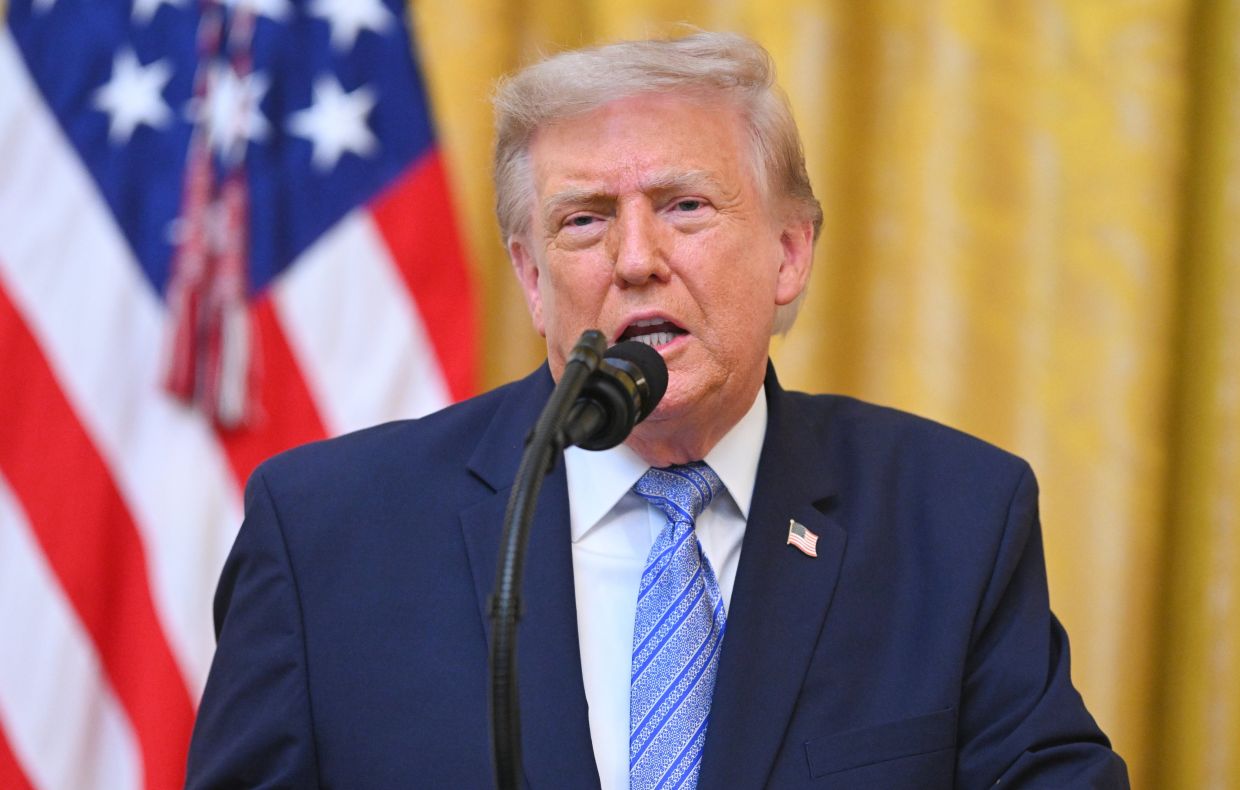
President Donald Trump used a major White House address to launch a multipronged attack on China over alleged election interference, domestic voting vulnerabilities, and media oversight, signalling an increasingly aggressive approach to both foreign policy and domestic political challenges as the nation approaches its midterm elections. The speech represented one of the most confrontational addresses of his current term, weaving together national security warnings, election integrity concerns, and media criticism into a unified message about protecting American institutions from external threats and internal subversion.
At the heart of Trump's remarks lay allegations that China orchestrated what he characterised as the "largest compromise of election data in history," a claim he framed as demanding urgent governmental response. Rather than treating the incident as an isolated cybersecurity breach, Trump positioned Chinese actions as part of a broader pattern of state-sponsored interference designed to undermine American democracy itself. The specific nature of the data breach and the timeline of its discovery were not detailed in his address, though he suggested the scale and sophistication of the operation represented a significant escalation in Beijing's willingness to target sensitive American infrastructure directly.
Beyond allegations of data theft, Trump expanded his accusations to include a more insidious form of interference: the alleged manipulation of influential American figures. He claimed that China had systematically worked to influence prominent business leaders and journalists, pressuring them to adopt anti-Trump positions and mobilise public opinion against his administration. This assertion—that foreign actors were coordinating influence operations among America's cultural and economic elites—struck at concerns about how effectively hostile nations could exploit America's open media environment and business networks to sow division and undermine political leaders deemed threats to Beijing's interests.
The President further alleged that these interference efforts were not random or opportunistic, but rather strategically calibrated to target his political survival during his first term in office. By framing China's actions as specifically aimed at removing him from power, Trump connected the foreign threat narrative to his own political biography and suggested that the nation's election security challenges were intimately bound up with his continued political fortunes. This rhetorical move conflated national security interests with Trump's personal electoral prospects, a common feature of his political messaging that often blurs the boundaries between defending the republic and defending his own position.
Transitioning to domestic policy, Trump emphasised the urgency of election integrity measures as the nation prepares for midterm elections. He repeatedly invoked concerns about voting vulnerabilities and alleged past instances of electoral fraud, using these warnings to build momentum for specific policy changes. The President framed election security not as a technical or administrative matter requiring expert management, but as a fundamental question about the legitimacy of American democracy itself, with implications for every voter and political outcome.
Among the concrete reforms Trump advocated were voter identification requirements and proof of citizenship checks, measures he tied to legislative proposals within the SAVE America Act framework. These voting requirement reforms remain controversial, with supporters arguing they prevent fraud and ensure ballots are cast only by eligible citizens, while critics contend they disproportionately burden minority voters and those without easy access to required documentation. Trump's invocation of such measures during a speech dominated by warnings about Chinese interference suggested his administration views voting access restrictions and foreign threat countering as complementary security strategies.
The address also signalled a hardening of Trump's stance on China more broadly, moving beyond specific election-related accusations to position Beijing as the defining adversary in American foreign policy. He explicitly rejected what he described as a previous posture of "complacency" toward Chinese actions, suggesting that his administration would adopt a more assertive and confrontational approach across multiple domains. This rhetorical framing invited the American public to view the China relationship as requiring fundamental recalibration rather than marginal adjustments to existing policy frameworks.
In a striking shift toward domestic media regulation, Trump warned that he was contemplating revocation of broadcast licences held by television networks ABC and NBC. This threat, directed at major American news organisations, reflected his longstanding antagonism toward media outlets he perceives as unfair to his administration. The suggestion that broadcast licence revocation might be employed against news organisations with whom the President disagrees represented a significant escalation in rhetoric around media accountability and state power over information distribution, raising concerns among press freedom advocates about the relationship between executive authority and editorial independence.
For Malaysian and Southeast Asian observers, Trump's address carries important implications extending beyond American domestic politics. China's alleged election interference operations described by Trump reflect broader patterns of Beijing's technological sophistication and willingness to project power into other nations' political processes. The region, home to significant Chinese diaspora communities and substantial Chinese economic interests, faces similar vulnerabilities to foreign interference campaigns. Malaysia's own experience with electoral politics and foreign influence attempts suggests the region cannot remain indifferent to the methods and strategies that Trump outlined.
Additionally, Trump's emphasis on voter identification and citizenship verification requirements offers a cautionary case study for Southeast Asian democracies considering similar measures. The American debate reveals how such requirements can become entangled with deeper questions about democratic inclusivity, minority representation, and voting access. Regional nations grappling with election integrity concerns must consider whether imported security measures fit local contexts or risk importing American political polarisation along with security protocols.
The address also underscores the growing intersection of technology, national security, and electoral politics that will shape geopolitical competition throughout this decade. As digital infrastructure becomes more central to governance and elections, the vulnerability of voting systems, voter databases, and election management to sophisticated state-sponsored attack becomes an increasingly urgent concern for all democracies, particularly in the Asia-Pacific region where China's technological reach extends furthest.
Trump's combination of aggressive China rhetoric, election security reforms, and media regulation threats reflects a worldview in which threats to American democracy originate from both external adversaries and internal institutional failures. Whether this framing accurately captures the nature of contemporary election security challenges or represents a politicisation of legitimate concerns about both foreign interference and voting access remains contested even within American policy circles.

