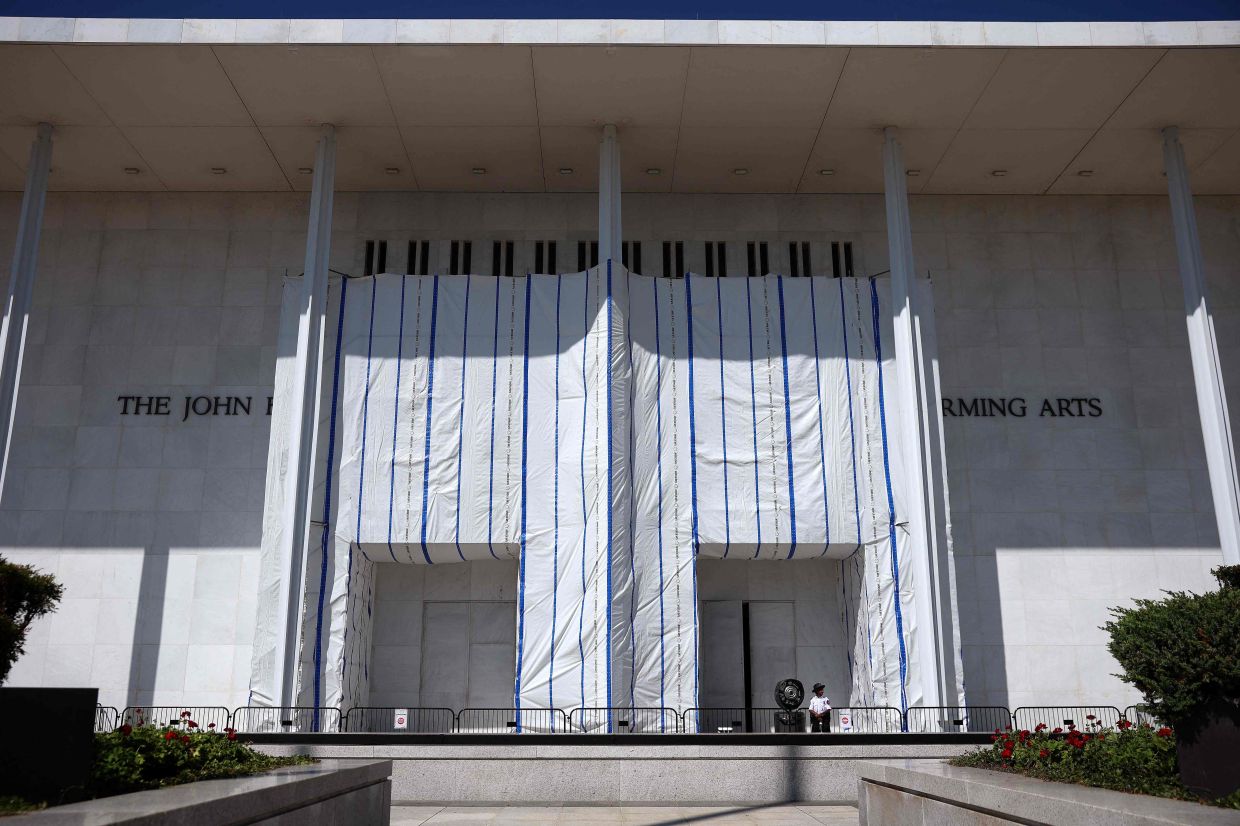
The Trump administration has escalated its confrontation with congressional Democrats over control of the Kennedy Center by suggesting in a federal court filing that the iconic performing arts venue could be demolished if judges interfere with renovation plans and efforts to place the president's name prominently on the building. The extraordinary threat emerged on Tuesday as the Justice Department defended its position against legal challenges mounted primarily by Democratic lawmakers who view the naming initiative as an inappropriate politicization of a cultural institution established as a living memorial to assassinated president John F. Kennedy.
Justice Department attorney Brantley Mayers argued in the filing that without Trump's administration undertaking comprehensive restoration work and securing additional funding commitments, the Kennedy Center would steadily deteriorate into a structurally hazardous condition that would eventually necessitate its complete removal. The filing characterized the current state of the building as "structurally unsound, fundamentally unsafe, and embarrassing to the nation's capital," painting a grimly urgent picture of institutional decay that only the Trump administration's intervention could arrest. This rhetorical framing positions the president not as a self-interested political actor but as a national steward rescuing a crumbling symbol of American cultural achievement.
The administration's legal team went further, sketching an alternative future should the courts prevent demolition without enabling restoration. Mayers acknowledged that if the building were razed, the site could be redeveloped as a large outdoor amphitheater overlooking the Potomac River—a design that would, he conceded, "fail to adequately honor" Kennedy but would prove substantially cheaper to construct and operate than maintaining or restoring the existing structure. This hypothetical reconstruction represents an implicit threat: allow Trump's naming rights and restoration agenda, or accept the erasure of Kennedy's memorial entirely.
The Justice Department's argument relies heavily on the administration's demonstrated financial commitments to the project. Officials noted that Trump's team has secured approximately US$258 million from Congress for restoration efforts and has cultivated a new donor base willing to contribute capital. This fundraising success, the filing suggests, depends critically on public recognition of the president's role. Without the prominent placement of Trump's name on the building and renaming of the surrounding plaza, major contributors may withdraw their support, threatening the entire renovation enterprise. For Malaysian and Southeast Asian observers, this framing illustrates how American political actors increasingly seek to monetize national institutions through naming rights and branding arrangements.
The Kennedy Center board, recently reconstituted under Trump's influence, voted to inscribe "Restored and Renovated by President Donald J. Trump" beneath the institution's official title and to designate the adjacent public space as "President Donald J. Trump Plaza." These symbolic gestures carry substantial political weight in American democratic culture, where naming conventions for public buildings reflect hierarchies of honor and historical significance. The effort to attach the current president's name to a memorial originally dedicated to a deceased Democratic predecessor represents a striking reversal of historical custodianship norms.
Congresswoman Joyce Beatty, an African American Democratic lawmaker and ex officio board member, initiated the legal challenge contending that only Congress, not an appointed board, possesses constitutional authority to rename an institution created by federal statute as a Kennedy memorial. A federal judge previously agreed with her argument, ordering the removal of earlier Trump signage and ruling that the board could not unilaterally alter the center's official name. The Trump administration is currently appealing this decision, setting up a direct clash between executive and judicial branches over the building's identity and legacy.
This dispute reflects deeper tensions within American governance regarding the appropriate relationship between sitting presidents and national institutions. Kennedy Center officials have previously described the planned restoration work in notably restrained terms, emphasizing necessary upgrades to electrical systems, stage facilities, and moisture damage prevention without any suggestion that structural integrity was so compromised as to require demolition. This discrepancy between the administration's current dire warnings and earlier, more measured assessments raises questions about whether the demolition threat represents a genuine structural concern or a negotiating tactic designed to pressure the courts into permitting the naming arrangement.
For audiences in Malaysia and across Southeast Asia, this episode illuminates how American political actors increasingly blur the boundaries between cultural stewardship and partisan advantage. The Kennedy Center dispute demonstrates that even iconic national institutions are now contested terrain in partisan conflicts. The willingness of government lawyers to invoke demolition as a consequence of unfavorable court rulings reflects an escalatory approach to political disagreement that extends beyond traditional legislative and executive channels into the realm of cultural authority.
The underlying struggle concerns competing visions of presidential legacy-building and institutional memory. Trump's supporters argue that significant private fundraising and restoration work merit public recognition, a position grounded in principles of patronage and donor acknowledgment. Critics contend that attaching a sitting president's name to institutions dedicated to historical figures politicizes cultural space and creates precedents for future partisan appropriation. The outcome will likely influence how subsequent administrations approach naming decisions affecting national landmarks and memorials.
A federal court hearing scheduled for Thursday will address both the broader question of whether courts should block the naming initiative and the administration's latest arguments regarding the building's structural condition. Judges must weigh competing claims about institutional autonomy, congressional authority, and presidential recognition while navigating threats that escalation will result in permanent loss of the building itself. The decision will have implications not only for the Kennedy Center but for the broader question of how American institutions manage the intersection of presidential authority, public memory, and cultural stewardship in an increasingly polarized political environment.

