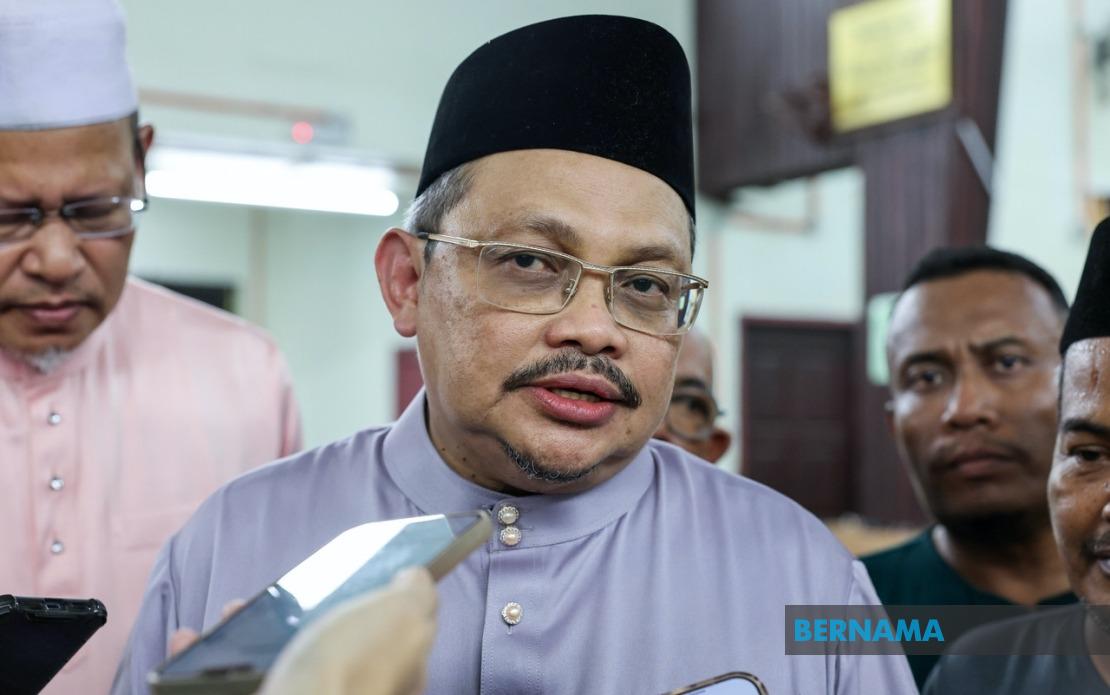
Tan Sri Dzulkifli Ahmad, the former Chief Commissioner of the Malaysian Anti-Corruption Commission, has challenged the nation to reconsider what independence truly means as Malaysia approaches its 69th National Day celebrations. Speaking at a community carnival in Tasek Gelugor, the veteran administrator emphasized that freedom from colonial powers represents merely the opening chapter of a nation's story, and that subsequent chapters must be written by leaders of genuine character and moral conviction. His remarks arrive at a moment when public discourse frequently centres on historical narratives of independence, yet his intervention steers attention toward the contemporary quality of governance and its direct impact on ordinary citizens' lives.
Dzulkifli's central argument rests on a distinction that many overlook in standard Independence Day commemorations. A society that escapes one form of oppression only to find itself governed by corrupt or self-serving leaders has not achieved meaningful liberation, he contended. Citizens in such circumstances would experience little tangible difference between their circumstances under colonial administration and under unscrupulous domestic rule. The former MACC leader framed trustworthy leadership as the essential foundation upon which genuine independence stands, arguing that without integrity at the helm, constitutional independence becomes hollow rhetoric divorced from lived reality for the broader population.
The veteran public servant articulated his vision of authentic independence as one anchored to specific qualities in leadership: sacrifice on behalf of constituents, active protection of public welfare, and a demonstrated commitment to collective benefit over personal enrichment. Such leaders, he suggested, would ensure citizens not only understand the conceptual meaning of independence but actually experience its benefits through competent, ethical governance. This formulation transforms independence from a binary historical marker—either a nation is independent or it is not—into a continuous process of collective endeavour requiring constant renewal through the quality of those entrusted with public authority.
Dzulkifli made these observations while attending the 2026 Tasek Gelugor Independence Day Children Carnival held at Al-Ridwan Mosque in Kampung Nyior Sebatang. The event demonstrated the kind of grassroots community engagement he champions, featuring a fun run that attracted over 700 participants alongside a Merdeka Ride drawing between 200 and 300 cyclists. Beyond these sporting activities, the carnival provided space for various community-based athletic programmes and a public feast offering complimentary meals prepared by 30 food vendors, illustrating how Independence Day observances can extend beyond ceremonial functions to build community cohesion and ensure broad participation across demographics.
When questioned about persistent speculation regarding a potential candidacy in the upcoming General Election for the Tasek Gelugor parliamentary seat, Dzulkifli deflected decision-making to UMNO, the political party he joined in June 2025. His response reflected the formal protocols governing internal party selection processes, though his presence at grassroots community events and his established network in the constituency clearly position him as a figure of relevance in local political calculations. He emphasized that his community involvement in the area predates his party affiliation, having commenced in 2022 through the establishment of a service center even during a period when he held no formal political position, suggesting a longstanding commitment to constituent service.
This background of community engagement without official position carries particular significance for Malaysian political discourse. It demonstrates an approach to public service that operates independently of formal political appointment, a distinction that holds meaning given public concerns about patronage networks and the instrumentalization of community work for electoral advantage. Dzulkifli's record of activity in Tasek Gelugor before securing party affiliation suggests a primary motivation beyond immediate political calculation, though observers will naturally weigh this claim against broader patterns of political recruitment and advancement within Malaysian party structures.
The remarks Dzulkifli offered at the carnival event resonate particularly strongly given his professional background investigating corruption and institutional misconduct. His tenure as MACC Chief Commissioner exposed him directly to the mechanisms through which public trust erodes and institutional legitimacy fractures. Having witnessed firsthand how embezzlement, abuse of power, and institutional dereliction undermine citizens' faith in governance, his emphasis on trustworthy leadership carries experiential weight beyond that of typical political rhetoric. His voice therefore carries particular credibility when asserting that independence without integrity amounts to a largely meaningless status change.
For Malaysian readers and broader Southeast Asian audiences, Dzulkifli's framework for understanding independence offers valuable perspective during a period when several nations across the region grapple with governance challenges, corruption concerns, and questions about the quality of democratic institutions. His insistence that independence is not a fixed historical achievement but rather an ongoing process demanding renewal through ethical leadership provides a useful lens through which to evaluate contemporary political performance. It suggests that the benchmark for national success should extend beyond formal indicators of sovereignty to encompass the actual lived experience of citizens under their government's stewardship.
The distinction Dzulkifli draws also carries implications for how societies evaluate their leaders and hold them accountable. If independence is understood as fundamentally dependent on trustworthy governance, then citizens acquire a framework for assessing whether their independence is genuine or merely nominal. This transforms Independence Day from an occasion for backward-looking historical commemoration into an opportunity for forward-looking assessment of whether contemporary leadership actually delivers on the promise of independence—protection of welfare, prioritization of collective interest, and demonstration of moral integrity in the exercise of power.
As Malaysia heads toward a general election, Dzulkifli's emphasis on integrity-driven leadership assumes additional resonance. His speech effectively positioned trustworthy governance as the measure by which political alternatives should be evaluated, establishing a standard that transcends partisan affiliation or ideological positioning. Whether his own eventual entry into electoral competition would be evaluated against this same rigorous standard remains to be seen, though his early articulation of these principles establishes a clear benchmark against which his subsequent actions will inevitably be measured by a public increasingly attuned to the relationship between campaign promises and governing performance.

