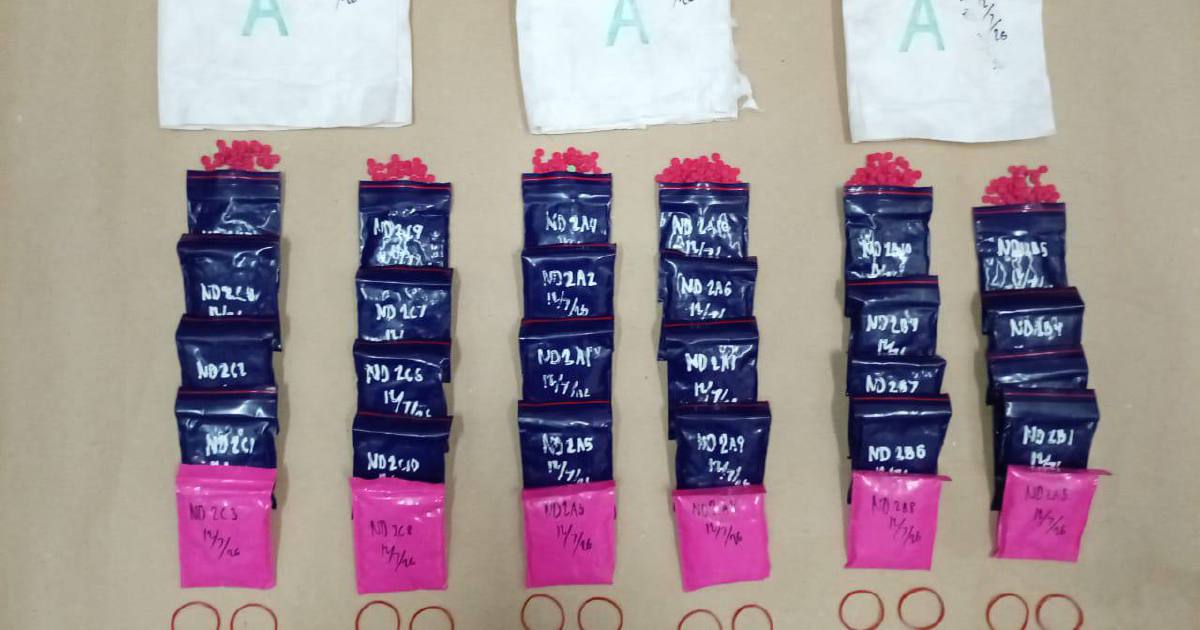
Authorities in Kelantan have apprehended a tow truck operator following the discovery of a substantial quantity of synthetic drugs concealed in a vehicle. The 35-year-old suspect was detained during an operation in Tumpat, with police recovering 6,000 yaba tablets during a thorough search of the motorcar. The contraband, estimated at a street value of RM60,000, was located in the vehicle while it was parked at Jalan Kubang Batang near Wakaf Bharu on an operation day.
The seizure represents a significant interception for the Kelantan police narcotics division, which has intensified efforts to combat the proliferation of dangerous synthetic drugs across the northern corridor. Yaba tablets, commonly known as "crazy medicine" due to their potent amphetamine content, have become increasingly prevalent in Malaysian drug trafficking operations over the past decade. The pills are typically manufactured in clandestine laboratories across the border, smuggled through established trafficking networks, and distributed via local agents operating across multiple states.
The tow truck service sector has inadvertently become a vehicle for drug distribution schemes, with criminals exploiting the mobile nature of towing operations and the relative freedom of movement afforded to service providers. The profession's access to various locations and reduced scrutiny compared to fixed-point operations makes it attractive for individuals seeking to transport contraband across districts. Law enforcement agencies have increasingly recognised that seemingly legitimate occupations can mask illegal activities, prompting enhanced surveillance in high-risk sectors.
Yaba pills present a particularly acute public health concern in Malaysia, given their accessibility to younger demographics and their highly addictive properties. The synthetic drug, primarily composed of methamphetamine and caffeine, produces effects that are both psychologically and physically damaging. Users report symptoms ranging from severe anxiety and paranoia to violent behaviour and long-term neurological deterioration. The tablets are considerably cheaper than powder methamphetamine, making them affordable for students and young professionals, thereby expanding the potential user base across urban and semi-urban areas.
The operation in Tumpat aligns with broader law enforcement initiatives targeting supply chains in the northern region. Kelantan and surrounding states have become critical trafficking corridors, given their proximity to Thailand and established smuggling routes that have existed for decades. The porous nature of certain border areas, combined with the sophisticated methods employed by trafficking networks, necessitates coordinated operations by federal and state police agencies, alongside international cooperation with Thai authorities.
The apprehension of this individual represents one piece of a larger enforcement puzzle. Authorities rarely dismantle entire distribution networks through single arrests, though each capture provides investigators with intelligence regarding supplier hierarchies, logistics methods, and financial arrangements. The suspect's cooperation, should it be forthcoming, could potentially unravel connections to higher-level operatives or identify vulnerable points in the supply network that enforcement agencies can target.
For communities in Kelantan and the wider region, the ongoing prevalence of yaba trafficking underscores the persistent challenges facing law enforcement in combating organised narcotics operations. Despite substantial investments in interdiction efforts and intelligence gathering, the financial incentives driving drug trafficking remain considerable. The profit margins associated with synthetic drug distribution exceed those of most other criminal enterprises, attracting motivated individuals willing to assume significant legal risks. The arrest in Tumpat, while noteworthy, represents merely one success among countless smuggling attempts that likely succeed without detection.
The incident also highlights the importance of community engagement in drug prevention strategies. Local residents and business operators who notice suspicious activities or unusual patterns of behaviour are often the first line of defence against trafficking operations. Public awareness campaigns coupled with accessible reporting mechanisms enable citizens to contribute meaningfully to law enforcement efforts. The police have periodically appealed for information from the public regarding suspected drug activities, recognising that intelligence from ordinary citizens frequently leads to significant interdictions.
Moving forward, the case may prompt closer examination of service industries that facilitate movement of goods and individuals. Authorities are likely to intensify monitoring of towing services, courier operations, and similar sectors that operate with flexible geographic parameters. Enhanced coordination between traffic enforcement units and narcotics divisions could improve the likelihood of detecting vehicles carrying contraband, particularly along known trafficking routes and border proximity areas.
The broader implications extend beyond the immediate apprehension of a single operator. The case reinforces how entrenched synthetic drug trafficking has become within Malaysian society and the extent to which criminal networks have diversified their distribution methods. Combating this phenomenon requires sustained investment in intelligence capabilities, border security enhancements, treatment infrastructure for affected individuals, and educational initiatives targeting vulnerable populations. The arrest in Tumpat demonstrates that enforcement activities continue, yet equally illustrates that the challenge remains substantial and multifaceted.

