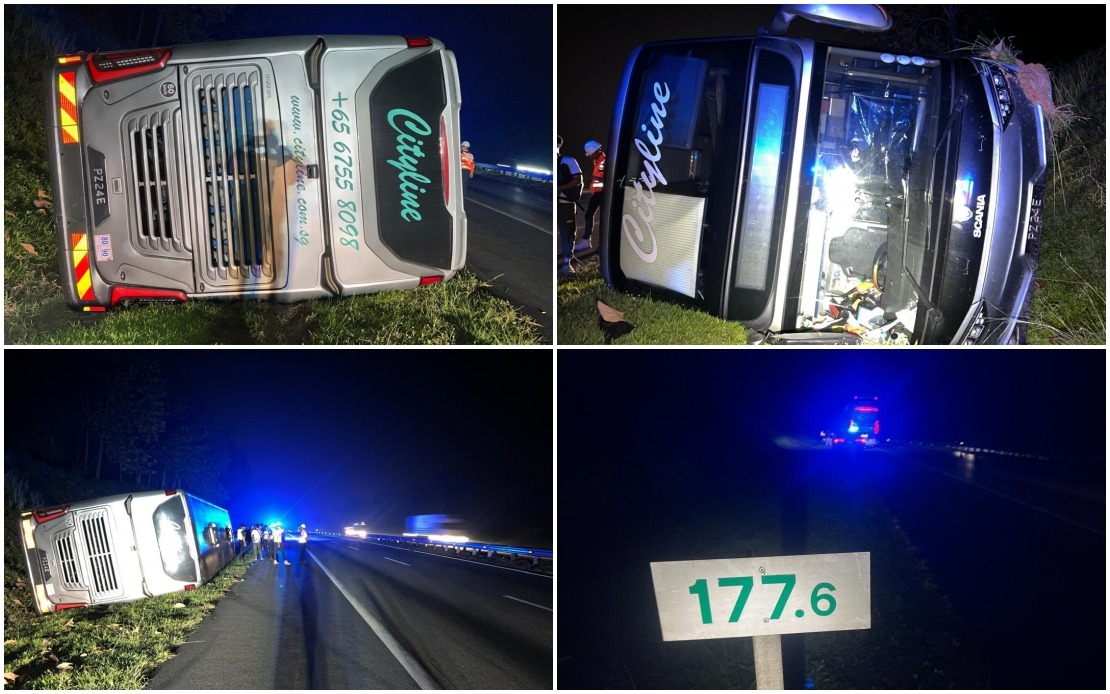
A tour bus carrying passengers from Singapore to Kuala Lumpur overturned on the northbound carriageway of the North-South Expressway in Jasin early on Monday morning, resulting in injuries to three people aboard. The incident unfolded at Kilometre 177.6, where emergency services attended to the casualties, who were subsequently transported to hospital for treatment. The accident highlighted the ongoing challenges faced by intercity bus operators navigating Malaysia's busiest highway corridors, particularly during periods of heavy congestion and unpredictable traffic patterns.
According to Jasin district police chief Supt Lee Robert, the three injured comprised a 59-year-old Malaysian tour guide, a 62-year-old Singaporean tourist, and a 42-year-old British national. All three sustained injuries to their heads and legs, though the severity of their conditions was not immediately disclosed. They were conveyed to Jasin Hospital where medical personnel assessed and treated their injuries. The police chief's statement indicated that the injuries were not life-threatening, though the full extent of recovery required remained unclear at the time of reporting.
Police received notification of the accident at approximately 5 am on Monday, triggering a rapid response from emergency and law enforcement personnel. The tour bus had been operating as a scheduled service connecting Singapore with Kuala Lumpur, carrying a total of 12 occupants including the driver and tour guide. Such cross-border coach services form a significant part of tourism and transport connectivity across Southeast Asia, facilitating movement between Malaysia and neighbouring Singapore on a daily basis. The incident raises questions about safety protocols and driver fatigue management on long-distance routes.
Investigations by the Jasin police revealed that the accident occurred as a result of evasive action taken by the bus driver. Traffic ahead had slowed considerably due to a lorry travelling at reduced speed on the expressway. In attempting to avoid a potential collision with the slower-moving vehicle, the bus driver steered sharply to the left. This manoeuvre caused the tour bus to veer off the left side of the road, losing stability and ultimately overturning. The sequence of events underscores the hazards inherent in high-speed highway driving when unexpected obstacles or changes in traffic flow emerge with minimal warning.
The North-South Expressway represents one of Malaysia's most critical transportation arteries, connecting Bukit Kayu Hitam in Kedah to Johor Bahru and handling approximately 200,000 vehicle movements daily during peak periods. Jasin, located in Melaka state, sits along this vital corridor and has witnessed numerous traffic incidents over the years. The expressway's design, while facilitating efficient long-distance travel, occasionally presents challenges when vehicles must perform emergency manoeuvres in congested conditions. Safety officials have repeatedly emphasised the importance of maintaining adequate following distances and reducing speed in response to prevailing traffic conditions.
The involvement of international tourists in this incident carries implications for Malaysia's tourism sector and the broader Southeast Asian travel landscape. Tour operators across the region depend on road transport to move visitors between destinations, and safety records significantly influence traveller confidence and booking decisions. Incidents involving foreign nationals receive heightened attention from relevant authorities and tourism boards, as they can affect the country's reputation as a secure travel destination. Tour operators typically maintain insurance coverage for such incidents, though the emotional and reputational impact extends beyond financial considerations.
Tour guide employment in Malaysia, particularly for cross-border services, involves working long hours under demanding conditions. The 59-year-old Malaysian guide injured in this accident represents the considerable workforce engaged in providing guided tourism experiences across the region. Many such professionals undertake multiple trips weekly, managing passenger welfare while navigating traffic complexities. This incident serves as a reminder of occupational hazards faced by those in the tourism service sector, who often work in environments beyond their direct control.
The driver's decision to undertake evasive action rather than apply gradual deceleration raises operational considerations regarding driver training and decision-making protocols. Tour bus operators typically provide driver training programmes covering defensive driving techniques, hazard awareness, and appropriate responses to unexpected situations. However, the split-second nature of highway emergencies means that outcomes sometimes depend on factors beyond training, including vehicle design, road conditions, and the precise positioning of other road users. Accident reconstruction experts would likely examine whether the bus driver's response was proportionate and optimal given the circumstances.
Following this incident, authorities would typically conduct comprehensive investigations examining multiple factors including vehicle maintenance records, driver credentials and work hours, road conditions at the time, and whether any regulatory breaches contributed to the accident. The Land Public Transport Agency (APAD) and other relevant bodies maintain oversight of long-distance bus operations, establishing standards for vehicle safety, driver qualifications, and insurance requirements. Findings from such investigations sometimes result in amended operating procedures or enhanced safety recommendations across the industry.
The recovery prospects for the three injured individuals remained uncertain pending detailed medical assessments. Such incidents typically generate insurance claims and potential civil proceedings, with tour operators and vehicle insurers becoming involved in determining liability and compensation. For the passengers and crew, the psychological impact of such a traumatic incident often extends beyond physical injuries, affecting their willingness to travel by bus in future. Tour operators sometimes offer counselling services to affected passengers and staff as part of their duty of care following accidents.
This accident contributes to the broader statistical picture of road safety on Malaysia's expressway system. While modern highways reduce certain categories of accidents through grade separation and traffic management, they simultaneously concentrate high-speed traffic flows that can result in serious incidents when preventive measures fail. Continued investment in driver training programmes, enhanced vehicle safety technologies, and intelligent traffic management systems represents part of the ongoing effort to reduce accident frequency and severity on these critical transport corridors.

