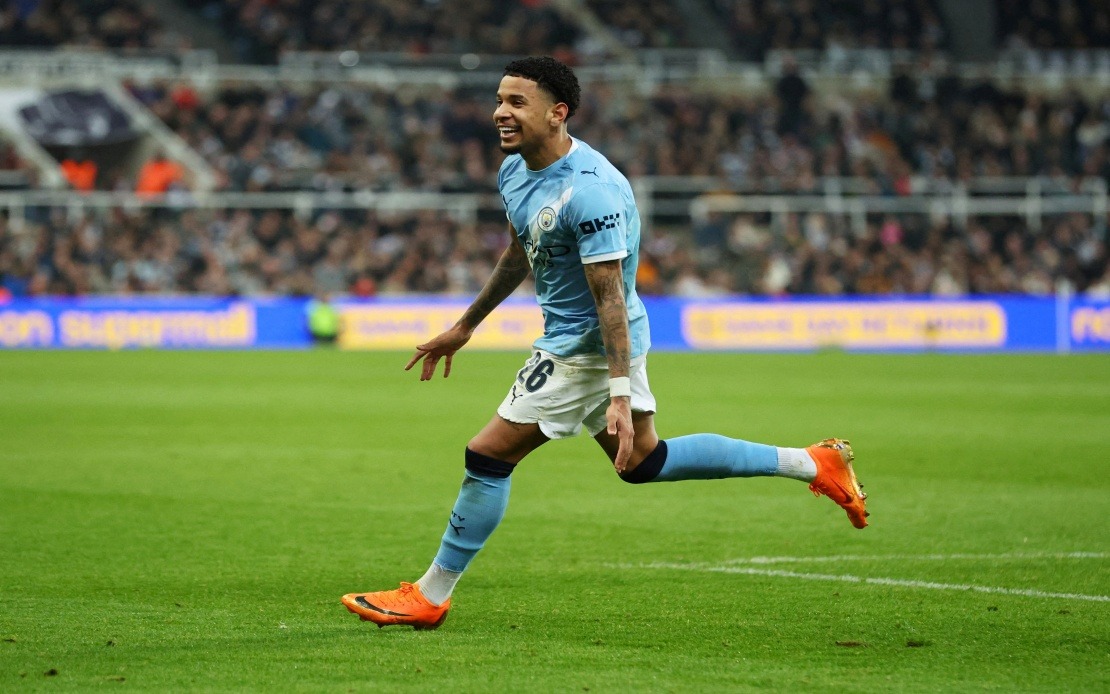
Tottenham Hotspur have moved decisively in the transfer market by securing an agreement with Manchester City to acquire winger Savinho, marking a significant moment in the north London club's ambitious recruitment drive. The 22-year-old Brazilian will arrive at Spurs for an initial payment of £75 million, with an additional £10 million payable through performance-based add-ons, subject to finalising contractual details and regulatory approvals expected by Friday's midday deadline.
The capture of Savinho represents a breakthrough in Tottenham's extended pursuit of the talented left-footed attacker, after previous attempts to lure him to the club ahead of the 2024-25 season fell short. His acquisition forms part of a broader strategic reshaping orchestrated by newly appointed manager Roberto De Zerbi, who has consistently emphasised the squad's need for attacking reinforcements to compete across multiple competitions. The agreement with Manchester City also suggests an ongoing dialogue between the two clubs, with negotiations continuing regarding forward Omar Marmoush potentially making the reverse journey to north London.
Savinho's journey through professional football reflects the contemporary reality of player development within interconnected club networks. He began his career at Atlético Mineiro in Brazil before moving to Europe, where he spent formative periods at Troyes and Girona—both institutions operating within the expansive City Football Group ecosystem. This pathway eventually facilitated his move to Manchester City's first team, though he found regular opportunities elusive at the Etihad Stadium despite accumulating respectable statistics during his tenure.
During his Manchester City spell, Savinho appeared in 84 matches across all competitions, contributing seven goals and sixteen assists. While these numbers indicate meaningful involvement, they understate his technical quality and potential. His departure reflects a mutual recognition that greater playing time and continuity would better serve his development, a reality increasingly common in modern football where depth of squad and tactical versatility can limit opportunities for talented players. Tottenham's interest in securing him suggests confidence that a change of environment under De Zerbi's tactical framework will unlock his considerable abilities.
The financial outlay required for Savinho's acquisition pushes Tottenham's summer spending beyond the £300 million threshold, representing one of the most substantial investment periods in the club's recent history. This level of commitment reflects both the ambition of the ownership structure and the recognition that significant squad enhancement is necessary to challenge for major trophies in an increasingly competitive Premier League environment. The scale of spending carries inherent pressure to deliver tangible results in the form of improved league position and cup progression.
Timing considerations have become crucial in finalising Savinho's registration ahead of Saturday's Premier League opener against Brentford at the Gtech Community Stadium. Should all documentation be completed before the Friday midday deadline, Savinho would theoretically be eligible for immediate involvement, though his match fitness and familiarity with tactical demands would require careful management. The urgency reflects genuine necessity within Tottenham's attacking contingent, as several key players navigate recovery from injury or ongoing rehabilitation phases.
Several of Tottenham's established attacking players—including James Maddison, Dejan Kulusevski, Mohammed Kudus, Xavi Simons, and Wilson Odobert—are either working through rehabilitation programmes following injuries or remain unavailable for competitive selection. This injury situation creates both challenge and opportunity, making Savinho's addition particularly timely. Once fully integrated, the Brazilian is likely to receive significant playing time, potentially functioning across either flank depending on tactical requirements and opposition considerations.
De Zerbi's appointment came with explicit expectations regarding attacking reinforcement, and Savinho's acquisition represents direct fulfilment of those commitments. The manager's preference for dynamic, creative attacking players aligns well with Savinho's profile and skill set. Left-footed players who can operate with flexibility across frontline positions have become increasingly valuable in contemporary tactical systems, and Savinho's versatility offers De Zerbi multiple strategic options for constructing attacking phases of play.
The broader strategic implications extend beyond immediate tactical considerations. Tottenham's willingness to engage in negotiations with Manchester City and complete significant transfers demonstrates organisational intent to build a genuinely competitive squad under new leadership. For Malaysian and Southeast Asian football observers, such transfers illustrate how elite European clubs navigate the complex landscape of player valuations, squad management, and the psychological impact of recent managerial changes on recruitment strategies.
Savinho's move also reflects evolving dynamics within English football's transfer market, where interconnected club networks and global talent pipelines create pathways previously unavailable. The City Football Group's role in developing the player across multiple institutions exemplifies how modern football clubs operate as integrated ecosystems rather than isolated entities competing in isolation. Tottenham's pursuit demonstrates how clubs systematically identify players developed within competitor organisations and execute strategies to acquire them at moments when circumstances align.
Looking forward, Savinho's success at Spurs will significantly influence perceptions of both the transfer strategy and De Zerbi's managerial effectiveness in the opening months of his tenure. The investment level demands corresponding performance, creating measurable accountability frameworks. His performances will also shape discussions regarding whether Manchester City's decision to allow his departure represents sound squad management or a missed opportunity—a evaluation that will crystallise through comparative achievements across the season.

