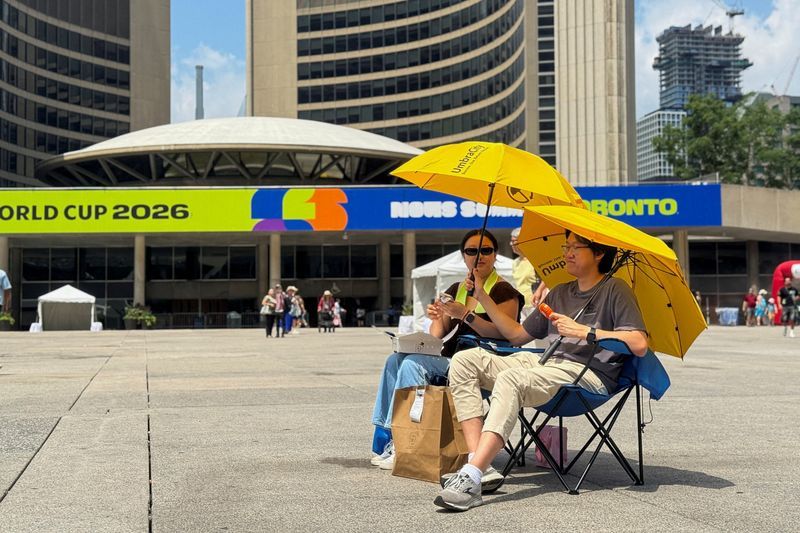
Toronto residents and visiting fans heading to Thursday's World Cup round of 32 encounter between Portugal and Croatia are facing significant health risks from extreme heat and humidity, prompting public health officials across the Canadian city to issue urgent precautions. The temperature is forecast to reach uncomfortable levels, with conditions potentially feeling as high as 40 degrees Celsius when factoring in humidity levels, according to warnings issued by Environment Canada. This presents a serious challenge for the tens of thousands expected to gather both inside Toronto Stadium and at outdoor viewing venues throughout the metropolitan area.
Michelle Murti, the City of Toronto's medical officer of health, has emphasised the critical importance of proactive hydration strategies rather than waiting for thirst signals to develop. She stressed that residents and visitors should maintain consistent water intake throughout the day, particularly in the hours before and during the match. Her guidance extends beyond simple fluid consumption, specifically recommending that supporters moderate their alcohol intake, as alcoholic beverages actually increase dehydration risk by increasing urine production and reducing the body's overall fluid retention capacity.
The combination of dangerously high temperatures and humidity creates what meteorologists call a heat index—the perceived temperature that feels significantly higher than the actual air temperature. Environment Canada has warned that thermometers are expected to climb above 35 degrees Celsius, with the additional threat of thunderstorms developing during or shortly after the fixture. This dual weather threat has forced city planners to prepare contingency arrangements for public viewing parties and fan zones, with some events potentially facing cancellation if severe weather develops as forecast.
Thursday's match represents the final World Cup game to be staged at Toronto Stadium, which holds the distinction of being the tournament's smallest venue. The city has invested considerably in infrastructure for the global sporting event, establishing multiple fan zones and organising extensive public viewing parties for supporters unable to secure tickets to matches. These outdoor gathering spaces, while festive and communal in nature, expose attendees to direct sun exposure and elevated temperatures for extended periods, intensifying heat-related health concerns.
Canada has been experiencing unusually severe weather patterns across multiple regions in recent weeks, with communities spanning from the western provinces to the Atlantic seaboard contending with flooding, extreme heat, and unstable atmospheric conditions. The situation intensifies as the country approaches Canada Day celebrations on Wednesday, when outdoor gatherings will draw even larger crowds seeking to enjoy public festivities while navigating challenging environmental conditions. The convergence of a major international sporting event and a national holiday creates peak demand on emergency services and public health infrastructure at precisely the moment when extreme weather poses the greatest risk.
City officials installed misting stations at Nathan Phillips Square, Toronto's iconic public landmark, to provide immediate relief for crowds gathering in the downtown core. These temporary cooling facilities represent a practical intervention allowing people to lower their body temperature through fine water spray, offering respite without requiring individuals to abandon their positions or leave viewing areas entirely. The installation reflects the city's recognition that many supporters, particularly international visitors unfamiliar with Canadian summer conditions, may underestimate the physiological stress of prolonged exposure to extreme heat.
Megan Rennie, a Toronto resident present at Nathan Phillips Square on Tuesday, articulated the physical challenge posed by the forecast conditions. She acknowledged the discomfort of the existing heat while expressing concern about the players' wellbeing during ninety minutes of intense physical exertion under these meteorological circumstances. Her comment that she anticipated leaving the viewing area early due to unbearable conditions illustrates how the forecasted weather may actually reduce attendance at public fan zones, paradoxically limiting the economic and social benefits the city anticipated from hosting this World Cup venue.
International visitors from warmer climates are similarly struggling with the adjustment, despite theoretical familiarity with tropical heat. Laura Albarez, travelling from Colombia, expressed preference for retreating to climate-controlled hotel accommodations rather than enduring extended periods outdoors in the oppressive conditions. Her willingness to abandon public viewing in favour of solitary relaxation demonstrates how extreme heat warnings successfully influence behaviour, with people choosing personal comfort and safety over communal celebration. Her comment about the availability of drinking water suggests that basic provisions, though helpful, may prove insufficient to overcome the physiological demands imposed by the forecasted conditions.
Public health authorities have essentially adopted a preventative communication strategy, recognising that educating supporters about heat risks and hydration protocols before the match begins proves more effective than managing heat-related medical emergencies during the fixture itself. The explicit guidance against excessive alcohol consumption represents particularly important public health messaging, as social drinking often accompanies major sporting events, yet alcohol amplifies dehydration risk precisely when hydration becomes most critical. This nuanced advisory acknowledges that supporters may not fully understand the physiological mechanisms through which alcohol impairs the body's heat regulation capacity.
The confluence of extreme weather, massive public gatherings, and intense physical activity creates compound risk factors that demand coordinated responses from multiple city departments and health services. Emergency medical personnel stationed throughout viewing venues will face heightened demand for heat-related interventions, while the potential for thunderstorms introduces additional hazards including electrical risks and sudden weather deterioration. Toronto's experience with this match will likely inform how other cities hosting major public events plan for extreme weather scenarios in an era of increasingly volatile climate patterns.

