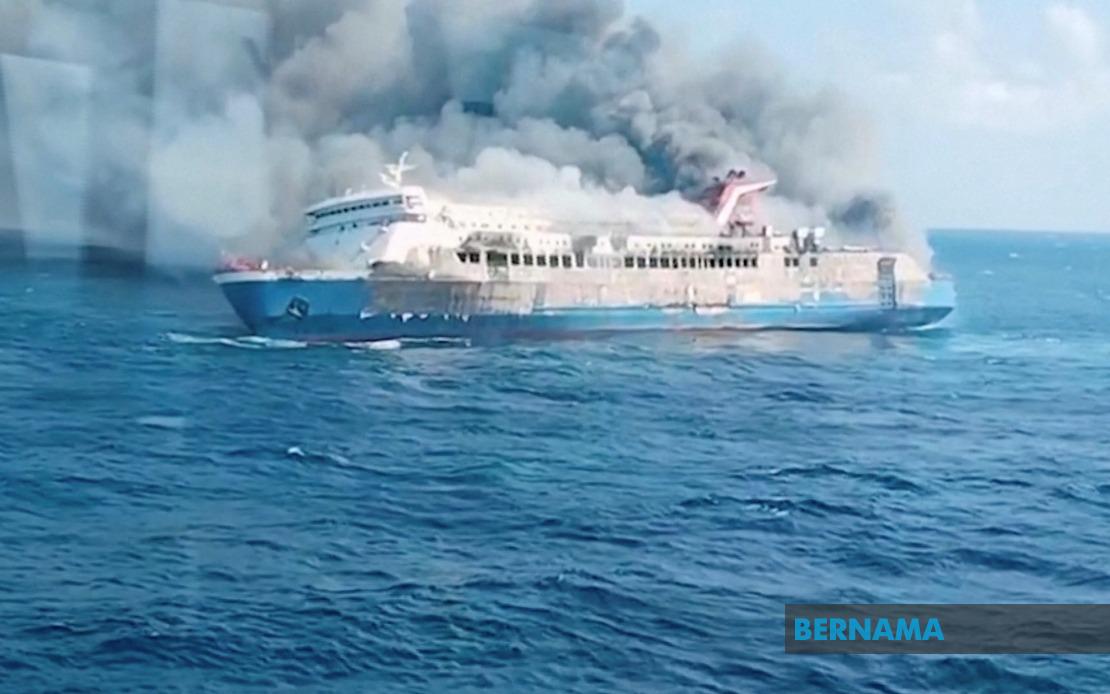
Indonesia's search and rescue operation intensified on Monday as authorities deployed additional military assets to locate the missing from the KMP Mutiara Sentosa II ferry, which erupted in flames in the waters north of Sumenep, Madura. The incident occurred at approximately 8.24 am local time on Sunday, destroying much of the vessel as it sailed through one of the region's crucial maritime corridors. The deployment of the TNI warship KRI Bung Hatta-370 marks an escalation of efforts to account for those unaccounted for following the disaster.
The Surabaya Search and Rescue Office, headed by Nanang Sigit, confirmed that the second day of operations would continue with expanded resources to recover missing persons. Beyond the military vessel, authorities have positioned the State Ship Grantin P.211, patrol boat Manyar 5003, and a helicopter from the East Java Police to systematically search the northern Madura waters. This multi-agency approach reflects the scale of the emergency, with maritime authorities treating the operation as a priority given the substantial number of people aboard the vessel at the time of the incident.
The KMP Mutiara Sentosa II had been transporting 232 passengers alongside 39 crew members when the fire broke out. This passenger manifest indicates the ferry was operating at near-capacity during what would typically be a routine service on this established maritime route. The rapid spread of flames throughout the vessel created immediate dangers for those aboard, necessitating swift evacuation procedures despite the vessel's location at sea, several kilometres from shore in the Madura Strait.
To date, rescue teams have successfully evacuated 229 survivors to Tanjung Perak Port in Surabaya, where they have undergone medical examinations to assess the extent of any injuries sustained. The port facility has served as the primary receiving point for evacuees, allowing medical personnel to triage and treat those affected by smoke inhalation, burns, and other trauma associated with the maritime emergency. The evacuation process occurred in stages, suggesting that not all survivors were rescued simultaneously and that rescue operations required coordination across multiple vessels and time periods.
Five bodies have been recovered and transported to Bhayangkara H.S. Samsoeri Mertojoso Hospital in Surabaya for identification and post-mortem examination. The presence of confirmed fatalities underscores the severity of the incident, though the relatively contained death toll thus far may suggest that many passengers managed to escape the burning vessel or were rescued promptly. However, the mathematics are sobering: with 271 people aboard and 229 confirmed evacuated, approximately 37 individuals remain unaccounted for, constituting the focus of the continuing search effort.
The incident has prompted questions about maritime safety protocols in Indonesian waters, where ferries remain a critical mode of transportation connecting distant islands and communities. The northern Madura route handles substantial passenger traffic, making vessel safety and emergency response capabilities central concerns for regulators and operators. Fires at sea present uniquely challenging rescue scenarios, as the maritime environment limits escape routes and complicates evacuation procedures compared to incidents on land.
The deployment of such significant naval and civilian resources demonstrates Indonesia's commitment to accounting for all missing persons and conducting thorough investigative and recovery operations. The inclusion of military assets alongside civilian rescue vessels indicates coordination between multiple government agencies, a necessity given the complexity of maritime search operations conducted across open water. The continued focus on locating survivors, rather than exclusively recovering remains, suggests that rescuers maintain hope of finding additional survivors.
For Malaysia and other Southeast Asian nations, the incident underscores the importance of robust maritime safety standards across the region. Ferry operations represent a vital transport link for millions of people across the archipelago, and disasters such as this highlight the need for stringent vessel inspections, crew training, and emergency equipment maintenance. The Madura fire will likely prompt regional discussions about safety protocols and best practices for passenger vessel operations.
The search operation's second day would prove crucial in determining the final outcome of the rescue effort. As recovery operations extend beyond the initial emergency phase, authorities must balance the hope of locating additional survivors with the practical realities of searching open water. The deployment of air assets provides crucial advantages, allowing visual scanning of wider areas and faster response times compared to vessels alone. The coming hours and days would determine whether the missing 37 individuals could be located and rescued, or whether the death toll would unfortunately rise.

