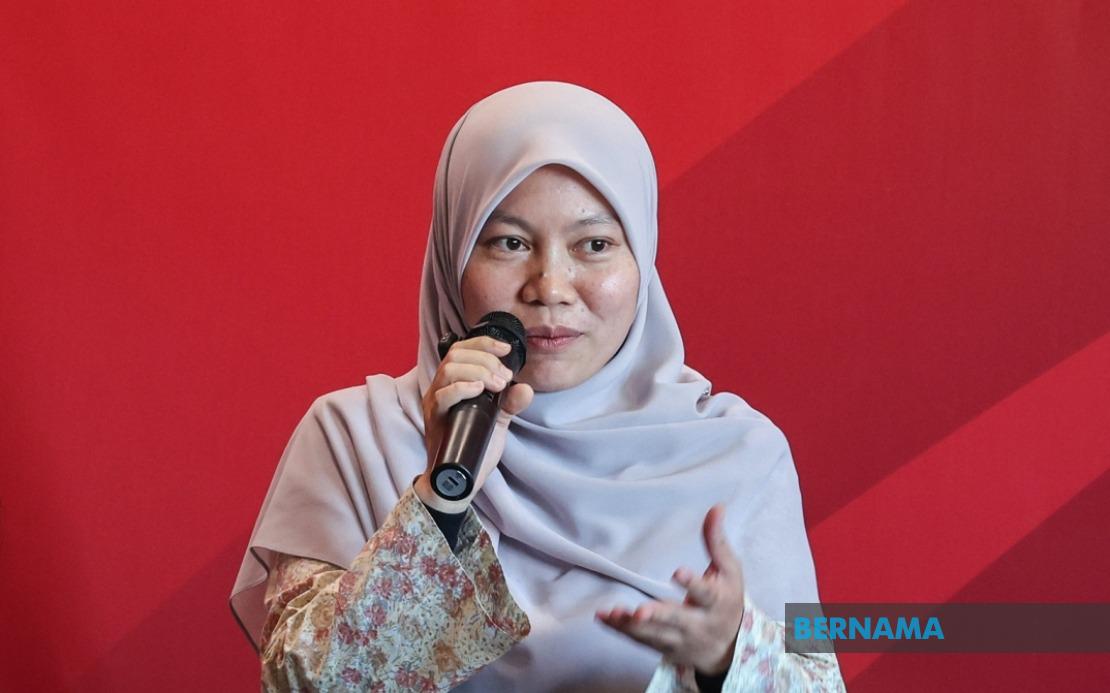
The Tiram state seat has become an unexpectedly volatile political battleground ahead of Johor's 16th state election, with Pakatan Harapan mounting an unconventional challenge to Barisan Nasional's decades-long dominance by fielding DAP candidate Nor Zulaila Abd Ghani. At 38, Nor Zulaila represents a calculated but risky repositioning by PH, as she will be the first DAP politician to contest in this Malay-majority constituency where nearly 60 per cent of the 117,000 registered voters identify as Malay. Political observers have characterised the selection as bold and potentially self-defeating, particularly given that BN has held the seat almost continuously since 1959, though PH through PKR did secure victory in 2018 before losing it again in 2022.
Nor Zulaila, who serves as private secretary to Deputy Finance Minister Liew Chin Tong, acknowledges the magnitude of her undertaking but reframes it as an imperative civic responsibility. She rejects the notion that contesting difficult seats represents political folly, instead viewing it as essential democratic participation. Her approach suggests PH is attempting to signal organisational renewal and a willingness to compete where parties have traditionally conceded territory. The challenge for her campaign extends beyond countering negative stereotypes about DAP's appeal to Malay voters; it requires demonstrating that PH has substantive solutions to the practical grievances that dominate local discourse.
Resident concerns in Tiram centre on infrastructure deficiencies and traffic management rather than partisan ideology. Peak-hour congestion along major thoroughfares has become symptomatic of planning failures that have not kept pace with the constituency's growing population. Village roads require upgrading, street lighting remains inadequate in many areas, and economic opportunities for locals appear limited relative to the population size. These are not ideologically charged issues but rather fundamental service delivery matters that any governing coalition should address. Nor Zulaila has positioned her campaign around a phased approach, committing to address immediate concerns including hawker permits during an initial hundred-day period before tackling larger infrastructure problems that demand multi-agency coordination.
Barisan Nasional has fielded Datuk Abdul Halim Suleiman, a Dewan Negara senator and former two-term Puteri Wangsa assemblyman now serving as Tebrau UMNO division chief. His selection represents the coalition's conventional strategy of deploying an experienced political operative with established local networks rather than attempting innovation. Abdul Halim acknowledges Tiram's heterogeneous composition, encompassing urban neighbourhoods, semi-rural villages, fishing communities, FELDA settlements and Orang Asli areas. His governance philosophy emphasises collaborative planning involving local authorities, government agencies, developers and community stakeholders before project implementation, suggesting an inclination toward consensus-building rather than unilateral action.
Abdul Halim's position on traffic congestion reflects the structural limitations facing state-level representatives when infrastructure challenges involve federal roads and nationally-significant projects. His argument that resolving congestion demands cooperation between state and federal governments is technically accurate but potentially unsatisfying to voters who experience daily gridlock. The observation underscores how certain key issues transcend electoral divisions and require whole-of-government approaches that state elections cannot fully address. This structural constraint may limit the effectiveness of campaign promises regarding infrastructure improvement.
Third-party candidate Dr Harith Fakhrudin Abdul Malek from Parti Bersama Malaysia has identified traffic congestion and road safety as primary resident concerns, echoing the dominant local discourse. Significantly, he characterises these as chronic rather than novel problems, having festered for over a decade while vehicle numbers and usage intensity have accelerated. Heavy vehicles increasingly utilise village roads and residential streets as alternative routes, creating hazards through their size, poor maintenance and occasional overloading. This diversion reflects broader regional congestion patterns extending into neighbouring Puteri Wangsa, suggesting that Tiram's traffic problems possess spillover effects that complicate resolution.
Community perspectives reveal sophisticated analysis of local development patterns. Farah, a 34-year-old Kampung Sungai Tiram resident, characterises Tiram not as underdeveloped but rather as incompletely and inadequately developed. Development proceeds but slowly and without strategic coherence relative to demographic change. Infrastructure planning appears outdated, unable to accommodate current population densities and vehicle usage patterns. This distinction between underdevelopment and uncoordinated development suggests voter frustration centres on apparent administrative incompetence rather than resource scarcity. The spillover of traffic into adjacent areas indicates that even localised solutions require broader coordination.
Political analyst Dr Mazlan Ali designates Tiram as a genuine swing seat where contest outcomes remain genuinely uncertain despite BN's 2022 victory. His analysis introduces a crucial analytical framework: BN's previous success occurred amid voter participation around 50 per cent or below 60 per cent, meaning the result cannot be interpreted as reflecting absolute voter preference. This low-turnout interpretation substantially alters the seat's political meaning. If participation rates rise significantly, electoral dynamics shift in PH's favour, suggesting that depressed turnout in previous cycles may have systematically advantaged BN through base mobilisation while demobilising potential opposition voters.
Electoral history substantiates the seat's volatility. BN dominated decisively during stable periods, recording majority margins of 74.6 per cent in 1995, 73.0 per cent in 2004 and 31.7 per cent in 2008. However, PH's 2018 victory with 16.1 per cent majority demonstrated that even traditionally secure BN territory could flip with sufficient mobilisation. BN's 2022 comeback with 9.4 per cent majority occurred at depressed turnout, suggesting the coalition's recent advantage reflects participation patterns rather than deepening support. Dr Mazlan's observation that turnout exceeding 75 per cent would likely favour PH reflects broader Malaysian electoral dynamics where non-Malay voter mobilisation and middle-class participation patterns typically benefit opposition coalitions.
Current political circumstances appear likely to influence participation rates beyond conventional patterns. Recent developments including PAS-BN cooperation arrangements in selected constituencies and ongoing legal issues involving former Prime Minister Datuk Seri Najib Tun Razak have reportedly alienated segments of non-Malay and middle-class voters. These grievances extend beyond Tiram-specific issues and reflect broader national political tensions. If such alienation translates into elevated turnout among constituencies that have previously demonstrated lower engagement, the electoral calculus shifts materially. Mazlan's analysis suggests that turnout dynamics will prove decisive in determining whether Tiram returns to PH or remains with BN, effectively making this seat a referendum on participation rates rather than conventional partisan support.
The Tiram seat encapsulates ongoing Malaysian electoral realignment dynamics where traditional geographic strongholds have become competitive through changed participation patterns and evolving voter coalitions. Neither BN's historical dominance nor PH's 2018 breakthrough provides reliable predictive value under current political conditions. Nor Zulaila's campaign represents PH's willingness to contest traditionally difficult terrain while simultaneously testing whether DAP can expand beyond its conventional electoral base in Malay-majority areas. The constituency's practical development challenges—traffic management, infrastructure coordination, economic opportunity creation—transcend partisan competition and reflect genuine governance failures that whichever coalition governs must address. The Saturday election will reveal not merely local voter preferences but also whether changed national political circumstances have translated into modified voter mobilisation and participation patterns.

