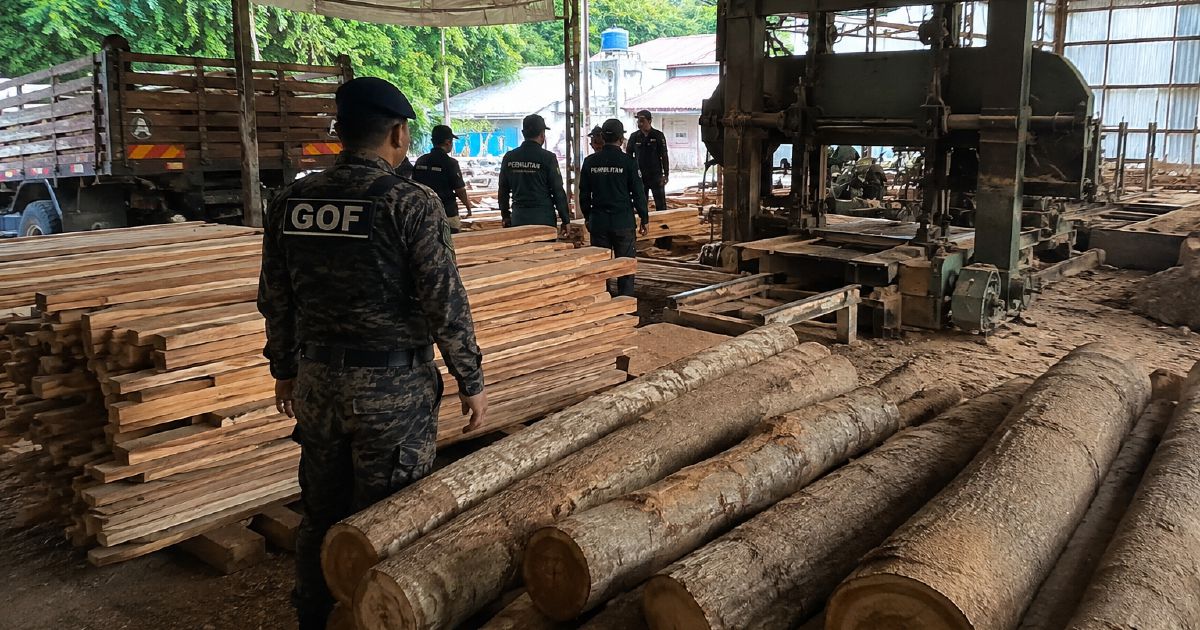
Enforcement authorities have struck another significant blow against illegal timber operations in peninsular Malaysia, with the General Operations Force conducting a high-impact raid on a sawmill facility in the Kuala Berang area of Terengganu. The operation resulted in the confiscation of timber stocks and industrial processing equipment collectively valued at RM640,510, alongside the detention of a 20-year-old individual suspected of involvement in the unlicensed operation. The seizure underscores escalating efforts by government agencies to curb unauthorised timber extraction and milling activities that have long plagued Malaysia's forest regions.
The GOF's intervention at the sawmill represents part of a broader enforcement strategy aimed at dismantling networks engaged in unregulated timber processing. Such operations are typically monitored closely by both federal and state authorities because illegal sawmilling often serves as a front for harvesting timber from protected areas or from sources lacking proper forestry permits. The confiscation of substantial equipment inventories sends a clear message that authorities are willing to target the infrastructure supporting these enterprises, not merely the raw materials themselves.
Terengganu has emerged as a persistent focus area for forest enforcement initiatives, given the state's significant timber resources and the persistent challenges posed by clandestine milling activities. The state's geographic position, with access to both coastal and inland forested regions, has historically created vulnerabilities in timber tracking and verification. By intercepting operations at the processing stage rather than solely at harvest, enforcement teams can disrupt supply chains more comprehensively and prevent illegally sourced wood from reaching downstream markets.
The arrest of the 20-year-old suspect provides investigators with an opportunity to trace operational networks and identify suppliers and customers connected to the sawmill. Such individuals often maintain detailed records or communications that can expose broader patterns of illegal activity across multiple locations. Interrogation and evidence gathered at the scene may reveal whether this represents an isolated operation or part of a more coordinated network involved in systematic forest resource theft.
The combined value of the seizure—RM640,510—reflects the economic significance of timber processing operations, even at relatively modest scales. Industrial-grade sawing equipment, lumber stocks, and ancillary machinery represent substantial capital investment, which explains why operators are willing to undertake the risks associated with unlicensed activity. The confiscation effectively dismantles this particular operation's capacity to function, at least temporarily, and represents a genuine financial loss to those involved.
For the broader Southeast Asian timber sector, enforcement actions such as this carry regional implications. Malaysia's commitment to combating illegal logging and unlicensed processing is closely monitored by trading partners, conservation organisations, and international certification bodies that assess timber supply chain integrity. Demonstrable action against processors helps maintain Malaysia's standing in global markets where legitimacy of timber sources increasingly matters to importers and end-users seeking certified, sustainable products.
The GOF's role in this operation highlights the importance of paramilitary enforcement units in tackling resource crimes. These forces bring specialist training, coordinated deployment capabilities, and investigative resources that can be more effective than conventional police approaches, particularly when targeting organised or entrenched operations. The timing and scale of raids often depend on intelligence gathering and surveillance, indicating that this facility may have been under monitoring for some period before action was taken.
Local impacts in Kuala Berang and surrounding communities warrant consideration. While illegal sawmills may provide informal employment and income streams, they typically generate negative externalities including environmental degradation, water pollution, and unregulated competition against legitimate timber businesses. Suppression of these operations theoretically benefits compliant operators who bear the cost of proper licensing, environmental compliance, and labour standards. However, the economic displacement of those employed in informal operations presents a policy challenge that authorities must address through alternative livelihood programmes or formal sector integration.
Government enforcement effectiveness depends on sustained pressure rather than isolated actions. A single major seizure, while significant, must be followed by consistent follow-up operations and penalties sufficiently severe to deter recurrence. The criminal justice phase—which will involve charges, prosecution, and sentencing of the arrested individual—sends crucial signals about the seriousness with which authorities treat these violations. Courts' sentencing decisions directly influence deterrent value, particularly among actors evaluating whether operating illegally justifies the legal and financial risks involved.
Looking forward, this seizure exemplifies an ongoing resource management challenge that Malaysia shares with other timber-rich nations throughout the region. Addressing illegal timber processing requires simultaneous attention to supply-side enforcement, demand reduction through market mechanism improvements, legitimisation of informal operators where feasible, and investment in forest monitoring technology that improves detection capabilities. The GOF's continued operational success indicates that enforcement capacity exists, but scaling such efforts to match the full scope of suspected illegal activity remains an ongoing challenge within Malaysia's enforcement infrastructure and budget allocations.

