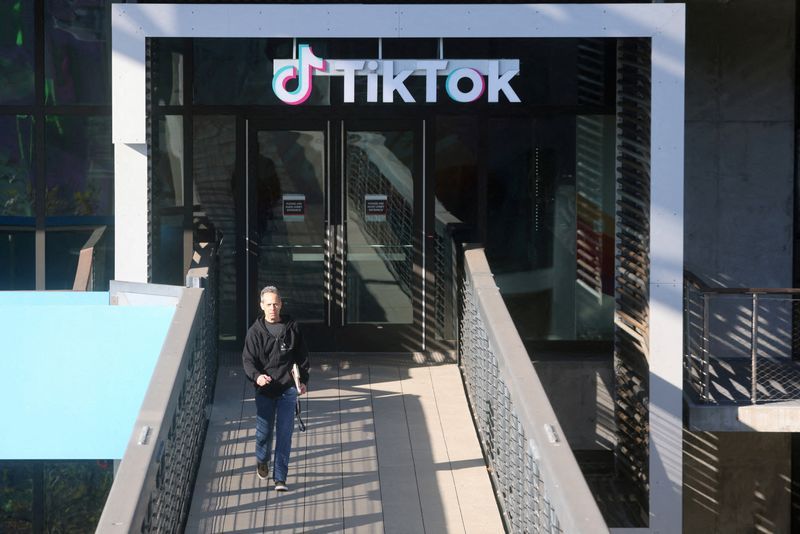
ByteDance's TikTok has agreed to settle a legal action brought by a Florida teenager who contended that the platform's design deliberately fostered addictive behaviour and undermined his psychological wellbeing. According to representatives of Morgan & Morgan, the law firm representing the plaintiff, a settlement in principle has been reached, though specific terms remain subject to finalisation. The development marks another significant retreat by a major social media operator facing mounting litigation over the mental health impacts of their services on young users.
The plaintiff, identified only by his initials R.K.C., was 15 years old when the lawsuit proceeded. Court documents reveal that the teenager began engaging with social media platforms around age eight and subsequently became deeply dependent on them, experiencing sleep deprivation alongside documented symptoms of depression and anxiety. His experience exemplifies a broader pattern of youth vulnerability that now underpins hundreds of legal challenges across the United States. When R.K.C. initially filed his claim, he named four defendants: Google's YouTube, Meta's Instagram, Snapchat owned by Snap Inc., and ByteDance's TikTok, establishing a legal strategy that aimed to hold multiple platforms accountable for their combined influence on his wellbeing.
The sequence of settlements reveals a shifting landscape in which tech companies are increasingly willing to negotiate rather than defend their business practices in court. YouTube, operated by Google, was the first to capitulate in June of this year. Meta Platforms and Snap Inc. elected to proceed toward trial, with proceedings scheduled to commence on July 27. TikTok's decision to settle before that date underscores the considerable legal and reputational risks these companies now perceive in defending their algorithmic design choices before juries.
This case represents the second significant trial in California state court addressing allegations that social media platforms have been deliberately engineered to be compulsively engaging for children, thereby catalysing what public health advocates describe as a youth mental health emergency. The first such trial, which concluded in March, involved a woman who had alleged that exposure to addictive platform design during her formative years caused lasting psychological harm. In that proceeding, TikTok and Snap chose settlement over litigation, but Meta and Google proceeded to trial. A jury found both companies liable for negligence, awarding USD 4.2 million in damages against Meta and USD 1.8 million against Google. When the presiding judge declined to overturn the verdict in June, the legal precedent became more difficult for defendants to ignore.
The scale of pending litigation against these companies is staggering. California state courts are currently processing more than 3,300 lawsuits alleging addiction-related harms, while an additional 2,600 cases filed by municipalities, school districts, individual plaintiffs, and state governments remain pending within the federal court system in California alone. This accumulating caseload suggests that TikTok's settlement decision reflects broader industry recognition that wholesale legal victory is unlikely and that negotiated resolutions may prove more economically prudent than extended litigation.
Beyond California, the enforcement landscape has expanded dramatically. A federal court case initiated by a Kentucky school district against Meta, Snap, TikTok, and YouTube was scheduled to commence in June but never reached trial, as all four defendants agreed to settle collectively for USD 27 million. The case underscores how institutional plaintiffs, representing communities and students rather than individuals, have proven effective in compelling settlement negotiations. This dynamic carries particular significance for Malaysia and Southeast Asia, where similar concerns about young people's digital wellbeing are rising despite weaker regulatory frameworks and lower litigation capacity.
Nearly every state in the United States has launched its own legal action against these companies, alleging that they have misrepresented the safety profiles of their platforms to young users and intentionally constructed their services to promote compulsive engagement among children. These coordinated efforts have created compounding legal exposure that makes defending each jurisdiction's claims simultaneously impractical. The consistency of allegations across diverse state systems strengthens the narrative that platform design choices represent deliberate business decisions rather than inadvertent technical outcomes.
All of the social media companies under legal siege have maintained that they do not design platforms to be addictive and that they have implemented substantial safeguarding mechanisms to protect younger users. However, the succession of trial losses, settlements, and accumulated litigation appears to have exhausted their appetite for this defence strategy. TikTok's settlement aligns with broader industry capitulation, suggesting that the cost of defending algorithmic practices in court now exceeds the financial and reputational cost of negotiated payouts.
For Malaysian policymakers and digital regulators, these American legal developments offer both cautionary lessons and regulatory templates. Southeast Asia's younger demographic and rapidly expanding digital adoption mean that concerns about platform-driven addiction and mental health impacts are urgent regional issues. Malaysia's Communications and Multimedia Act and other regulatory instruments have not yet crystallised the kind of systematic litigation that characterises the American response, but the precedent is being set. The success of American plaintiffs in establishing that major social media companies are negligent in their duty of care toward young users may encourage similar legal claims in other jurisdictions and could inform how regional regulators calibrate their approach to platform accountability.

