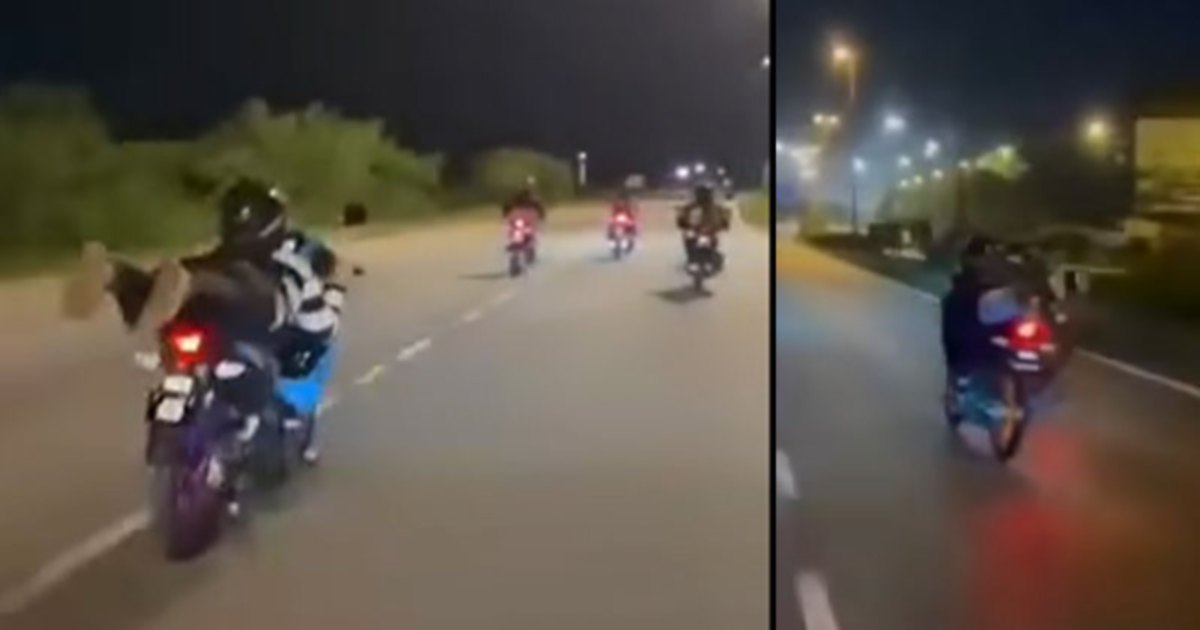
Authorities in Kuantan have apprehended three teenage girls following their involvement in a high-risk motorcycle stunt that captured viral attention on social media platforms. The incident occurred along the Jalan Kuantan Bypass-Gebeng road in the preceding week, where the teenagers performed the hazardous 'Superman' manoeuvre that subsequently circulated widely across online networks.
The 'Superman' stunt, a reckless driving technique where riders stand upright on their motorcycles with arms outstretched in a manner resembling the fictional superhero, represents a particularly dangerous form of vehicular behaviour. Such stunts demand minimal control over the machine while prioritising theatrical display over road safety, making them inherently unpredictable and liable to result in severe accidents or fatalities for the perpetrators and innocent bystanders alike.
The decision to perform such acts on a major thoroughfare like the Jalan Kuantan Bypass-Gebeng adds another layer of concern to the incident. This route serves as a critical transport corridor in the region, accommodating substantial traffic volumes daily and hosting numerous commercial vehicles. Introducing uncontrolled motorcycles executing elaborate stunts into this environment exponentially elevates the possibility of collisions with other vehicles and catastrophic outcomes for road users.
The viral nature of the video demonstrates how social media platforms have become enablers of dangerous behaviour among young people. The circulation of such content creates a ripple effect, inspiring imitation attempts by others seeking online recognition and peer validation. This phenomenon has emerged as a persistent challenge for road safety authorities across Southeast Asia, where adolescents frequently attempt to replicate or escalate dangerous stunts after witnessing them digitally, leading to mounting injury and mortality statistics among youth demographics.
For Malaysian authorities, this incident underscores the ongoing battle against reckless riding behaviours that continue to plague public thoroughfares despite sustained awareness campaigns and enforcement efforts. Traffic police have consistently highlighted motorcycle accidents and dangerous stunting as contributing factors to Malaysia's relatively high rate of road fatalities, with young riders disproportionately represented in casualty statistics. Each viral incident compounds existing challenges by normalising such conduct within peer networks and reinforcing the perception that dangerous behaviour attracts social currency.
The apprehension of these teenagers serves as a crucial intervention point for addressing both immediate legal accountability and the broader cultural attitudes surrounding motorcycle culture in Malaysia. Young riders, influenced by social media trends and the desire for online notoriety, frequently underestimate the consequences of dangerous riding. This case provides an opportunity for authorities to deliver clear messaging about liability, legal penalties, and the genuine physical dangers involved, potentially deterring similar attempts by peers aware of the consequences.
Parental responsibility and digital literacy emerge as critical complementary factors to formal enforcement actions. Guardians must actively monitor their children's online activities and discuss the distinction between entertainment and reality, emphasising that viral video success does not justify endangering lives. Educational institutions, meanwhile, could integrate road safety awareness programs specifically addressing the allure of social media validation and risky behaviour patterns commonly targeted at adolescents and young adults.
The incident also reflects the broader challenge facing authorities in balancing freedom of expression and the prevention of harmful conduct. While police enforcement remains necessary, sustainable solutions require cultivating a cultural shift where dangerous stunting becomes socially stigmatised rather than celebrated. Road safety organisations, influencers, and community leaders possess significant capacity to reshape narratives around motorcycle culture, promoting responsible riding as aspirational rather than pedestrian.
Future prevention strategies should incorporate cooperation between traffic enforcement agencies, social media platforms, educational bodies, and civil society organisations. Platforms hosting such content could implement age-appropriate warnings, reduce algorithmic promotion of dangerous content, and facilitate reporting mechanisms. Simultaneously, authorities might consider community engagement programs offering alternative outlets for youthful expression and identity exploration that do not compromise public safety.
The arrest of these teenagers, while necessary for enforcing existing traffic laws, represents merely one component of addressing this systemic issue. Without comprehensive efforts addressing the underlying appeal of such stunts and the social media ecosystem that amplifies them, similar incidents will inevitably recur. Malaysia's road safety outcomes depend fundamentally on evolving enforcement approaches alongside cultural transformation that values responsibility over momentary viral fame among younger generations navigating an increasingly digital social landscape.

