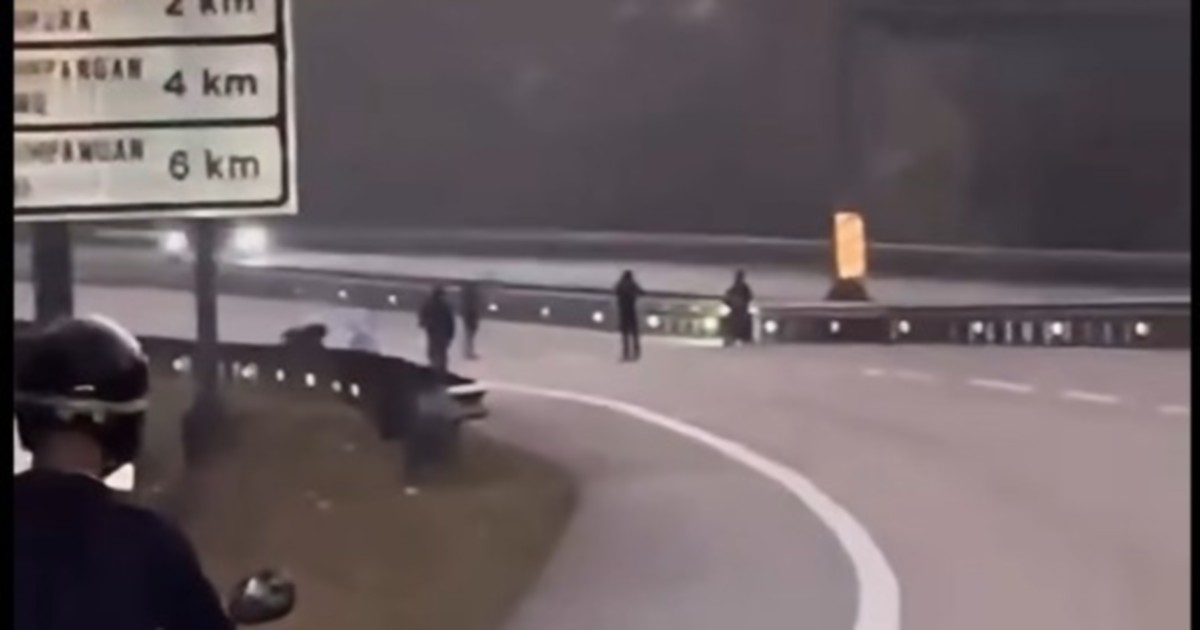
Police have remanded three additional men in connection with an illegal motorcycle racing operation that took place on the Second Link highway in Johor, significantly expanding what has become a substantial criminal investigation. The three fresh arrests raise the total number of individuals detained in relation to the incident to eleven, signalling an intensified enforcement response against organised street racing activities in one of the region's busiest transport corridors.
The Second Link, which serves as a vital artery connecting Johor Bahru to Singapore, has emerged as a flashpoint for illegal racing activities despite the highway's critical importance to regional commerce and travel. The concentration of arrests in this particular location reflects growing police concerns about the risks posed to public safety on a route that carries significant volumes of commercial and passenger traffic daily. The expansion of the investigation from its initial phase suggests authorities are uncovering a more complex network of organisers, participants, and support personnel than initially apparent.
Illegal street racing remains a persistent challenge across Malaysia, combining multiple criminal elements including reckless driving, endangerment of lives, noise pollution, and organising unlawful public assemblies. The Second Link incidents underscore how such activities are not spontaneous occurrences but often involve coordination among participants who deliberately select highways as venues. The involvement of eleven individuals indicates this was not a simple case of two riders engaging in impromptu racing, but rather a more structured activity with multiple stakeholders playing different roles.
The investigation's expansion through successive waves of arrests suggests police are methodically mapping the hierarchy and roles within the racing network. Early detainees may have identified other participants or organisers, leading officers to specific individuals and potentially triggering further lines of inquiry. This investigative approach helps authorities understand not just who participated, but who initiated the event, who promoted it, and who provided logistical support or lookout services.
Public safety concerns on highways like the Second Link are particularly acute because of the speeds involved and the presence of unsuspecting civilian traffic. Illegal racers using such routes create unpredictable hazards for ordinary drivers unaware that they are sharing the road with deliberate speed competitions. The consequences can be catastrophic, involving innocent parties in collisions or pile-ups triggered by reckless participants. This reality has prompted law enforcement agencies across Southeast Asia to treat highway racing cases with heightened seriousness.
The jurisdiction of Kulai, where the detainees are being processed, covers a portion of the Second Link approach and surrounding areas. Local police have intensified their focus on this corridor following public complaints and documented incidents. The multi-phase arrest operation demonstrates resource commitment to addressing what authorities view as an escalating problem requiring sustained intervention rather than one-off enforcement actions.
Motorcycle racing specifically presents additional regulatory challenges compared to other forms of street racing. Motorcycles' manoeuvrability and acceleration capability, combined with their vulnerability in collisions, create a hazardous combination. The lower cost of entry into motorcycle ownership compared to cars means such racing may attract participants from diverse socioeconomic backgrounds, complicating prevention and enforcement strategies.
The legal framework governing such conduct in Malaysia encompasses traffic violations, dangerous driving charges, and potentially organised crime considerations depending on the scale and sophistication of the operation. Charges against the eleven arrested individuals will likely reflect their specific roles—organisers may face more serious charges than casual participants. Sentencing precedents in similar cases typically involve fines, licence suspension periods, and occasionally custodial sentences, particularly where the driving was demonstrably dangerous.
Beyond enforcement, the persistence of illegal racing highlights the appeal such activities hold for certain demographics, particularly younger riders seeking adrenaline and community. Addressing this phenomenon comprehensively requires not only police action but also public education campaigns, community engagement, and alternative recreational opportunities that provide similar excitement through legal channels. Some jurisdictions have experimented with sanctioned racing events and motorcycle clubs as pressure valves for this energy.
For businesses and commuters depending on the Second Link, the police action provides assurance that authorities are actively tackling threats to highway safety and disruption. The thoroughness of the investigation, evidenced by the escalating arrest toll, sends a deterrent message to would-be organisers and participants contemplating similar activities. However, sustained prevention will require continued vigilance and community reporting of suspicious activity on the highway.
The investigation remains ongoing, and police statements typically indicate that additional charges or arrests may follow as inquiries progress. The coordination required to conduct such a racing event across a major highway suggests forensic examination of communications, vehicle records, and witness statements could yield additional evidence and identifications. Authorities often utilise CCTV footage from highways and toll plaza systems in building comprehensive cases against racing networks.

