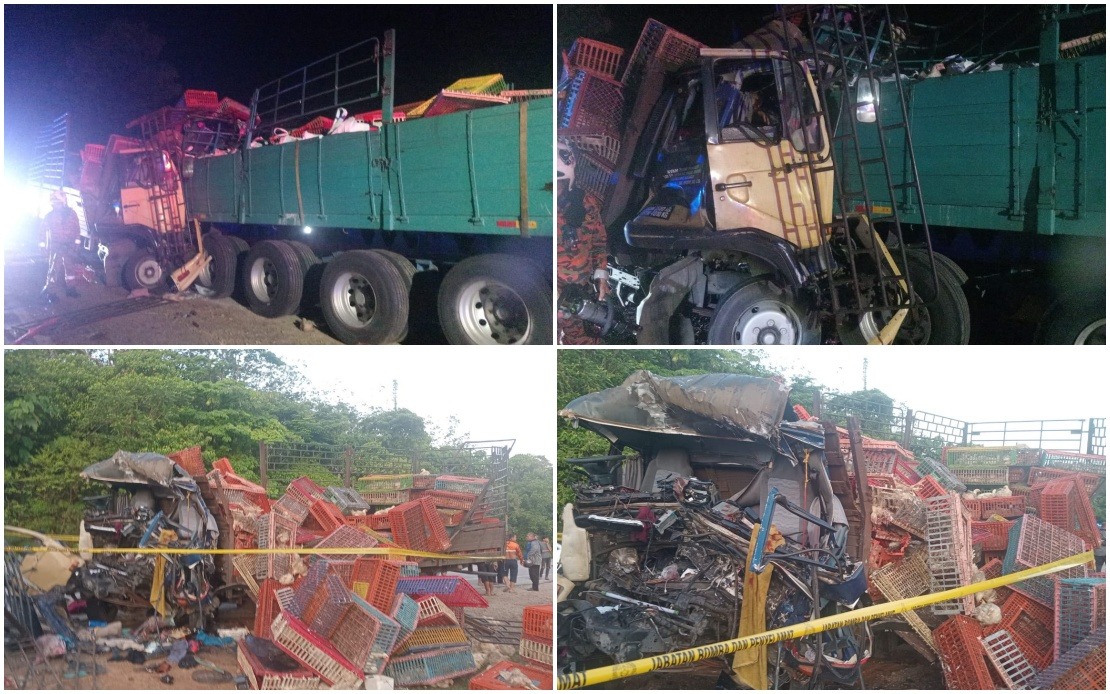
A predawn tragedy unfolded on the East-West Highway near Tanah Merah when a five-tonne chicken lorry veered into a trailer parked along the roadside, claiming three lives in one of Kelantan's recent fatal transport accidents. The collision, which occurred in the early hours of Wednesday, July 21, claimed the lorry driver Norazeman Abdul Aziz, 42, alongside passengers Mohammad Zakwan Mohd Nor, 16, and Mohd Haikal Hanifah, 29, leaving their families devastated and renewing concerns about highway safety in the region.
Emergency responders mobilised swiftly following the incident. The Kelantan Fire and Rescue Department received notification through the NG999 emergency line at 4.26 am, immediately deploying personnel from both the Kemahang and Tanah Merah fire stations to the crash site. When firefighters arrived at the location just 15 minutes later, at 4.41 am, they discovered the full scale of the emergency: a five-tonne lorry transporting chicken cargo lay crumpled against the trailer, with all three occupants trapped inside the twisted wreckage.
The rescue operation demanded considerable effort and expertise from the emergency services. Twelve firefighters from the two stations worked methodically to extricate the victims from the severely damaged vehicle, a process requiring specialised cutting equipment and careful coordination to safely remove each person from the confined space. However, despite the rapid response and professional rescue efforts, all three occupants were pronounced dead at the scene by Health Ministry personnel who attended to assess the casualties.
The incident underscores persistent challenges facing Malaysia's highway transportation sector, particularly regarding accidents involving commercial vehicles on major routes like the East-West Highway. This corridor connects key towns across Peninsular Malaysia and experiences substantial traffic volume, including numerous lorries transporting agricultural goods such as poultry. The presence of parked trailers alongside active highway lanes, while sometimes unavoidable, creates hazardous conditions that amplify risks during low-visibility periods like early morning hours.
The young age of one victim—Mohammad Zakwan at just 16 years old—adds a tragic dimension to the incident, raising questions about passenger safety practices and the circumstances under which adolescents are positioned as passengers in commercial transport situations. Such details often prompt broader discussions about workplace safety standards and passenger protection measures across Malaysia's logistics and transport industries.
Kelantan authorities have initiated standard procedures following the fatalities. Police have taken custody of the three bodies for continued investigation, which will seek to determine the precise sequence of events leading to the collision. Factors under examination likely include vehicle speed, driver fatigue or visibility conditions, potential mechanical failures, and whether the trailer's roadside positioning complied with safety regulations.
The operational response mobilised considerable resources to manage the incident. The dual deployment from Kemahang and Tanah Merah fire stations, involving two engines and a dozen personnel, reflects the emergency services' commitment to extracting victims as quickly as possible despite the technical challenges posed by the specific nature of the entrapment. Such responses, though ultimately unable to prevent the deaths, demonstrate the professionalism of Malaysia's firefighting and rescue personnel.
This collision joins a troubling pattern of fatal accidents on Malaysia's major highways, where the combination of heavy vehicles, variable traffic conditions, and roadside hazards creates an inherently risky environment. The East-West Highway particularly experiences regular traffic incidents, some attributable to driver fatigue during extended shifts, mechanical failures in ageing commercial vehicles, or environmental factors that reduce visibility and vehicle control.
The incident's implications extend beyond Kelantan's borders, resonating across Southeast Asia's transportation networks where similar configurations of vehicles and hazardous conditions exist. Regional road safety advocates have consistently emphasised the need for enhanced oversight of commercial vehicle maintenance, stricter enforcement of driver hour limitations, and improved roadside safety protocols to prevent parked vehicles from obstructing active traffic lanes.
For families of the deceased, the sudden loss represents both personal tragedy and economic disruption, particularly given that commercial transport roles often represent primary income sources for households across Malaysia's lower income brackets. Community support systems and government assistance programmes become crucial in helping affected families navigate the immediate aftermath.
Moving forward, this incident may prompt renewed discussions among Kelantan's transport authorities, highway management officials, and safety regulators regarding preventive measures. Potential interventions could include enhanced roadside lighting in high-risk collision zones, improved trailer parking protocols that maintain safer distances from active traffic lanes, or intensified fatigue-monitoring programmes for long-distance commercial drivers.
The three fatalities represent lives abruptly terminated and families forever altered by circumstances occurring on an ordinary night on Malaysia's transportation infrastructure. While emergency services performed admirably in their rescue efforts, the incident serves as a sobering reminder that comprehensive systemic approaches to highway safety remain essential if Malaysia is to reduce preventable transport deaths across its extensive road network.

