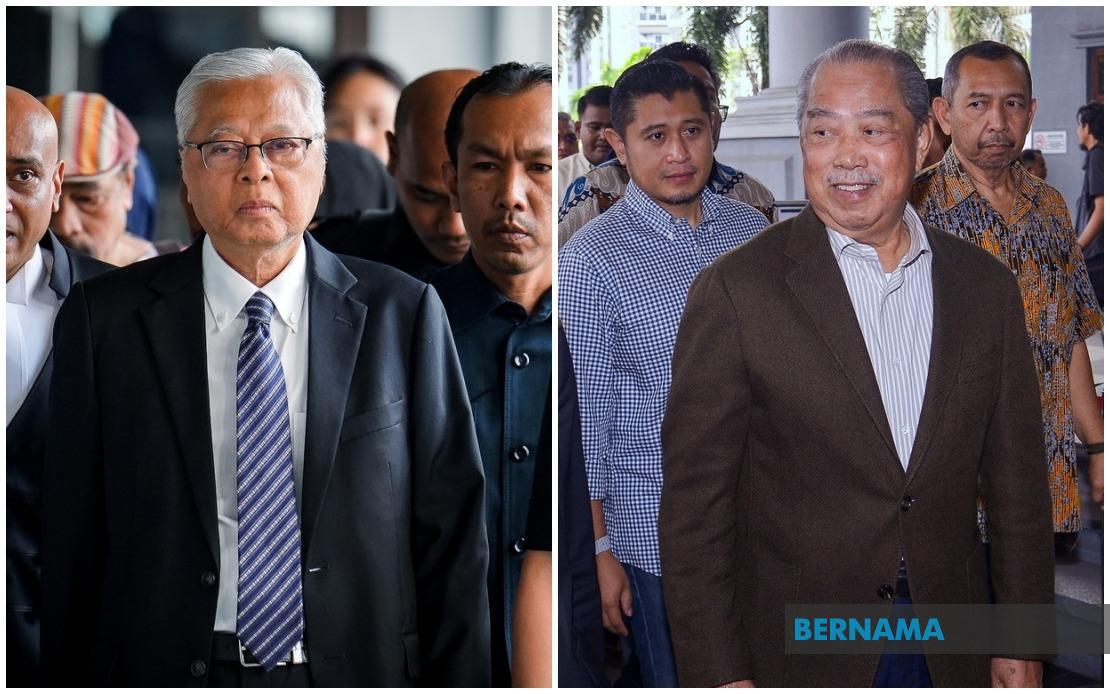
An exceptionally rare convergence unfolded at Malaysia's principal courthouse when three former prime ministers appeared for distinct legal matters on the same day, creating what veteran observers and journalists characterised as a singular moment unlikely to recur in the nation's political landscape. The simultaneous presence of Datuk Seri Najib Tun Razak, Tan Sri Muhyiddin Yassin and Datuk Seri Ismail Sabri Yaakob at the Kuala Lumpur Court Complex on Tuesday underscored the intensity of legal accountability affecting Malaysia's recent political leadership.
The occasion generated widespread interest among Malaysia's press corps, who recognised its historical significance. Seasoned court reporter V. Anbalagan of Free Malaysia Today reflected on decades spent covering judicial proceedings, noting he had never encountered circumstances where three sitting prime ministers faced court appearances simultaneously. His assessment highlighted not merely Malaysia's unique position but also the statistical improbability of such an occurrence manifesting elsewhere globally. The convergence prompted recognition from multiple media professionals that this particular configuration of events might represent a historical marker unlikely to be superseded.
Journalists and camera crews began assembling at the court complex from early morning, with reporters positioned by 7 am to capture developments across the three separate cases. Bernama TV news officer Siti Zanariah Nor Zin described the experience as extraordinary within her 16-year journalism career. She noted that staggered arrival patterns, particularly the coordinated timing of the former premiers and their legal representatives, afforded media organisations sufficient opportunity to transmit updates to their editorial headquarters. The operational logistics of managing multiple simultaneous proceedings required careful coordination, yet controlled access and security arrangements enabled comprehensive coverage of all developments.
The three cases involved distinct legal matters reflecting different aspects of governance and conduct. Najib faced proceedings in a civil suit initiated by 1Malaysia Development Berhad (1MDB) and its subsidiary, with claims totalling USD5.64 billion, heard before Judicial Commissioner Mohamad Redzuan Idrus. Muhyiddin confronted seven charges encompassing alleged abuse of power and money laundering allegations connected to the Jana Wibawa programme, with proceedings overseen by Judge Noor Ruwena Md Nurdin. Separately, Ismail Sabri appeared before Judge Suzana Hussin to address charges concerning failure to declare substantial assets, including RM14.7 million in cash, multiple foreign currency holdings, and precious metal stockpiles.
Security preparations proved comprehensive, reflecting the unprecedented nature of the occasion. Police personnel stationed from Sentul district police headquarters coordinated with court security officers and Palace of Justice police contingents to maintain order and prevent any operational disruption. Security briefings conducted the preceding afternoon ensured all personnel remained vigilant and properly informed of anticipated crowds and access requirements. Officials implemented a tiered security pass system, issuing between three and six categories to accommodate different groups including members of the public, accredited journalists attending open court proceedings, and those accessing video-link facilities.
Amirul Aiman Osman of Utusan Malaysia, having arrived before 7 am to secure optimal coverage positions, acknowledged that while proceedings generated considerable congestion and activity, professional security management prevented any negative incidents from materialising. The carefully orchestrated approach to managing access and movement allowed journalists to monitor the former prime ministers' activities throughout the day without experiencing serious obstacles. The court grounds maintained stability despite the high-profile nature of proceedings and concentrated media attention.
Unnamed court officials emphasised the thoroughness applied to logistical preparation, noting that arrangements initiated the preceding afternoon ensured the movements of former prime ministers and associated security measures proceeded without disruption. Security officer Nik Zainab Jusoh highlighted that the preparatory briefing successfully positioned all personnel for heightened alertness. Monitoring operations concentrated particularly on upper courtroom floors and areas immediately adjacent to hearing chambers, while ground-floor sections remained orderly and calm throughout proceedings.
The convergence carried broader significance for Malaysian political discourse and public comprehension of accountability mechanisms. The visible concentration of three former leaders within a single judicial venue, each confronting distinct legal allegations, illustrated the extent to which recent Malaysian political administrations have intersected with complex legal inquiries. For Southeast Asian observers monitoring governance developments in the region's largest anglophone economy, the occasion demonstrated sustained commitment by Malaysian institutions to adjudicating matters involving the highest-ranking officials, regardless of political sensitivities or operational complexity.
Ismail Sabri departed the court complex at 11.43 am after providing bail of RM300,000 with one surety, while remaining proceedings continued for the other two former premiers. The day's proceedings represented not merely a procedural checkpoint but rather a symbolic illustration of how Malaysian democracy navigates periods when significant portions of political leadership become entangled with legal processes. The institutional capacity demonstrated by security services and judicial personnel to manage such circumstances reflected established operational competencies, yet the improbability of circumstances recurring suggested the era witnessed Tuesday represented a genuinely singular intersection of political and judicial events unlikely to repeat.

