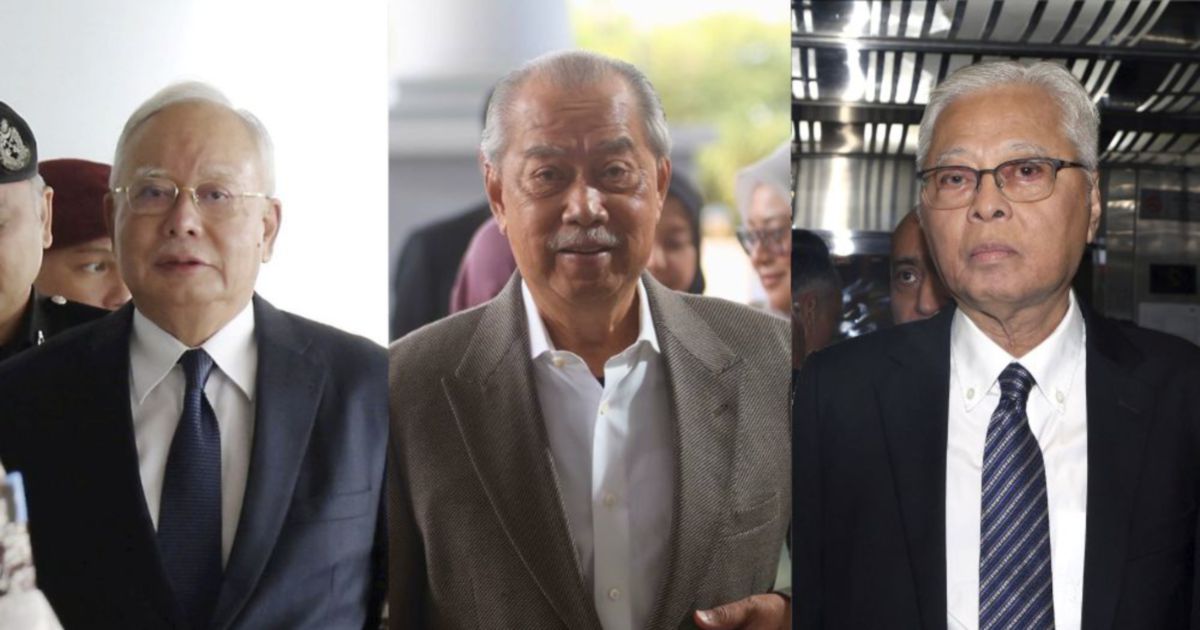
An unprecedented scenario is unfolding at Malaysia's capital courthouse, where three former prime ministers are converging on the same day to address separate corruption-related charges. The simultaneous appearances at the Court Complex in Kuala Lumpur represent a singular moment in the nation's political and judicial history, highlighting the extent to which the country's accountability mechanisms have expanded their reach into the highest echelons of past leadership.
The coinciding court dates underscore a broader pattern that has emerged since Malaysia's 2018 political transition. Following years of largely insulated governance, the courts have become venues where multiple layers of leadership face examination for alleged financial impropriety and abuse of office. Each former premier arrives with a distinct legal dossier, reflecting different periods of governance and separate investigations conducted across various oversight agencies. The circumstances differ markedly, yet the symbolism remains consistent: no office, regardless of how recently or powerfully held, exempts individuals from judicial process.
For Malaysian observers, the spectacle carries substantial weight. Democratic societies often struggle with the question of how to treat former leaders once they lose power. The appearance of multiple ex-prime ministers within the same courtroom hours illustrates Malaysia's current attempt to navigate this challenge through legal channels rather than political accommodation. Whether pursued with consistency and vigour or selectively applied remains a question that shapes public confidence in the judiciary's impartiality.
The broader context matters considerably. Malaysia's courts have encountered increasing pressure to demonstrate independence following decades when high-level political accountability remained comparatively rare. International observers monitoring the country's governance improvements have frequently cited the treatment of former leaders as a key metric for assessing institutional integrity. These proceedings therefore function as both practical legal matters and symbolic tests of whether systemic change has genuinely taken root within judicial institutions.
The convergence also reflects the complexity of Malaysia's administrative state. Allegations spanning different eras of governance, different portfolios of responsibility, and different investigative timelines suggest that numerous inquiries have proceeded through various agencies simultaneously. Some cases may have originated from federal authorities, others from state-level investigations or independent commissions. The coordination required for these cases to reach court dates reflects extensive work by prosecutors, investigators, and judicial administrators operating across bureaucratic divides.
For Southeast Asia more broadly, Malaysia's approach carries instructive dimensions. Across the region, questions about post-tenure accountability for political leaders generate substantial debate. Countries grapple with whether formal legal proceedings against predecessors strengthen democratic institutions or create perceptions of political vendetta. Malaysia's experience—particularly whether courts conduct these cases with procedural rigour and transparent reasoning—will likely influence how other nations in the region evaluate similar questions about accountability and succession.
The implications extend into Malaysia's domestic political sphere. Opposition coalitions and ruling administrations will undoubtedly interpret these proceedings through competing lenses. Some will regard rigorous prosecution of former leaders as evidence that institutional reforms have succeeded. Others may view selective application or inadequate penalties as proof that powerful interests remain protected. The trials' outcomes, the severity of findings, and subsequent sentencing will shape perceptions about whether accountability reaches uniformly across different political factions and eras.
Court procedure itself becomes significant in this environment. The transparency of proceedings, the detailed examination of evidence, and the judges' reasoning in their rulings will be scrutinised by civil society observers, legal professionals, and the broader public. Media coverage will amplify particular aspects while potentially obscuring others. These trials thus occur not merely as legal matters but as public demonstrations of how Malaysia's judicial system addresses the highest-stakes questions about power and accountability.
The resource allocation within the Court Complex for these simultaneous proceedings also warrants consideration. Managing multiple high-profile cases with substantial public and international attention requires judicial infrastructure, personnel, and logistics planning. The concentration of former prime ministerial trials within a single facility on a single day inevitably draws administrative resources and media attention to unprecedented levels. This practical dimension reflects both the demands created by the volume of serious allegations and the institutional capacity Malaysia's courts must demonstrate to handle them.
For ordinary Malaysians following developments, these courtroom appearances offer a tangible point of reference for assessing institutional evolution. Abstract discussions about judicial independence and democratic accountability become concrete when former leaders physically appear before judges. Whether the proceedings unfold with dignity and rigour, whether evidence receives adequate examination, and whether outcomes appear proportionate to established facts will shape public understanding of whether Malaysia has genuinely transformed how it addresses allegations against its highest officeholders.
Looking forward, these trials will likely establish precedent regarding both procedural expectations and substantive standards for judicial treatment of former prime ministers. Appellate courts may need to examine aspects of these cases. Academic legal commentators will analyse the judgments' reasoning and consistency. International legal observers will assess whether Malaysia's courts have maintained standards of due process while addressing serious allegations. The outcomes will reverberate well beyond the individuals directly involved, influencing how future administrations contemplate the possibility of post-tenure legal exposure.

