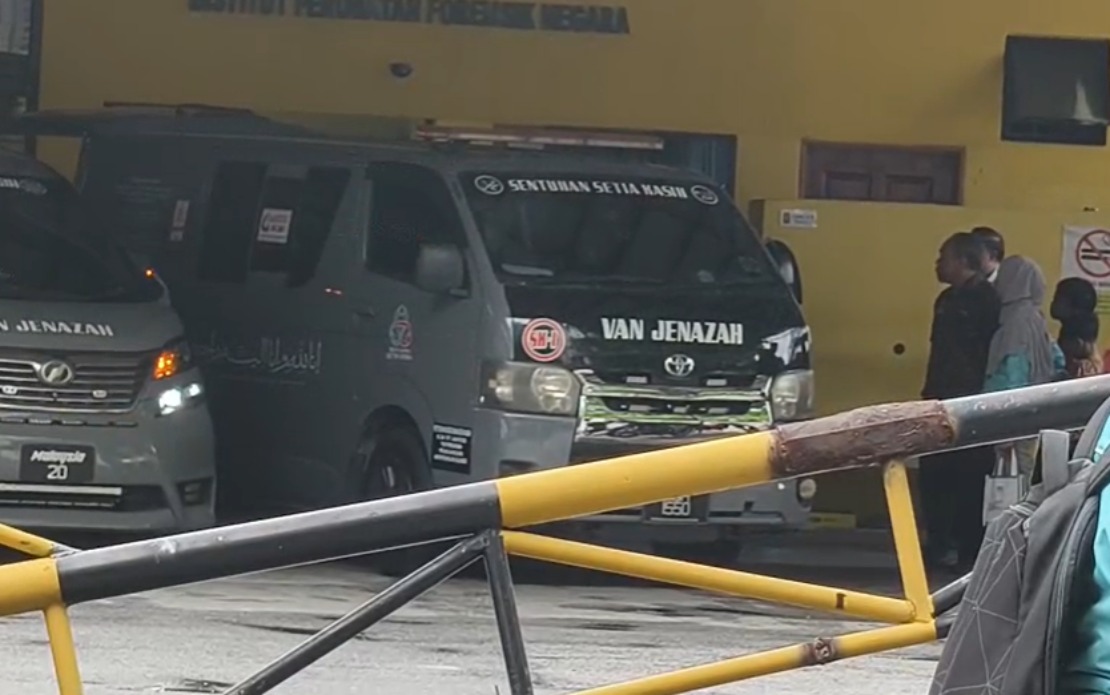
Three members of the same family who died in a collision with a Malaysian Immigration Department lorry in central Kuala Lumpur early Monday morning have been released from the National Institute of Forensic Medicine following the completion of post-mortem examinations. The remains of Shaik Mohd Firdaus Shaikh Yahya, 53, and his daughters Siti Nor Sazlin, 25, and Siti Darwisyah Auni, 12, were handed over to relatives by late evening, clearing the way for funeral arrangements to proceed.
According to established procedures, the three bodies will first be transported to Jamiul Ehsan Mosque on Jalan Pahang in Kuala Lumpur, where they will undergo Islamic rituals including ritual bathing, shrouding, and funeral prayers. Following these ceremonies, the remains will then be taken to Kampung Air Hitam Labu Muslim Cemetery in Kampar, Perak, for final burial, bringing the victims home to their home state for interment.
The fatal collision occurred just after 1 am on Jalan Sultan Ismail when a JIM Black Maria operational vehicle, empty of any detainees at the time, struck multiple road users. The lorry had been dispatched on an enforcement mission to Chow Kit with its warning lights and siren activated, indicating an urgent operational status. However, witnesses and early reports suggest that the vehicle may not have adhered to traffic regulations at a critical moment.
Investigators believe the JIM lorry proceeded through the Maju Junction intersection against a red traffic signal before colliding forcefully with a Proton Saga sedan that was lawfully proceeding on a green light. The impact from this primary collision was substantial enough to cause the heavier JIM vehicle to lose directional control, skid across the roadway, and subsequently strike four pedestrians who were in the vicinity. The uncontrolled lorry also made contact with an Inokom Matrix multi-purpose vehicle, multiplying the scale of the incident.
The crash resulted in multiple casualties and injuries distributed across the vehicles and pedestrians involved. Beyond the three fatal victims from the same family, at least one other person sustained serious injuries requiring medical attention. The incident has drawn significant public attention given the involvement of a government vehicle and the tragic circumstances affecting an entire family unit in a single incident.
The accident has triggered a formal investigation by road transport authorities in Malaysia. Investigators have registered the case under Section 41(1) of the Road Transport Act 1987, which pertains to dangerous or reckless driving incidents. This legal framework provides the basis for examining whether the JIM lorry operator's actions constituted a breach of traffic safety regulations and what contributing factors may have led to the collision occurring at that particular intersection and time.
The incident raises broader questions about operational safety protocols for government vehicles engaged in enforcement activities, particularly regarding speed management and intersection navigation during nighttime emergency operations. Emergency response vehicles, while granted certain operational privileges, remain subject to fundamental traffic safety principles designed to protect the public. The activation of beacon lights and sirens, while alerting other road users to an approaching vehicle, does not automatically grant unrestricted passage through controlled intersections, and operators bear responsibility for ensuring safe passage.
For residents and motorists in Kuala Lumpur's commercial districts, the accident underscores the importance of defensive driving practices, particularly during late-night hours when visibility is reduced and traffic patterns are less predictable. The Maju Junction area on Jalan Sultan Ismail is a significant arterial route and intersection point, regularly used by delivery vehicles, enforcement agencies, and commercial transport operators during early morning hours.
The loss of three family members in a single incident represents a profound tragedy for the extended family and community affected. Such multi-victim accidents involving family units are particularly devastating, as they concentrate grief and loss within a single household. The family's decision to arrange burial in Perak suggests they maintain ties to the state, and the return of the deceased to their home community forms part of the grieving and closure process.
As the investigation proceeds, authorities will examine vehicle maintenance records, driver qualifications and fatigue status, road conditions at the time, and witness testimonies to establish a complete picture of causation. The findings will likely inform discussions about safety protocols for JIM enforcement operations and may influence future recommendations regarding vehicle operation during sensitive or urgent assignments. Traffic safety advocates have long emphasized that no enforcement objective, however important, justifies operational practices that endanger public safety or ignore traffic regulations designed to protect all road users.

