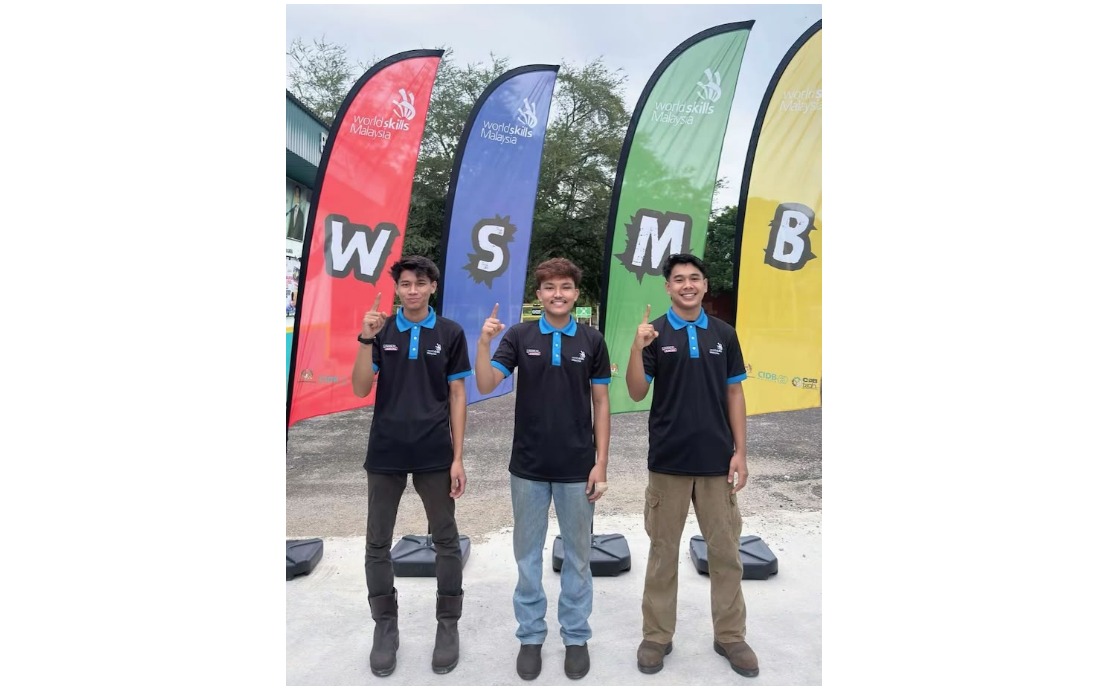
Three decades after its inception as the Malaysian Skills Champion Competition, WorldSkills Malaysia Belia (WSMB) remains a cornerstone institution for developing skilled workers in Malaysia's construction sector. Born from the vision of former Prime Minister Tun Dr Mahathir Mohamad in 1990, the programme has undergone significant evolution, shedding its original identity through successive rebrands including the prestigious Anugerah Tangan Emas Perdana Menteri era from 1991 to 2006, the MySkills initiative spanning 2007 to 2013, and its current incarnation as WSMB from 2014 onwards. This journey of institutional transformation reflects Malaysia's broader commitment to aligning vocational education with global standards and economic priorities.
The architecture of WSMB operates on a meritocratic model whereby outstanding competitors advance through structured development pathways designed to prepare them for Malaysia's representation at international WorldSkills competitions. This progression system ensures that talent identified at the national level receives intensive coaching and mentorship to compete on the global stage. The infrastructure supporting this ambition involves collaboration between the Malaysian Construction Academy (ABM) and CIDB Technologies, both accredited by the Construction Industry Development Board, which maintain training facilities meeting international specifications. Such institutional coordination demonstrates how Malaysia systematically converts local competitive success into regional and international standing.
Mohd Hafiz Dasahi, chief executive officer of CIDB Technologies Sdn Bhd, articulates a philosophy extending beyond mere skills demonstration. According to Dasahi, WSMB functions as an incubator for the professional class destined to lead construction industry transformation. This perspective reframes vocational competition from a one-time achievement into an investment calculus—the contemporary identification and development of skilled workers directly determines Malaysia's future competitiveness across multiple sectors including energy, maritime, and manufacturing. The strategic thinking embedded in this approach recognises that demographic shifts and automation pressures require constant renewal of human capital, making talent identification programmes increasingly critical for sustained economic relevance.
Dasahi emphasises that contemporary training frameworks must respond dynamically to industry evolution rather than perpetuating outdated practices. The emphasis on aligning curricula with actual sector requirements, incorporating emerging technologies, and producing graduates immediately ready for professional deployment reflects lessons learned from previous vocational education cycles. This responsiveness to market signals creates a feedback loop wherein industry practitioners help shape training standards, which in turn produces workers better suited to real-world challenges. For Malaysian manufacturing and construction firms competing regionally, this alignment provides workforce advantages that reduce onboarding costs and accelerate productivity.
Zarulhakim Abdul Rahim, welding head at CIDB Technologies, describes the multi-dimensional evaluation framework employed during competitions. Participants face assessment across technical precision, workmanship quality, procedural adherence, temporal efficiency, analytical problem-solving, and occupational safety compliance. This holistic evaluation mirrors professional reality, where technical competence divorced from safety awareness or time management becomes insufficient. Beyond technical metrics, the competitive environment cultivates softer attributes—self-assurance, self-discipline, emotional resilience, and commitment to continuous excellence—that differentiate truly professional workers from technically adequate ones. The exposure to international processes and equipment embedded throughout participation creates workers primed for cross-border mobility and capable of transferring between regional construction markets.
Industrial partnership constitutes an underappreciated dimension of WSMB's effectiveness. Companies like Lincoln Energy and Vinxus Mark contribute welding machinery, consumables, and technical expertise throughout competition cycles, effectively subsidising training intensity while ensuring participants work with equipment they will encounter professionally. Putra Faisal Ashraf Idris, representing the welding technology sector, frames this support as industry responsibility toward workforce sustainability. Rather than passive consumers of trained labour, companies position themselves as active stakeholders in talent development, creating reputational benefits and ensuring pipeline quality. This collaborative model addresses a chronic challenge in Southeast Asian construction—the gap between training environments and operational realities that often renders theoretical knowledge impractical.
Young participants themselves articulate how WSMB experiences accelerate professional maturation. Ahmad Syafie Dasuki, twenty years old from Tumpat, Kelantan, describes how nearly two years' workshop experience combined with WSMB participation intensified skill development beyond what either pathway provided independently. The competition exposed him to technological applications that workshop experience alone would not systematise, demonstrating how structured competitive environments compress learning curves. For participants from modest backgrounds—Dasuki is the youngest of eight siblings—WSMB represents genuine social mobility through demonstrated competence rather than educational credentials that might prove inaccessible.
Muhammad Fazran Md Rashid, currently employed at a Kulim welding enterprise, emphasises the psychological dimensions of competitive participation. The confidence-building, disciplinary formation, and resilience-cultivating effects of structured competition extend beyond technical proficiency. These attributes—particularly crucial in construction environments where decisions carry safety implications—develop through challenge-seeking rather than classroom instruction. Fazran's aspiration to master advanced welding skills and secure experienced employment reflects how WSMB participants internalise lifelong learning orientations. This mindset becomes especially valuable as sectors undergo technological transition, requiring workers comfortable with continuous upskilling.
Mohd Sahmi Irfan Sulaimi, aged twenty from Setiu, Terengganu, offers prescriptive encouragement framing WSMB participation as primarily beneficial rather than competitive struggle. His perspective emphasises that even unsuccessful competitors accumulate advantages—enhanced technical capabilities, professional networks with trainers and industry figures, demonstrated commitment to skill development, and expanded career awareness. This recalibration of success metrics—where competition participation itself becomes the achievement rather than merely winning—democratises opportunity and encourages broader youth engagement. Sulaimi's catalogue of benefits—competency enhancement, expert knowledge access, professional networking, and career pathway visibility—suggests participants extract maximum value through intensive engagement regardless of final rankings.
The sustainability challenge for WSMB involves maintaining relevance amid rapid technological change in construction practices. Additive manufacturing, drone-based site analysis, Building Information Modelling, and autonomous equipment increasingly shape industry operations. Training programmes must remain sufficiently current to prepare workers for these emerging realities whilst avoiding premature specialisation that renders skills obsolete within years. The institutional requirement for continuous curriculum review and equipment investment means WSMB depends on sustained government funding and industry partnership commitment. Malaysian policymakers must recognise that vocational excellence requires ongoing capital investment comparable to university infrastructure spending.
Regionally, WSMB positions Malaysia advantageously within Southeast Asia's construction talent marketplace. As Myanmar, Cambodia, and Laos develop infrastructure rapidly, demand for experienced construction workers from neighbouring countries intensifies. Malaysian workers trained to international standards become regionally competitive, creating export opportunities for labour services. Conversely, Malaysia's construction firms benefit from access to pre-screened, internationally-benchmarked workers, reducing recruitment uncertainty. This dynamic transforms vocational training from purely domestic concern into strategic economic asset contributing to regional trade and investment flows. WSMB's success metrics should ultimately measure not only international competition placements but also labour market outcomes for participants and contributions to sectoral productivity gains.

