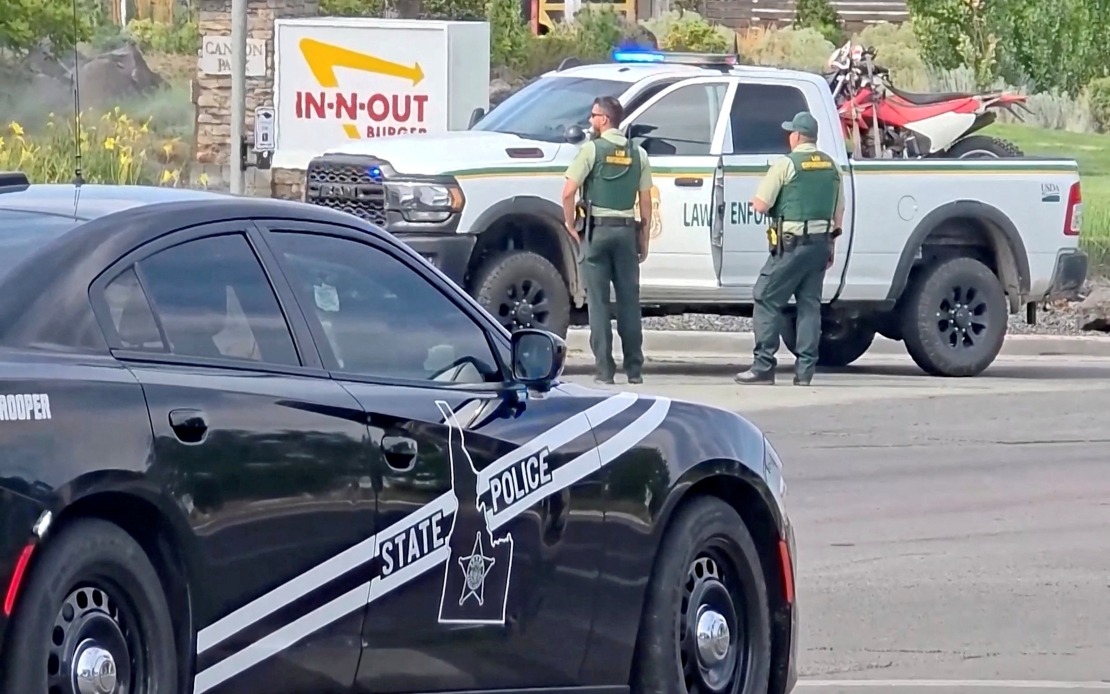
A shooting rampage at an In-N-Out Burger franchise in Twin Falls, Idaho, on Saturday afternoon claimed three lives and left seven others injured, according to local law enforcement officials. The incident unfolded around 2 pm local time at the restaurant, situated within a busy shopping plaza that had drawn hundreds of patrons and visitors at the moment the violence erupted. Authorities responded swiftly to contain the situation, though the full extent of casualties emerged gradually as emergency services attended to the wounded and secured the scene.
Joshua Palmer, the city's public information coordinator, reported that several of those injured sustained critical injuries requiring immediate medical attention. The response from emergency responders was substantial, reflecting the gravity of the situation and the need to provide trauma care to multiple victims simultaneously. Among the casualties was the suspected shooter, whose body was discovered in a location adjacent to the restaurant. The circumstances surrounding the shooter's death—whether by police intervention or self-inflicted injury—remained unclear in initial reports.
Twin Falls Police Chief Matthew Hicks addressed the community through a public statement, assuring residents that law enforcement had neutralised the immediate threat and that public safety had been restored to the area. His reassurance aimed to calm widespread concern following the dramatic incident. The police department's swift response prevented further loss of life and helped contain the situation before it could escalate further. The chief indicated that ongoing investigations would focus on establishing the identity of the suspected shooter and determining the underlying motivation for the attack.
The Twin Falls shooting represents another tragic chapter in America's persistent struggle with gun violence. Such incidents at commercial establishments serving hundreds of daily customers highlight the unpredictability and randomness of mass shooting events. The fact that it occurred in a shopping plaza during midday hours, when foot traffic is typically at its peak, underscores how these tragedies can strike without warning in ordinary public spaces where Americans conduct daily activities. The location—a widely recognised fast-food chain—makes the incident particularly resonant, as In-N-Out Burger operates dozens of restaurants across western states, making the shooting a reminder that such violence can occur at familiar, seemingly safe destinations.
At the time of reporting, authorities had deliberately withheld the names and ages of the deceased and wounded pending completion of family notifications. This standard procedure, while necessary for respecting the dignity of victims and their relatives, also meant that the broader public context of the incident remained partially obscured. Understanding who the victims were—their backgrounds, their families, their connections to the community—often becomes crucial to the public's comprehension of how random violence can upend so many lives instantaneously. The notification process itself can take considerable time when multiple families require in-person contact from officials bearing tragic news.
The investigation into the shooting remained active, with investigators working to piece together the sequence of events and the shooter's identity. Law enforcement faced the complex task of interviewing witnesses, reviewing any available security footage from the restaurant and surrounding businesses, and examining the shooter's background for potential warning signs or grievances. Such investigations typically expand beyond the immediate scene to encompass interviews with family members, friends, co-workers, and anyone who might provide insight into the shooter's state of mind or recent behaviour. Forensic evidence collection from the scene would be equally painstaking.
For Malaysian observers and Southeast Asian readers, such incidents in the United States serve as sobering reminders of the substantial differences in firearm regulations across democracies. Malaysia maintains strict gun control policies, with civilian ownership of firearms tightly restricted and subject to rigorous licensing requirements. The contrast between such regulatory frameworks and the permissive gun laws in many American states illustrates how policy choices shape outcomes. While Malaysia faces its own security challenges, mass shooting incidents of this nature remain virtually non-existent, a distinction often attributed to the nation's comprehensive approach to firearm regulation.
The Twin Falls incident also highlights broader questions about mental health resources, threat assessment protocols, and community safety measures in public gathering spaces. These are concerns that resonate globally as societies grapple with ensuring security without compromising the openness that characterises modern commerce and public life. How communities balance accessibility and safety—particularly in establishments that serve the general public—remains an ongoing challenge for law enforcement and city planners worldwide.
For the Twin Falls community specifically, the shooting represents a trauma that will reverberate through local institutions and collective memory. Businesses in the shopping plaza would likely face a temporary period of reduced foot traffic as customers processed the violence that had occurred. Restaurants and retail establishments frequented by the same demographic would inevitably become sites where residents collectively processed the tragedy. The psychological impact on witnesses, first responders, and community members cannot be quantified but remains significant and long-lasting.
As investigations continue in Twin Falls, the incident joins the long list of mass shootings that have punctuated American history in recent decades. Each such event generates renewed national debate about gun policy, mental health interventions, and security measures, though consensus on solutions remains elusive given America's constitutional framework and deeply divided political landscape. For now, the focus remains on supporting the injured, honouring the deceased, and determining whether the shooter's motivations can illuminate ways to prevent similar tragedies in the future.

