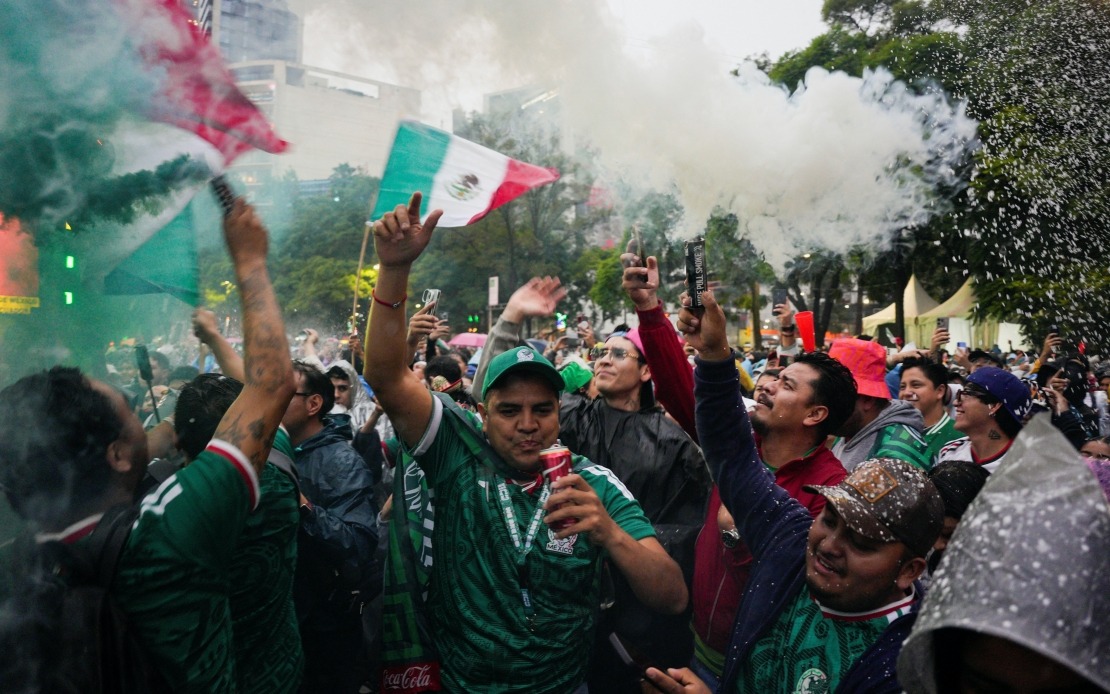
A triumphant moment for Mexican football turned tragic on Tuesday night when three spectators died during street celebrations following their team's advancement in the FIFA World Cup. The deaths occurred in Mexico City's central district near Paseo de la Reforma, shortly after the national squad secured a commanding 2-0 victory against Ecuador at the Estadio Azteca, ensuring their passage to the tournament's knockout stages.
All three victims succumbed to asphyxiation, according to the Mexico City health secretariat's official confirmation. The deceased included a 44-year-old man alongside two women aged 19 and 48, all found at separate locations within close proximity to the capital's main thoroughfare. The precise circumstances leading to the asphyxiation remain under investigation, though crowding and crowd compression are suspected factors during the large gatherings that materialised across the city as fans poured into streets to mark Mexico's progression.
Clara Brugada, the elected head of Mexico City's government, acknowledged the tragedy through a statement on social media, confirming that emergency response teams were deployed immediately upon receiving reports of three unresponsive individuals scattered across the Paseo de la Reforma area. Despite the activation of comprehensive medical protocols, medical personnel were unable to revive any of the three victims. The incident underscores the darker consequences that can emerge from large, uncontrolled public gatherings, even when driven by positive sentiment and national pride.
For Malaysian readers and Southeast Asian observers, this incident carries particular resonance given the region's own experience with crowd-related tragedies at sporting events and mass gatherings. The risks associated with spontaneous celebrations in urban centres without adequate crowd management infrastructure remain a persistent public health concern across the developing world. Mexico City, with its population exceeding 21 million in the metropolitan area, regularly experiences the logistical challenges of managing sudden surges of foot traffic through its historic city centre.
The Mexican national team's elimination of Ecuador represents a significant achievement for the squad under their current management structure. Mexico's progression sets up the possibility of a matchup against England's team, managed by Thomas Tuchel, should the European side successfully navigate their own upcoming fixture against DR Congo on Wednesday. Such a knockout-stage encounter at the iconic Estadio Azteca would constitute a marquee fixture in the tournament, adding further pressure on authorities to manage anticipated crowds if such a meeting materialises.
The Estadio Azteca itself, one of world football's most storied venues with a capacity exceeding 87,000, has been the site of numerous memorable international matches. However, the stadium and surrounding areas have also witnessed historical crowd management challenges. The tragedy occurring away from the stadium proper, rather in central Mexico City's streets, highlights how celebration-related risks extend beyond venue boundaries and into public spaces where authorities have less direct control over assembly and movement patterns.
Brugada's statement emphasised the government's commitment to supporting affected families and called for future celebrations to proceed with heightened awareness of safety considerations. This reflects a growing international recognition that public health authorities must balance cultural expression and national celebration with concrete protective measures. The message implicitly acknowledges that while celebration itself is not problematic, the manner and circumstances of gathering require deliberate planning and community responsibility.
From a regional perspective, Southeast Asian nations with significant populations and regular mass gatherings at sporting or cultural events should view this incident as an important reminder of crowd safety protocols. Countries including Malaysia, Indonesia, Thailand, and the Philippines have all experienced tragic crowd-related incidents in recent decades, prompting evolving discussions about venue design, emergency response procedures, and public awareness campaigns regarding safe assembly practices.
The incident also raises questions about the adequacy of emergency medical services during periods of heightened public activity. Rapid response teams proved insufficient to address the scale of the emergency once asphyxiation had occurred, suggesting that prevention through crowd management may be more effective than treatment after emergencies develop. This principle has gained prominence in global public safety discussions following major incidents at festivals, sporting events, and religious gatherings across multiple continents.
Mexico's strong performance in progressing past the group stage demonstrates the capacity of the national programme to compete at high levels, yet this achievement became inseparable from the human cost of uncontrolled celebrations. The contrast between sporting success and tragic loss serves as a sobering reminder that major events carry responsibilities extending beyond the field of play. Public authorities, event organisers, and citizens themselves share accountability for ensuring celebrations do not evolve into dangerous circumstances.
Looking forward, if Mexico's squad does advance further in the tournament, the authorities will face renewed pressure to implement enhanced crowd management protocols for any subsequent celebrations. This may include designated celebration zones, increased police presence, improved communication systems, and public education campaigns emphasising safe gathering practices. International best practices from other nations' experiences with large celebratory gatherings could inform Mexico City's approach to future events.
The three deaths represent a tragic counter-narrative to Mexico's sporting achievement, compelling the nation to confront uncomfortable truths about the intersection of national enthusiasm, urban infrastructure, and public safety. As the tournament progresses, Mexican authorities and fans alike will grapple with how to channel patriotic passion through channels that celebrate athletic accomplishment without imperilling participants. The balance between spontaneous popular expression and organised safety protocols remains one of modern society's most persistent challenges.

