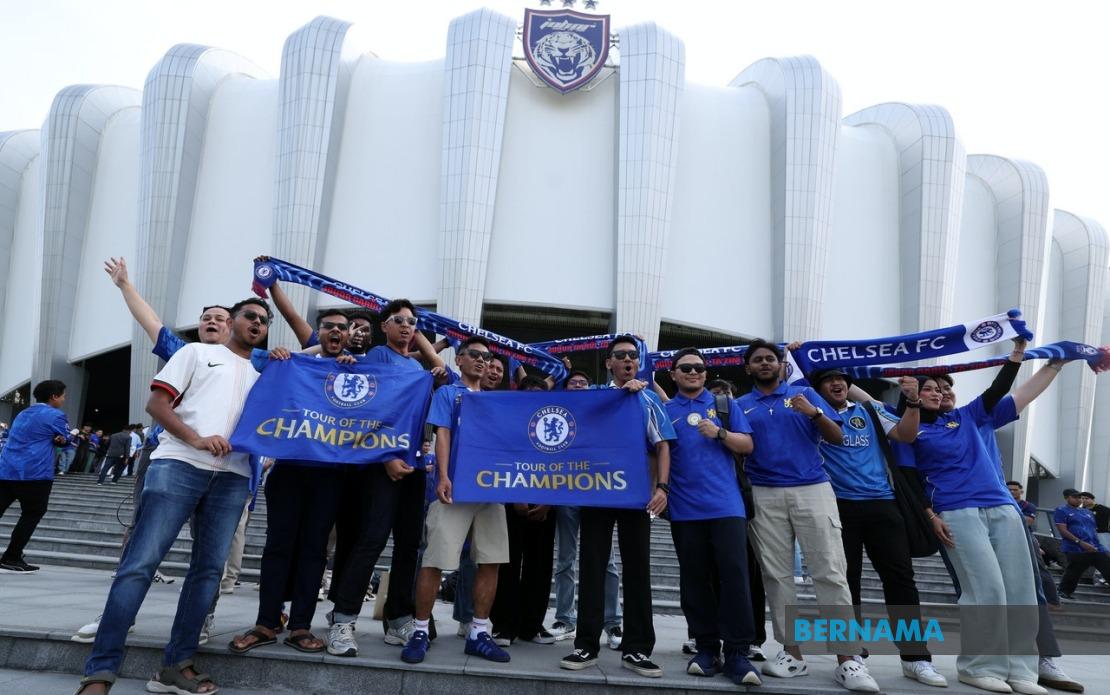
The Sultan Ibrahim Stadium in Iskandar Puteri transformed into a vibrant tapestry of red and blue on August 9 as anticipation built for Chelsea FC's friendly encounter with Johor Darul Ta'zim. Starting from mid-afternoon, an expanding sea of supporters clad in the colours of both clubs began arriving at the venue, creating an electric pre-match atmosphere that reflected the significance of hosting one of world football's most prestigious sides on Malaysian soil. The ground became a focal point for fans ranging from seasoned enthusiasts to families experiencing such a spectacle for the first time.
The diversity of the crowd spoke volumes about football's unifying power across generations and backgrounds. Supporters brought along children, partners, and friends, each hoping to witness a rare collision between Asian ambition and English elite football. Beyond the ticketholders, the stadium's immediate surrounds buzzed with activity as visitors explored the modern facilities and soaked in the occasion's magnitude. Many took advantage of the pre-match hours to capture photographs with the stadium's contemporary architecture as their backdrop, creating memories of an event that few Malaysian football moments have achieved in recent years.
Merchandise proved central to the matchday experience, with official vendor stalls becoming magnets for supporters eager to secure limited-edition items commemorating the fixture. Queue lines snaked through designated areas as fans pursued jerseys, scarves, and memorabilia bearing both club insignias. The commercial dimension underscored how such high-profile international friendlies generate economic activity beyond the ninety minutes of play, benefiting retailers and hospitality providers across the precinct.
The draw extended well beyond Johor's borders, with enthusiasts from neighbouring Singapore recognising the rare opportunity to witness English Premier League talent without requiring international travel to Europe. Cross-border visitors had begun their journeys early in the day, with some departing Singapore as morning approached to navigate the Johor Causeway during less congested periods. Their willingness to undertake such efforts illustrated the pent-up demand for world-class football experiences within Southeast Asia, a region often considered peripheral to Europe-centric football calendars.
Ahmad Danial Muhammad, a 28-year-old Chelsea devotee from Bangsar in Kuala Lumpur, exemplified the sense of privilege many supporters felt. Having developed his allegiance during Didier Drogba's era at Stamford Bridge, he regarded the opportunity to observe Premier League performers in person without transatlantic travel as genuinely exceptional. His determination to secure a ticket immediately upon learning of Chelsea's Malaysian visit reflected how such fixtures create moments that fans consider generational defining events.
Cross-border enthusiasm found equal expression in Singapore-based supporters like Tan Wei Sheng, aged 34, who coordinated family attendance with logistical precision. His family's noon departure represented strategic planning to circumvent the often-congested Johor Causeway transit points, demonstrating how major sporting events influence travel behaviour across the region. Tan's assessment of Sultan Ibrahim Stadium's world-class infrastructure and palpable atmosphere indicated that Malaysian football venues now competed internationally in terms of presentation and experience quality, potentially positioning future international fixtures as catalysts for sports tourism.
For JDT supporters, the fixture carried particular significance beyond mere entertainment value. Mohd Khairul Anuar Ismail, a 41-year-old enthusiast from Bukit Piatu in Melaka, viewed Chelsea's selection of the Southern Tigers' home ground as validation of Malaysian football's ascending international standing. His framing of the match as a test and simultaneously as evidence of local football gaining global respect suggested how such fixtures shape regional sporting narratives and national pride. The opportunity to showcase domestic capabilities against established international powerhouses carries psychological and diplomatic weight within football communities.
Female supporters contributed significantly to the demographic mix, with Safiyah Rosli from Batu Pahat bringing her own interpretative lens to the occasion. Her connection between Chelsea's visit and Tunku Mahkota Ismail's stewardship of Malaysian football demonstrated how international fixtures become intertwined with leadership narratives and governance assessments. The Regent's profile as football custodian became validated through securing such high-profile matches, creating symbiotic relationships between administration and sporting spectacle.
Traffic management along approach routes to the stadium operated smoothly despite substantial attendance, with Royal Malaysia Police implementing coordinated security protocols to maintain vehicular flow ahead of the 8 pm commencement. The operational effectiveness reflected experience gained from hosting major domestic competitions and infrastructure development investments throughout Johor's sporting facilities. Maintaining accessibility while ensuring security represented a delicate balance that authorities managed successfully, enabling supporters throughout the region to participate without major impediments.
The convergence at Sultan Ibrahim Stadium represented more than a single friendly match; it signified football's role as a connective tissue binding communities across borders and demographics. Chelsea's presence on Malaysian turf catalysed enthusiasm that transcended typical club allegiances, instead reflecting broader aspirations for regional football to gain prominence on international stages. For attendees ranging from dedicated Premier League aficionados to casual observers, the fixture offered rare glimpses of elite competition delivered locally, reshaping expectations about where world-class football experiences could occur.
For Malaysian football stakeholders, such occasions deliver tangible evidence that quality infrastructure and international partnerships can transform the sport's local ecosystem. The enthusiastic response suggested growing appetite for marquee international fixtures, potentially encouraging additional global clubs to consider Southeast Asian venues for competitive and friendly encounters. Beyond immediate spectacle value, these matches plant seeds suggesting that Malaysian football possesses both technical capacity and fan engagement levels warranting serious consideration within international football's scheduling priorities.

