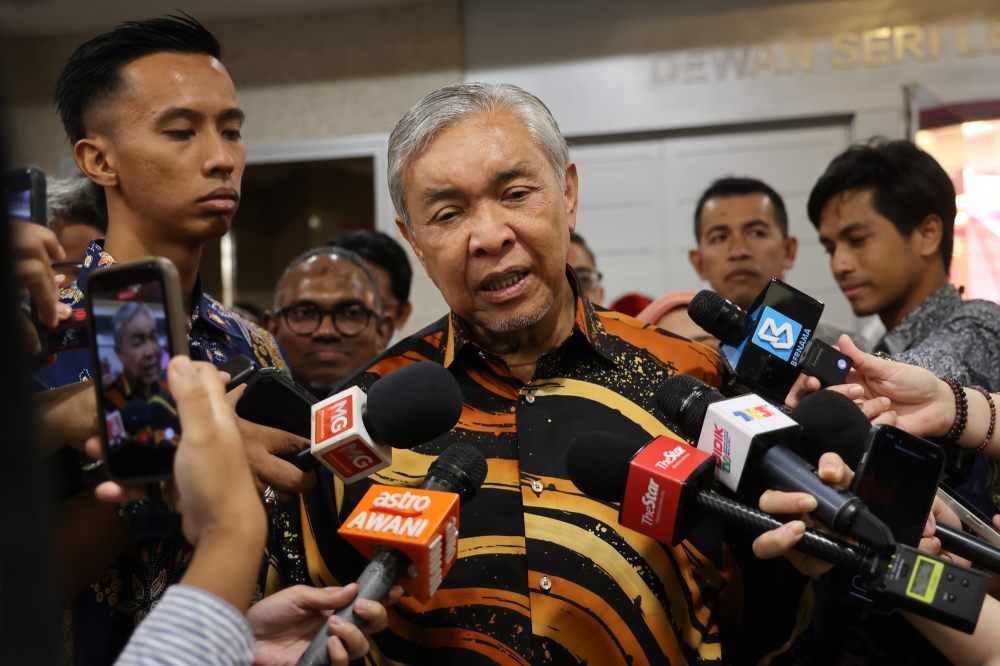
Deputy Prime Minister Datuk Seri Zahid Hamidi has delivered a stern warning that Barisan Nasional and Umno will accept no compromises when it comes to corporate governance failures at Tabung Haji, the largest pilgrimage savings scheme serving Muslim Malaysians. Speaking in Putrajaya on August 6, Zahid emphasised that accountability mechanisms must be activated swiftly against anyone found culpable in the mishandling of the fund's resources.
The pilgrimage savings institution has faced mounting scrutiny over financial irregularities and poor investment decisions that eroded the deposits of millions of Malaysian pilgrims. The fund, which operates as a statutory body under the Ministry of Religion, had accumulated significant losses through problematic property acquisitions, equity investments, and loan defaults over several years. These lapses exposed beneficiaries to financial risk during a period when demand for Hajj services remained steady, creating a governance crisis that extended across multiple administrations.
Zahid's statement reflects the governing coalition's apparent determination to distance itself from the governance failures that occurred on previous administrations' watch, while simultaneously signalling that the current government takes fiduciary responsibility with utmost seriousness. The message carries particular weight given the fund's cultural significance within Malaysia's Muslim-majority population, where Tabung Haji savings represent a deeply personal financial commitment tied to religious obligations. Any perception of mismanagement strikes at the heart of public trust in institutions managing citizen assets.
The Deputy Prime Minister's remarks suggest that investigations into the fund's missteps will proceed without political protection for implicated parties. This approach aligns with Barisan Nasional's broader messaging about institutional reform and clean governance, themes that have gained prominence following changes in political leadership over the past several years. By explicitly rejecting tolerance for breaches of trust, Zahid seeks to reinforce the ruling coalition's commitment to investigating corporate malfeasance regardless of who benefited or which figures may have been involved.
For Malaysian pilgrims and their families, such pronouncements offer limited immediate relief but indicate that legal remedies and disciplinary actions remain available through formal channels. Thousands of Hajj applicants had faced postponements and uncertainty regarding their savings as the fund struggled with liquidity pressures. The institution's reputation suffered considerably as beneficiaries discovered that investment decisions made by management had not always prioritised the security of deposited funds.
The Tabung Haji episode illustrates broader challenges facing Malaysia's statutory bodies and linked institutions, many of which operate with varying degrees of transparency and oversight. The fund's difficulties stemmed partly from insufficient board supervision, inadequate risk management frameworks, and investment strategies that prioritised aggressive expansion over capital preservation. These systemic weaknesses have prompted broader conversations about strengthening governance standards across Malaysia's public institutional landscape.
Zahid's statement also carries implications for regulatory agencies tasked with overseeing the fund's operations. The Malaysian Anti-Corruption Commission, the Securities Commission, and the Ministry of Religion's oversight apparatus will likely face expectations to demonstrate visible progress in holding accountable those responsible for governance failures. Public confidence in these institutions depends on demonstrable enforcement action against wrongdoing, particularly when ordinary citizens' savings are at stake.
The consequences framework outlined by Zahid encompasses various potential outcomes, ranging from criminal prosecution for those engaged in fraudulent conduct to administrative dismissals and recovery actions against former officials. The severity of penalties will likely depend on investigations' findings regarding the nature and extent of misconduct, as well as whether actions constituted negligence, incompetence, or intentional wrongdoing.
For Southeast Asia more broadly, Malaysia's handling of the Tabung Haji situation carries relevance as a test case for how regional governments address governance failures in institutions managing citizen assets. Indonesia, Singapore, and other neighbouring economies face comparable challenges with state-linked enterprises and religious institutions managing public funds. Malaysia's approach to accountability may influence how other regional governments calibrate their own enforcement responses.
The path forward requires not only pursuing individual accountability but also implementing institutional reforms that prevent recurrence of similar failures. Tabung Haji's governance structures, investment oversight mechanisms, and reporting requirements may all require overhaul to restore the fund's operational integrity. Such reforms, coupled with transparent accountability measures, would signal to depositors that management failures will not recur and that their savings warrant serious institutional protection.
As investigations proceed and accountability mechanisms activate, the Tabung Haji case will test Malaysia's commitment to holding public institutions to consistent governance standards. The outcome will reverberate beyond the fund itself, shaping public perceptions about institutional credibility and whether Malaysia genuinely enforces consequences for breaches of fiduciary duty in high-stakes financial contexts.

