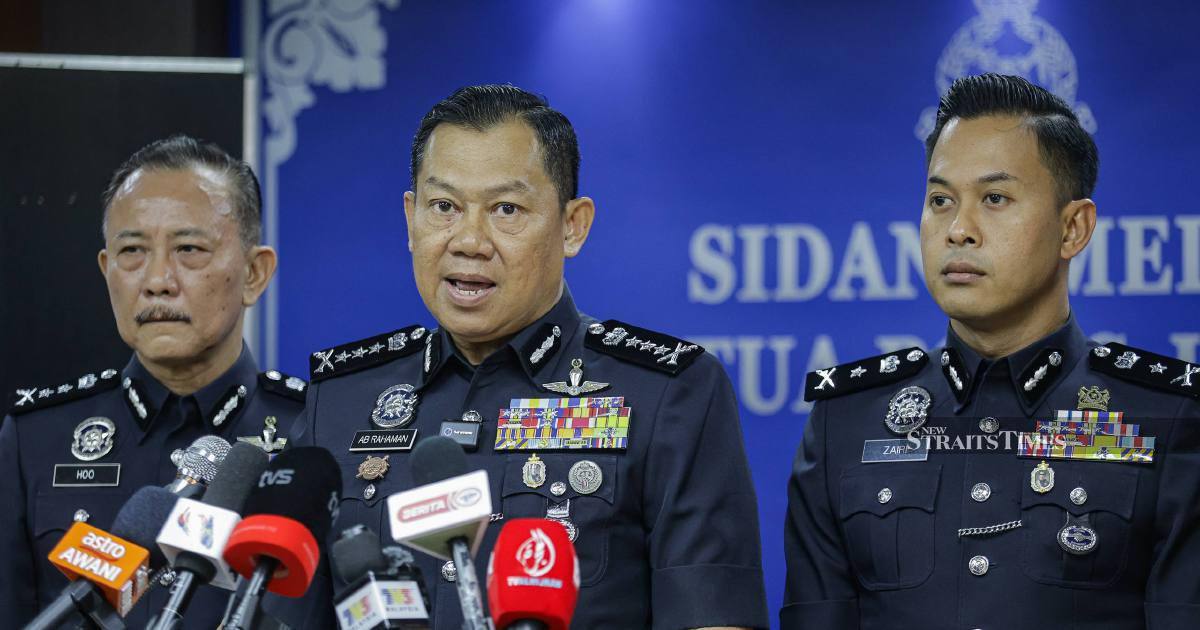
A fatal motor vehicle collision in Kulai has prompted a sweeping investigation into potential gang-related criminal activity, with police in Johor Baru mobilising significantly to uncover the circumstances surrounding a teenage girl's death. The victim, aged 17, was killed at Lingkaran Bulatan Persiaran Indahpura 4 when the incident occurred on Tuesday, sparking immediate law enforcement response that has widened considerably beyond a simple traffic accident.
Authorities have moved swiftly to detain 13 individuals across various locations, among them a 15-year-old girl, as investigators seek to establish connections between those detained and organised criminal networks. The decision to arrest such a significant number of people in relation to a single fatal crash indicates police suspicions that the collision may not have resulted from ordinary traffic circumstances, but rather from deliberate actions or escalating tensions between competing groups.
The Lingkaran Bulatan Persiaran Indahpura 4 roundabout in Kulai sits within a rapidly developing area of southern Johor, serving as a major traffic intersection that connects residential zones with commercial and industrial districts. The location's prominence in Kulai's transportation network means the incident has heightened community concern about public safety and the operations of criminal organisations within what residents generally regard as a relatively orderly neighbourhood.
When police investigations expand to encompass gang-related inquiries, the narrative typically shifts from straightforward accident analysis to complex questions about premeditation, inter-group conflicts, and organised violence. The detention of individuals ranging from a 15-year-old to adults for questioning suggests investigators are mapping out a network of relationships and examining whether the crash resulted from a confrontation that escalated dangerously or constituted a deliberate act by one faction against another.
The involvement of a minor among those arrested raises additional concerns about youth recruitment into criminal organisations operating within Johor. Law enforcement agencies across Malaysia have increasingly documented how younger individuals become entangled in gang activities, often through social networks and proximity to older members. The arrest of a 15-year-old signals that investigators may be examining how young people have become entwined in whatever circumstances led to the collision and subsequent death.
For Malaysian readers, particularly those living in Johor, such incidents illustrate the persistent challenge of gang activity in the country's urban and semi-urban zones. While Johor has developed economically and modernised substantially in recent years, organised criminal groups continue to operate within communities, sometimes resulting in violent confrontations that claim innocent lives. The randomness with which teenagers can become victims—whether through direct involvement or proximity to conflict—underscores why community safety remains a persistent public concern.
The death toll from gang-related violence and traffic incidents intersecting with criminal activity represents a troubling dimension of Malaysia's public safety landscape. Unlike conventional motor accidents attributable to reckless driving or mechanical failure, deaths resulting from deliberate criminal action or gang-motivated violence carry different legal, social, and psychological implications. Families and communities processing grief must simultaneously confront the possibility that preventable criminal activity, rather than accident or fate, claimed their loved one.
Police procedures in gang-related death investigations typically involve extensive interviews, examination of mobile phone records, surveillance footage analysis, and cross-referencing against existing intelligence databases on known criminal organisations. The relatively large number of detainees suggests investigators have substantial leads or witness testimony pointing toward multiple individuals' involvement. Whether all 13 people played active roles in events preceding the death or whether some are detained for peripheral connections remains part of the ongoing investigative process.
The broader security implications for Johor extend beyond this single incident. If organised gang activity is sufficiently entrenched to result in fatalities on public roads, questions arise about the effectiveness of existing law enforcement strategies and intelligence gathering. Municipal authorities, transport planners, and community leaders may also need to consider whether certain locations experience elevated risk factors that require specific intervention or enhanced monitoring.
As investigations continue, attention will inevitably focus on what specifically occurred during the incident—whether it represented a planned confrontation, a chance encounter escalating violently, or circumstances still unknown to the public. The police investigation's scope, encompassing gang connections rather than treating this as a standard accident case, suggests they possess evidence or intelligence pointing toward criminal intent or organised involvement rather than mere chance.
For families affected by such tragedies, the investigative process offers minimal consolation. The death of a 17-year-old represents the loss of a young life with unrealised potential, and the arrest of a 15-year-old classmate or acquaintance compounds the tragedy by indicating how youth can become trapped within criminal circumstances. These human dimensions persist regardless of investigation outcomes.
The incident serves as a reminder that Malaysia's ongoing efforts to combat organised crime remain incomplete, with criminal networks continuing to operate visibly enough to impact public safety on established roads. Whether this particular case results in significant law enforcement progress against gang activity or resolves as an isolated tragic event will depend substantially on the evidence investigators uncover and the details that emerge as the case progresses through the justice system.

