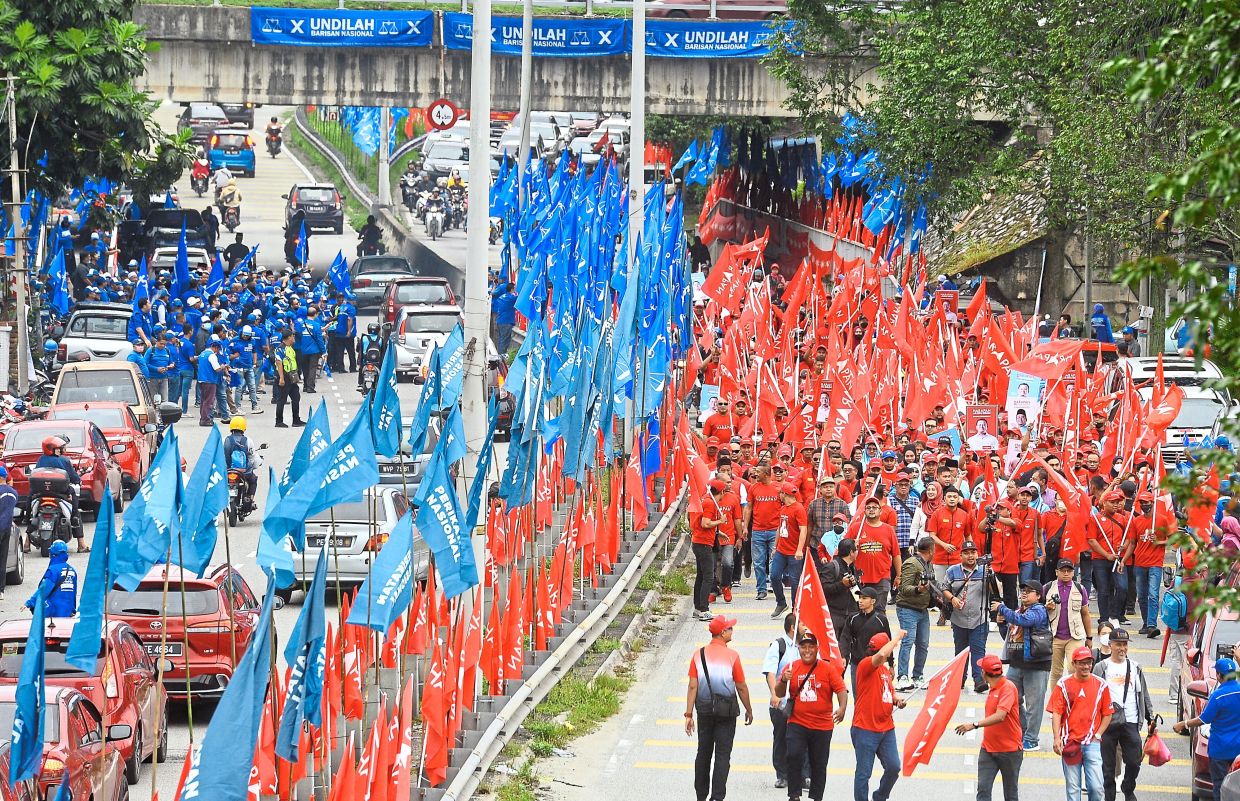
The prospect of electoral contests transforms the political landscape into an arena of heightened emotion and psychological strain. While politicians face their own battles—from nomination anxieties to existential fears about career viability—ordinary Malaysians are increasingly experiencing what researchers term "election anxiety," a phenomenon that extends far beyond the polling booth into our homes, workplaces and digital spaces. The 2026 state elections in Johor and Negri Sembilan, coupled with persistent rumours of imminent general elections, promise to amplify this collective sense of tension across the nation.
For political candidates, the emotional weight begins long before campaign trails are blazed. Many hopefuls spend months in uncertainty, wondering whether they will secure party nominations to contest their constituencies. Those who pass this first hurdle often find themselves haunted by a different anxiety: the real possibility of electoral defeat. For sitting representatives and established figures, this prospect carries particularly grave implications—not merely loss of office, but potential damage to political legacies and long-term career trajectories. The psychological burden intensifies during the campaign period itself, when politicians must maintain gruelling schedules while contending with sleep deprivation, exhaustion and heightened irritability. Adding another layer of distress is the proliferation of unverified stories circulating on social media, designed to vilify candidates and erode public confidence, creating a corrosive environment that tests even the most resilient political operatives.
Yet the anxiety surrounding elections is far from confined to those seeking office. Voters themselves face mounting psychological pressure as electoral contests approach. The constant stream of media coverage, dinner table debates, workplace discussions and social media arguments about political matters creates a pervasive backdrop of tension that affects overall well-being. The uncertainty surrounding which party will govern, combined with legitimate concerns about how election outcomes might reshape government policies and societal direction, generates stress that penetrates daily life. For many Malaysians, this election-related anxiety mirrors the broader stress of modern life, capable of triggering measurable physiological responses that can undermine both mental and physical health.
The contemporary Malaysian political landscape has grown increasingly complex, with more parties in contention and shifting coalition arrangements that confuse even engaged voters. This fragmentation, combined with the rising tendency to link ideology and personal identity directly to political affiliation, has transformed electoral competition into something more emotionally charged. When voters perceive political disagreement as a personal attack rather than a difference in policy preference, the stakes of every election feel existentially higher. Political differences that once remained confined to debate forums now seep into family dynamics, workplace relationships and friendships, creating situations where supporting a different candidate can feel like a betrayal of shared values.
The psychological consequences of this polarisation are measurable and significant. When parties fail to win, their supporters often experience genuine distress—worry, insecurity and feelings of powerlessness about the future. The overwhelmingly negative and bitter tone that characterises many campaign periods, amplified through news channels and social media algorithms that reward controversy, generates widespread resentment. This toxic environment can make people more reactive, irritable and withdrawn from normal social interaction. Yet Malaysian society has demonstrated a remarkable capacity to compartmentalise electoral tension; once voting concludes and results are declared, the intensity dissipates remarkably quickly, with even arch-rivals and their supporters resuming normal social relations with apparent ease.
From a physiological standpoint, election anxiety operates through well-established biological pathways. Heightened political stress triggers the autonomic nervous system, prompting the release of adrenaline and cortisol—the body's primary stress hormones. Excessive adrenaline elevation increases cardiovascular risk, potentially contributing to heart attacks and strokes. Elevated cortisol creates cascading health consequences: elevated blood sugar levels, suppressed immune function and constricted blood vessels that can affect circulation. Beyond these systems, election-related stress impacts the amygdala, a pair of almond-sized structures deep in the brain that regulate sensory processing, emotional memory formation, decision-making and mood regulation. During periods of intense political stress, the amygdala can become hyperactive, responding irrationally or disproportionately to perceived threats, thereby amplifying anxiety beyond what circumstances warrant.
While rigorous epidemiological studies on election anxiety specifically within Malaysia remain limited, international research provides compelling evidence that this phenomenon is universal rather than culturally specific. A British Association for Counselling and Psychotherapy study conducted during the 2019 United Kingdom general elections found that one in three people experienced measurable negative effects on their mental well-being, driven primarily by uncertainty regarding post-election policy changes. Across the Atlantic, American researchers found that 56 percent of adults identified the 2024 presidential elections as a "significant stressor" in their lives when surveyed a year prior to voting. These international data points suggest that regardless of geography or political system, elections function as collective psychological stressors that affect substantial portions of national populations.
Individual responses to election anxiety vary considerably based on personality characteristics and past experiences. Some voters approach elections with genuine enthusiasm and anticipation, motivated by civic responsibility and emotional gratitude toward candidates or parties they support. These individuals have often invested considerable time wrestling with policy platforms, political philosophies and ideological frameworks before deciding how to vote. Their emotional investment in electoral outcomes, while potentially stressful, remains grounded in substantive political reasoning. Others, however, approach the same electoral moment from positions of greater anxiety, uncertainty or conflict, perhaps uncertain about their voting preferences or concerned about potential outcomes regardless of who wins.
The intersection of election anxiety with Malaysia's unique political context deserves particular attention. The country's multiethnic, multireligious composition means that electoral competition frequently touches on questions of communal identity, religious accommodation and resource distribution. These dimensions add another psychological layer, as voters feel not merely that their political preferences are at stake, but that their community's interests and security are in the balance. For members of minority communities, electoral outcomes can carry genuine significance regarding representation and policy responsiveness. This heightened salience makes Malaysian elections more psychologically charged than voting in contexts where electoral outcomes are perceived as largely symbolic or interchangeable.
Managing election anxiety during campaign periods requires both individual and collective strategies. On the personal level, voters benefit from limiting exposure to the most inflammatory political content, maintaining perspective about what elections can and cannot accomplish, and consciously preserving relationships across political divides. Communities can reduce collective anxiety by establishing norms against vilification of opposing candidates, promoting fact-checking mechanisms to counter misinformation, and creating spaces for genuine policy discussion rather than personality-based attacks. News organisations play a crucial role by avoiding sensationalism, providing balanced coverage of competing positions, and resisting algorithmic amplification of the most divisive content. Ultimately, recognition that election anxiety is a normal psychological response—not a personal failure or weakness—can help Malaysians approach the 2026 state elections with greater resilience and self-compassion.

