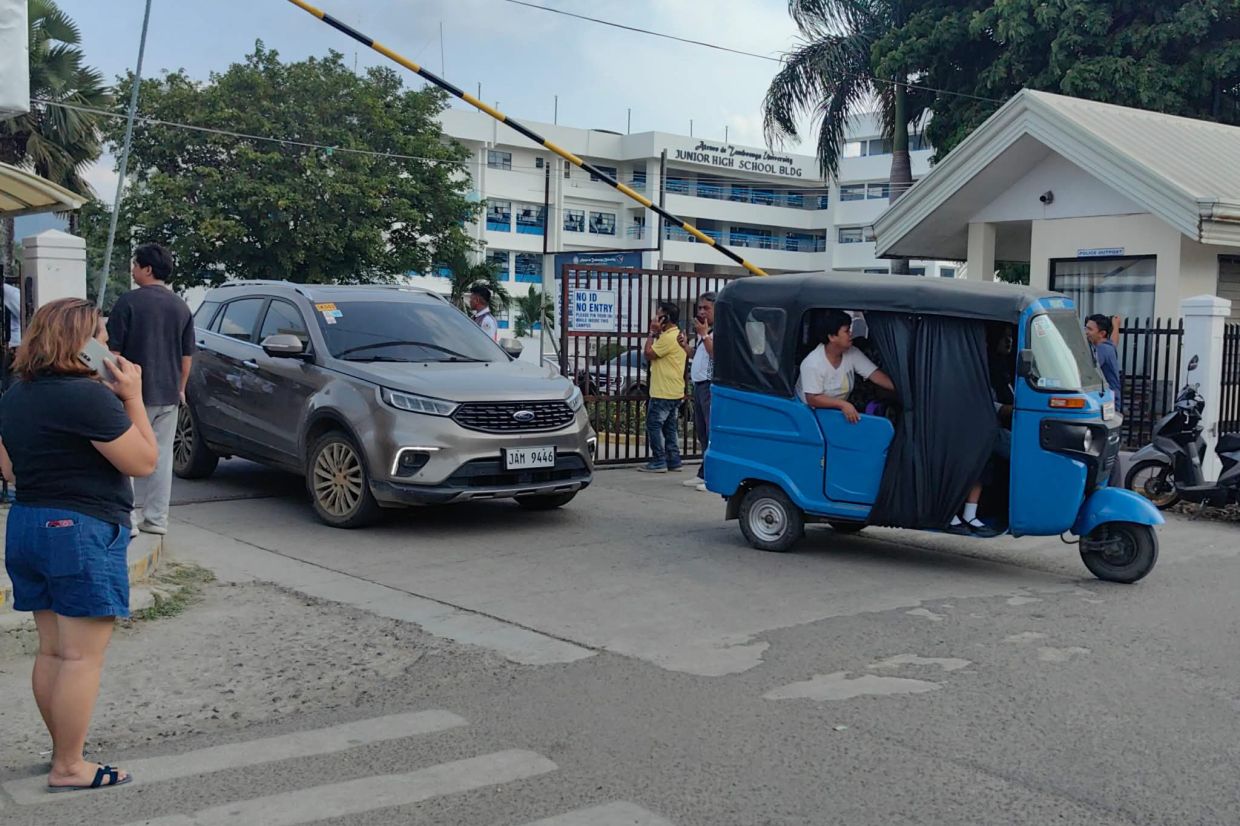
The Philippines is grappling with a form of violence it once considered foreign to its shores. Two coordinated school shootings—one in Tacloban in July and another in Zamboanga in August—have shattered the country's relative immunity to campus gun violence, triggering a cascade of copycat threats, stabbings and firearms discoveries across educational institutions. The crisis prompted the Department of Education to announce nationwide active shooter drills only to cancel them after psychologists warned such exercises could further traumatise already vulnerable children. For a nation with historically low rates of school shooting incidents despite maintaining one of Southeast Asia's highest gun ownership rates, these events signal a troubling departure from past patterns.
Experts examining this phenomenon have identified what amounts to a perfect convergence of risk factors. Psychologists, sociologists and lawmakers point to the normalisation of violence permeating Filipino society, the unprecedented digital integration of adolescents, and critical gaps in adult capacity to identify and support young people experiencing isolation or psychological distress. Crucially, research indicates that online extremist networks have developed sophisticated recruitment strategies precisely calibrated to exploit these vulnerabilities. Senator Risa Hontiveros, who led legislative hearings into both incidents and the phenomenon of nihilistic violent extremism, has drawn uncomfortable connections between these shootings and the cultural legacies of the previous administration's policies.
The shadow of former president Rodrigo Duterte's drug war looms large in these discussions. Hontiveros pointedly questioned whether years of officially sanctioned violence—conducted through rhetoric that glorified killing, thousands of reported extra-judicial deaths, and systematic impunity for perpetrators—could have fundamentally altered Filipino society's relationship with violence as a problem-solving mechanism. The senator suggested that what began as state-level normalisation has now percolated downward into schools and communities, becoming embedded in cultural attitudes towards conflict resolution. Duterte himself now faces trial at the International Criminal Court in The Hague for alleged crimes against humanity stemming from his anti-drug campaign between 2016 and 2022.
Sociologist Filomin Gutierrez of the University of the Philippines Diliman characterises the drug war's contribution as creating a wider cultural framework in which violence functions as an acceptable solution to social problems. This backdrop has normalised killing, death and firearms as legitimate tools for resolving disputes and addressing perceived threats. However, both Gutierrez and psychologist Peejay Bengwasan—who works extensively with children in conflict with the law—caution against establishing direct causation between the drug war and the shootings themselves. Rather, they suggest the political climate functioned as an environmental factor that increased receptivity to aggressive ideologies among susceptible youth. Bengwasan, a board member of the Psychological Association of the Philippines, explains that when children repeatedly encounter political messaging that glorifies violence, they become more likely to view aggressive responses and violent ideation as normalised, acceptable behaviour.
The second pillar of this crisis involves the unprecedented digital immersion of Filipino adolescents. Government data reveals that 60 per cent of children aged 10 to 17 possess internet access and actively engage with online platforms. The suspects in the Tacloban shooting were aged 14 and 15; the Zamboanga suspect was 14. Unlike older generations who encountered social media after establishing extensive face-to-face relationship networks, contemporary Filipino teenagers have been immersed in digital spaces since early childhood. Bengwasan emphasises that this creates substantially heightened probability of encounters with strangers whose values, backgrounds and worldviews fundamentally diverge from their immediate social circles. At an age when adolescents remain particularly vulnerable to external influence and validation-seeking, this exposure generates novel pathways for radicalisation.
Cybersecurity expert Angel Redoble provided Senate investigators with granular detail on how extremist networks systematically hunt vulnerable youth. Recruiters identify lonely or socially marginalised children within ordinary platforms such as online gaming environments, then gradually migrate them into private servers and encrypted messaging applications where trust-building can evolve into psychological isolation, coercion and blackmail. Algorithmic systems facilitate this predatory process by identifying and grouping isolated individuals with similar profiles. The culmination of this process Redoble termed "status through brutality"—a system where increasingly extreme violent acts earn standing and prestige within the extremist group, ultimately manifesting in real-world violence. Police acknowledged handling 74 nihilistic violent extremism cases and rescuing 42 minors, with 30 younger than 15 years old.
Particularly concerning is evidence of copycat behaviour. Online posts celebrating the Tacloban shooters emerged within hours of the attack, whilst footage from the Zamboanga incident continues circulating on social platforms. This phenomenon suggests that initial attacks function as proof-of-concept demonstrations and recruitment tools, potentially triggering subsequent incidents among already-vulnerable populations exposed to the same digital networks and ideological messaging. The internet amplifies not merely individual incidents but entire narrative frameworks that validate violence as a pathway to notoriety and significance.
Yet Gutierrez identifies a profound paradox within Philippine society itself. Despite the nation's reputation for familial cohesion and robust community bonds, this very strength has paradoxically created deeper marginalisation for those unable to achieve integration. Those perceived as "weak", "strange", "delinquent" or "problematic" experience compounded isolation, with institutional pathways for their reintegration systematically sealed. For such individuals, alternative groups and subcultures offering unconditional acceptance become extraordinarily attractive. This dynamic reflects a broader failure of social infrastructure—not weakening of bonds, but their transformation in ways that exclude rather than encompass vulnerable populations.
Bengwasan adds that this isolation intensifies when compounded by traumatic exposures endemic to Philippine life. Children navigate numerous potential traumas spanning natural disasters such as typhoons, floods and earthquakes to direct exposure to communal violence. Developmental psychology demonstrates that children process distress heterogeneously; some internalise difficulties as anxiety or depression, whilst others externalise through aggressive or violent behaviour. Schools constitute the primary social arena where adolescents determine their standing—whether they are perceived as "popular", "accepted", "seen" or rendered "invisible" by peers and educators. Gutierrez notes that research into rampage shooters frequently identifies perpetrators seeking to overturn perceived exclusion through spectacular public violence, effectively destroying imposed identities and writing alternative biographies through destructive action.
Addressing this convergent crisis demands multifaceted intervention operating across cultural, institutional and technological domains. Policymakers must confront the lingering cultural effects of the drug war through explicit renunciation of violence-based rhetoric and demonstrable accountability for past abuses. Educational systems require substantially enhanced capacity for early identification of psychologically distressed or isolated students, alongside development of accessible mental health resources. Digital literacy programmes must equip both educators and families to recognise recruitment tactics employed by extremist networks. Furthermore, online platforms operating within the Philippines need transparent implementation of algorithms that prioritise child safety, combined with rapid response protocols for content glorifying violence. Most ambitiously, society must reconstruct pathways for integrating marginalised youth, transforming social structures that currently seal off opportunities for those deemed incongruent with community norms.

