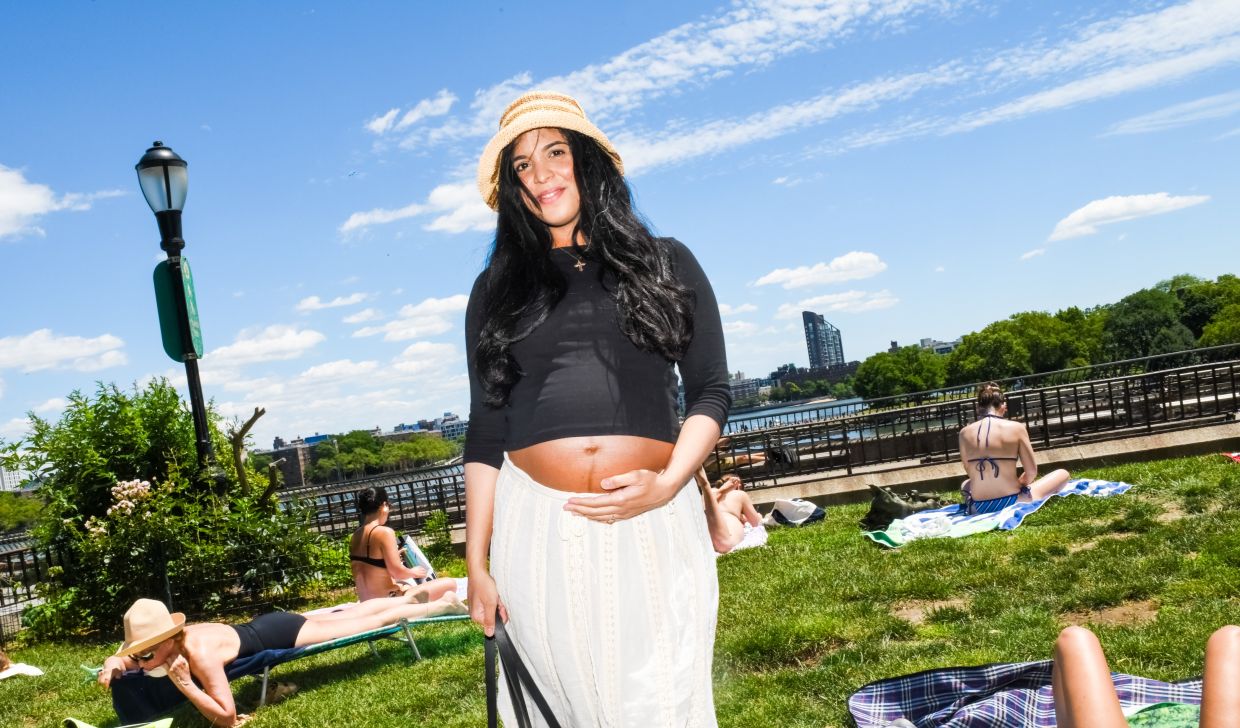
The evolution of how expectant mothers present themselves publicly marks a significant departure from generations past, reflecting broader cultural attitudes toward the female body and pregnancy itself. What was once considered indecent exposure has become a fashion statement embraced by celebrities and everyday mothers alike, challenging decades of social conditioning that treated pregnancy as something to be discreetly hidden beneath oversized, shapeless garments.
Sarah Brown, a 36-year-old handbag designer and stylist, exemplifies this modern approach. When she began sharing photographs of her pregnant belly on social media at 22 weeks gestation, her well-intentioned mother suggested purchasing maternity jumpsuits—a response rooted in earlier conventions about propriety during pregnancy. Brown's preference to deliberately style around her expanding midriff, pairing her bare stomach with blazers and low-slung jeans, represented a conscious aesthetic choice rather than an oversight. Her mother's reaction, though kind, revealed the generational gap in perspectives about how pregnant bodies should be presented to the world.
The cultural transformation extending far beyond individual mothers represents a marked departure from the concealment paradigm that dominated previous decades. Today's pregnant women are visible at concerts and music festivals, in Instagram pregnancy announcements, on beaches and streets—their exposed bellies deliberately highlighted through crop tops, strategic cutouts, and swimwear. This visibility stands in stark contrast to the 1990s and earlier eras when expectant mothers routinely obscured their changing bodies beneath what critics described as oversized tents of fabric.
Academic observers attribute this shift substantially to generational messaging. Laura McAndrews, an associate professor studying fashion at Kent State University, notes that Gen Z women have absorbed consistent body-positivity messaging throughout their lives, making them naturally inclined to embrace rather than reject any phase of their physical transformation. Unlike their predecessors who internalized shame around visible pregnancy, these younger women view the maternity silhouette as temporary, valid, and worth celebrating through thoughtful styling.
Celebrities have significantly accelerated this normalization process. When Beyoncé shared photographs of her bare pregnant stomach at her baby shower during her second pregnancy in 2017, the images circulated widely among millennials and Gen Z consumers. Rihanna's 2022 pregnancy announcement—featuring a partially unbuttoned hot pink Chanel puffer jacket over her exposed bump—perhaps most powerfully redefined maternity fashion as something bold and luxury-oriented rather than utilitarian and concealizing. Subsequently, other high-profile figures including Anne Hathaway have followed this template, announcing pregnancies in deliberately revealing ensembles like white crop tops paired with minimal skirts.
Musician Michelle Zauner provided particularly candid insight into the appeal of this aesthetic direction. When she performed at New York's Governors Ball music festival in June while pregnant, she deliberately chose an unbuttoned cardigan that exposed a delicate black lace bra and her bare pregnant belly. She explicitly credited Rihanna's approach as inspirational, while simultaneously rejecting what she described as the unflattering proportions of conventional maternity garments. For Zauner, the choice transcended fashion into territory of bodily autonomy and personal pride, reflecting her genuine comfort with and appreciation for pregnancy's physical manifestations.
Historical context helps explain why this transformation feels revolutionary to contemporary observers. For most of recorded history, visible pregnancy was treated as immodest—evidence of sexual activity that polite society preferred to ignore or conceal. Isabel Davis, who has authored extensively on the history of pregnancy and fashion, notes that pregnancy was essentially considered "rude" in earlier periods. This social stigma persisted remarkably late into modern times. Ariane Goldman, founder and chief creative officer of Hatch, a maternity clothing company established in 2011, recalls starting her business during an era when pregnancy remained so taboo that many women concealed their condition from employers out of legitimate fear of job termination.
The maternity apparel industry itself has undergone fundamental recalibration in response to these cultural developments. Goldman emphasizes that over the past decade, a profound shift has occurred toward celebrating pregnancy and acknowledging the inherent power of carrying a child. Yet this celebration paradoxically complicates the commercial landscape. If expectant mothers now feel empowered to style themselves using their partners' clothing, oversized pieces from their own closets, and strategic layering rather than purchasing dedicated maternity lines, what market remains for specialized pregnancy fashion?
The answer lies in functional necessity. Goldman notes that despite the enthusiasm for alternative styling approaches, most pregnant women eventually identify specific needs that demand purposefully designed solutions. Even those successfully assembling hybrid maternity wardrobes from non-traditional sources ultimately discover gaps. Brown herself navigated her entire pregnancy using primarily two pairs of Los Angeles Apparel elastic-waist pants and a couple of Paloma Wool tops featuring side-button configurations—modest holdings that permitted both comfort and aesthetic control. For many women, particularly those with professional obligations or varying body changes throughout pregnancy, specialized pieces provide irreplaceable functionality that standard clothing cannot accommodate.
This pragmatic reality suggests that the maternity fashion market will likely persist in evolved form rather than disappear entirely. Rather than serving concealment purposes, contemporary maternity clothing increasingly prioritizes flexibility, comfort, and compatibility with modern aesthetic preferences. The industry has shifted from presuming pregnant bodies require hiding to acknowledging that they sometimes require structural support or functional adaptation. Younger mothers' confident embrace of their pregnant silhouettes doesn't eliminate the need for specialized garments—it simply reframes them as tools for enhancement and expression rather than camouflage.
The broader implications of this fashion transformation extend beyond wardrobes into deeper questions about female body autonomy and social acceptance. That an entire generation has rejected the shame-based approach to pregnancy presentation suggests fundamental cultural evolution regarding women's bodies and their right to occupy public space without apology. Malaysian and Southeast Asian contexts, where traditional modesty standards have historically been particularly pronounced, may observe similar generational shifts as younger women increasingly encounter these global beauty narratives through social media and celebrity influence. The willingness to visibly celebrate rather than conceal pregnancy represents not merely a fashion trend but a statement about ownership of bodily experience and rejection of externally imposed shame.

