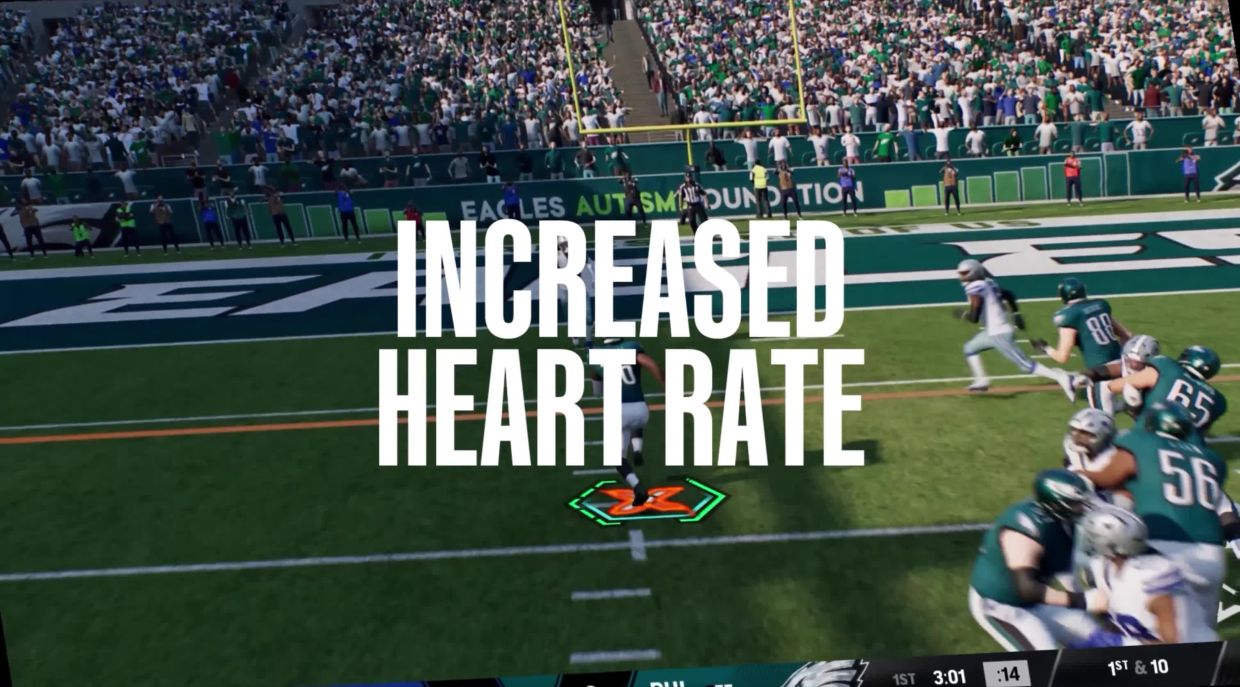
A linebacker delivers a thunderous hit to New York Giants running back Cam Skattebo during a routine play, and his head strikes the turf with bone-jarring force. For most of the millions who play the latest version of Madden NFL 25, this moment passes like countless others. But among players using a free modification, the scene transforms into something far more unsettling. The screen distorts with blurred vision and visual shimmer. Sounds become muffled and distorted, replaced by a persistent ringing. The gamepad vibrates with irregular pulses as nausea and dizziness settle in. This is what a community-created mod is attempting to achieve: translating the neurological chaos of a concussion into the digital experience of football entertainment.
The modification represents a pointed artistic and educational statement aimed at the world's most popular American football simulation. Despite Madden's design philosophy of unprecedented realism—with biomechanics, player personalities, and tactical depth refined across decades—the franchise has systematically removed concussions from its gameplay experience. Where earlier iterations, particularly those from the 1990s and early 2010s, depicted head injuries with ambulances carting away players or sideline concussion evaluations, modern versions have excised this dimension entirely. The contrast raises uncomfortable questions about what aspects of athletic reality deserve digital representation and what gets sanitised for commercial appeal.
Chris Borland, a linebacker who abandoned his NFL career after just one season due to concerns about cumulative brain damage, recognises both the mod's value and its limitations. He acknowledges that visual and auditory representations of concussion symptoms serve an awareness function, yet he points out the fundamental gap between experiencing neurological distress from a sofa and living with actual head trauma. The real consequences extend far beyond the moment of impact—cognitive decline, personality changes, emotional instability, and family breakdown represent the authentic burden that no video game modification can fully capture. Borland's skepticism about the mod's capacity to simulate genuine impact highlights a broader tension in how media portrays professional sports' darkest realities.
The decision to exclude concussions from modern Madden occurred during a period when the NFL confronted unprecedented scrutiny regarding player safety. Junior Seau, a Hall of Fame linebacker, died by suicide and was subsequently found to have chronic traumatic encephalopathy, the progressive brain condition known as CTE. This revelation, combined with a landmark legal settlement exceeding US$1.5 billion (RM6.13 billion) paid to former players and their families, forced the league to acknowledge what it had long downplayed: football's architecture creates cumulative neurological damage. Hollywood amplified these concerns through major motion pictures exploring the intersection of the sport and brain injury, further cementing public awareness of the issue.
Ben Utecht, a former tight end who retired in 2010 specifically due to concussion-related anxieties, articulates the institutional incentive behind the NFL's approach to video game depiction. The league, he explains, has vested interest in maintaining football's cultural appeal to young audiences and their parents. Removing concussion mechanics from entertainment products serves this interest by preventing potential player recruitment to see injury as an inevitable career component. Yet Utecht identifies an inconsistency in this logic: if the game preserves other injuries—ankle sprains, shoulder separations, muscular strains—then selectively excluding concussions sends a particular message that head trauma is somehow different, somehow to be forgotten.
The negotiation between Electronic Arts and the NFL's licensing department reveals how entertainment products become battlegrounds for controlling health narratives. League executives, according to former insiders, engaged in detailed discussions with game developers about whether to incorporate concussion evaluations into gameplay. The complexity of realistic concussion mechanics presented practical challenges: in actual football, two players might absorb nearly identical impacts yet experience vastly different outcomes, with only one suffering a concussion. Translating this probabilistic uncertainty into code while maintaining gameplay balance proved thorny. Rather than solve this puzzle, the path of least resistance involved elimination rather than representation.
Recent data underscores why this choice carries weight. Last season alone, the NFL documented 168 reported concussions, a significant jump from 129 the previous year—a surge partly attributed to rule changes that increased kick return opportunities. The league's official concussion protocol, requiring blue medical tents on sidelines and mandatory neurological testing, acknowledges that head injuries represent a persistent, measurable reality of professional play. Meanwhile, several players who graced Madden's cover—quarterbacks Michael Vick and Lamar Jackson, among others—have experienced career-altering concussions during actual games. The gap between video game simulation and lived athletic experience grows wider with each omission.
The mod itself represents a technical achievement born from gaming culture's tradition of community-driven enhancement. Built from 9,000 lines of code, the modification attempts to democratise awareness of concussion symptoms among players who might never encounter formal sports medicine education. By rendering subjective neurological experiences—blurred vision, light sensitivity, tinnitus, cardiac acceleration, respiratory difficulty—through sensory gameplay elements, creators hope to bridge knowledge gaps. For audiences accustomed to absorbing information through entertainment rather than medical literature, this approach offers unexpected educational potential. The modification's reach remains modest, yet its symbolic weight exceeds its technical scope.
Kristen Thomson Sheely, executive director of the Derek Sheely Foundation, recognised immediately how Madden's cultural penetration could amplify the mod's message. Her son Derek, a fullback at Frostburg State University in Maryland, died at twenty-two after sustaining catastrophic brain injury during a 2011 college football practice. According to court documents, Derek reported a headache following an initial head contact, only to be verbally demeaned by coaching staff and returned to a seven-on-seven drill. A subsequent collision with a defensive back resulted in his collapse; he never regained consciousness. The family's eventual US$1.2 million (RM4.9 million) settlement with the NCAA and Frostburg State included requirements to retire Derek's number and display it permanently on campus—an institutional acknowledgment of the human cost.
When players using the concussion mod complete their games, Derek Sheely's retired jersey number appears on screen, transforming entertainment into memorial. This modest moment of digital remembrance connects abstract awareness to tangible tragedy, reminding gamers that concussions belong to a category of injury fundamentally different from ankle bruises or hamstring pulls. Derek's story, like those of Seau and countless others, demonstrates that head injuries cascade through families, communities, and futures in ways that cannot be fully restored by financial settlements or rule adjustments. The mod's creators positioned Derek Sheely's number not as graphic decoration but as human testimony.
For Malaysian and Southeast Asian readers, this debate carries particular resonance as developing sporting industries increasingly adopt American football models and adopt similar liability frameworks. The Madden franchise maintains global reach, with local markets consuming entertainment products designed primarily for North American contexts. When international audiences encounter American sports entertainment, they inherit not only the games themselves but the philosophies underlying their design—including deliberate choices about which realities receive representation and which remain invisible. The concussion mod suggests that commercial entertainment need not choose between realism and responsibility, between accessibility and truth.
The broader question extends beyond a single modification or franchise. As sports simulation technology advances, developers and licensing bodies face recurring choices about authenticity's boundaries. Do realistic games have ethical obligations to depict realistic harms? Can entertainment products simultaneously celebrate athletic achievement and acknowledge systemic dangers? The Madden concussion mod, despite its modest technical scope, suggests growing frustration with sanitised representations of professional football's human consequences. Whether the industry responds through policy change, transparent design choices, or continued omission remains an open question with implications for how global audiences understand sports, injury, and institutional accountability.

