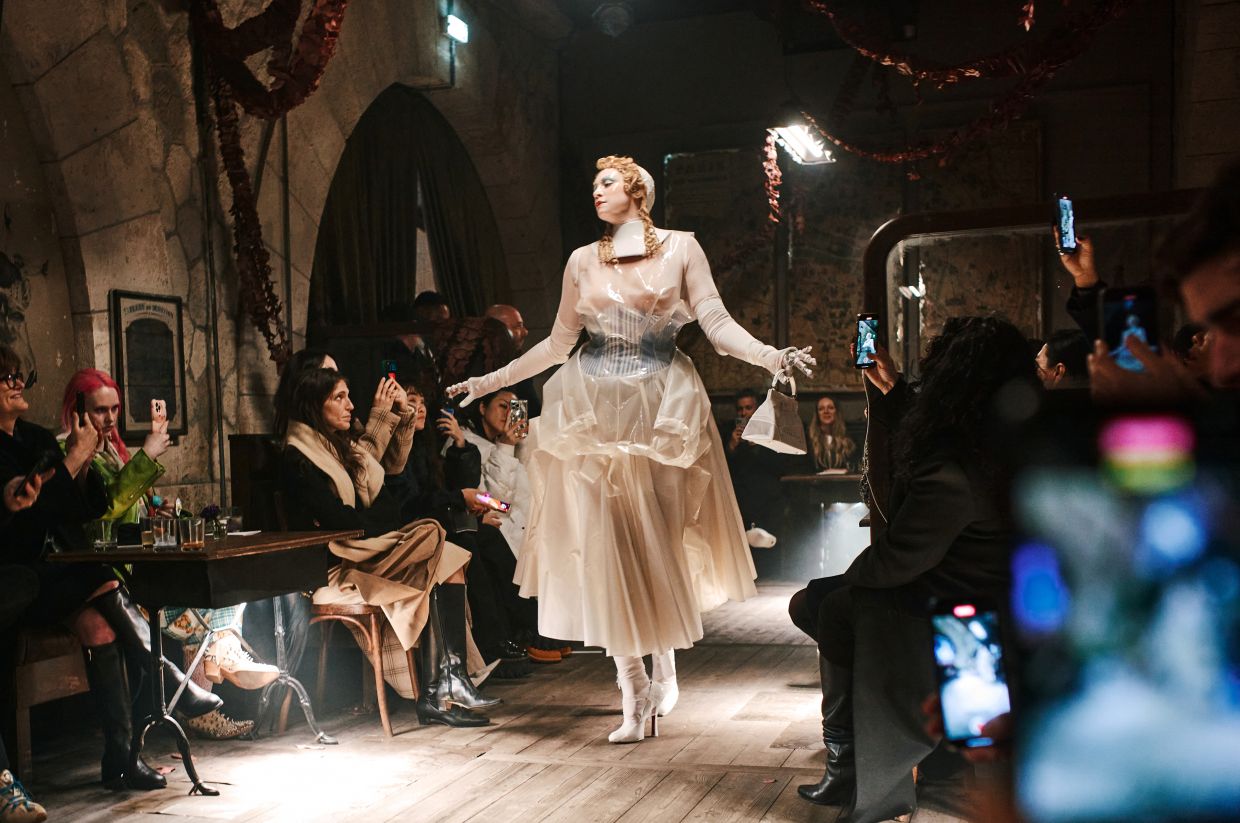
The Metropolitan Museum of Art convened an unusual gathering in May, bringing together prominent figures including Vogue editor Anna Wintour and Jewish community leaders for closed-door discussions about a potentially fraught situation: a major retrospective honouring the work of John Galliano. The meetings represented the museum's deliberate effort to navigate the minefield of honouring one of contemporary fashion's most celebrated designers while remaining sensitive to the traumatic legacy of his past transgressions. This was not an isolated conversation—multiple rounds of such discussions with Jewish leadership have taken place over the past year as the institution grappled with how to proceed.
Galliano occupies a peculiar place in the fashion pantheon. During his tenure as creative director of Christian Dior from 1996 to 2011, he fundamentally reshaped how the world's most storied fashion house presented itself to a global audience, transforming the French heritage luxury brand into a contemporary cultural juggernaut. His contributions to fashion design are undeniable—a master of the bias-cut and an imaginative storyteller whose runway presentations became theatrical events that transcended mere clothing. Yet in 2011, a video surfaced capturing him making deeply antisemitic statements in a Paris bar, including the declaration "I love Hitler," alongside equally repugnant remarks. The revelation obliterated his career overnight, resulting in his dismissal from Dior, a hate crime conviction in France, and a period of public exile from the industry.
The proposed exhibition would represent the highest honour the Metropolitan Museum can bestow upon a living designer, making Galliano only the third living creator ever accorded a solo show at the institution, joining Yves Saint Laurent and Rei Kawakubo. This level of recognition carries enormous cultural weight, effectively declaring that the fashion world—and by extension, the broader cultural establishment—has moved past the controversy. Yet the timing creates particular sensitivity. Antisemitic incidents are rising across the United States, and New York's Jewish community remains on edge following recent attacks, including the stabbing of two men in broad daylight, with one incident occurring near a Manhattan Jewish community centre. These attacks are being prosecuted as hate crimes, creating an environment where celebrating a figure with Galliano's history feels distinctly uncomfortable to many.
Museum director Andrew Bolton, who has contemplated a Galliano retrospective since 2010 but only committed seriously to the idea in 2024, has proposed a thoughtful curatorial framework intended to address rather than sidestep the controversy. He plans to open the exhibition with an "orientation gallery" that will confront what he terms "the rupture" at the centre of Galliano's life and career—the rupture that has defined him as thoroughly as his artistic contributions. Bolton emphasizes that clarity must prevail over euphemism, drawing on feedback from Jewish community leaders who stressed that straightforward language about difficult subjects matters more than carefully calibrated diplomatic phrasing. He is considering an online forum to facilitate ongoing public dialogue about Galliano's actions, his rehabilitation efforts, and what his case suggests about accountability, redemption, and artistic legacy.
The question of redemption itself has emerged as central to these discussions. Religious leaders, including Rabbi Rick Jacobs, president of the Union For Reform Judaism in North America, and Rabbi Joshua Davidson of Temple Emanu-El, have engaged thoughtfully with the concept of teshuvah—the Jewish principle of repentance and genuine transformation. Jacobs described Galliano as speaking with apparent sincerity during their meeting, looking directly at his interlocutors and communicating clearly rather than reciting prepared statements. Such testimony carries weight within a theological framework that emphasizes the possibility of meaningful change. Yet there remains legitimate concern about whether an exhibition celebrating Galliano's undeniable artistic achievements can simultaneously wrestle substantively with the reality and consequences of his antisemitic behaviour, or whether the grandeur of institutional recognition risks overshadowing the seriousness of his past actions.
Jonathan Greenblatt, CEO of the Anti-Defamation League, cautiously endorsed Galliano's rehabilitation efforts, stating that his attempts to repair the damage caused by his words and to educate himself about Judaism and antisemitism deserve recognition. This represents significant support from a prominent Jewish organization, yet even this endorsement comes with implicit conditions—that the work of repair be genuine, ongoing, and clearly visible. The museum's proposed approach attempts to meet these conditions by transforming the exhibition into an educational opportunity, using Galliano's narrative not merely as a celebration of design but as a lens through which to examine the nature of antisemitism, its consequences, and the possibilities for redemption in contemporary society.
Galliano himself has undertaken substantial work toward rehabilitation since his 2011 conviction. He entered rehabilitation, worked with rabbinical authorities in London to deepen his understanding of Judaism and the Holocaust, and engaged with Abe Foxman of the Anti-Defamation League for further education. Following this period of intensive personal work, he returned to fashion as creative director of Maison Margiela in 2014, where he has spent the past decade creating designs that have earned widespread critical acclaim and commercial success. Celebrities including Zendaya, Tyla, and Amal Clooney regularly wear his creations on red carpets, and his vintage designs achieve record-breaking prices at auction, suggesting that the fashion industry and its consumers have substantially moved past their initial horror at his statements.
Yet the rehabilitation of Galliano's professional reputation does not necessarily resolve deeper questions about institutional responsibility. When the Metropolitan Museum accords someone the honour of a solo retrospective, it makes a particular kind of statement about value, forgiveness, and the relationship between individual genius and moral accountability. The decision to proceed with the exhibition, particularly with the curatorial framework Bolton has proposed, reflects a judgment that artistic legacy and personal redemption can coexist within a thoughtfully designed educational context. However, this remains a contested judgment, with legitimate perspectives on both sides of the question.
The exhibition will be launched by the annual Met Gala, perhaps the world's most closely observed red carpet event, ensuring that global attention will focus on how the fashion world and cultural institutions reckon with figures whose past contains serious moral failings. For Malaysian and Southeast Asian observers, this debate carries resonance beyond fashion. It raises fundamental questions about how societies treat individuals who have committed serious wrongs, whether redemption is possible, and what institutional responsibility entails when recognizing complex figures. The Galliano case suggests that these determinations require not reflexive condemnation or reflexive forgiveness, but careful, contextual consideration informed by those most affected by the original harm.
Bolton has indicated that he will prioritize Galliano's own words wherever possible in the exhibition materials, recognizing that clarity about what was said and what was meant matters profoundly. By avoiding euphemism and centering accurate representation over sanitization, the museum attempts to create space for genuine reckoning rather than comfortable distance. Whether this approach succeeds in balancing artistic recognition with ethical accountability remains to be seen when the exhibition opens, but the deliberate consultation process and thoughtful curatorial planning suggest that institutions are capable of moving beyond simplistic narratives toward more nuanced engagement with difficult histories. For fashion, art, and cultural institutions generally, the Galliano retrospective may establish an important precedent for how to honour significant artistic contributions while refusing to minimize or forget serious moral failures.

