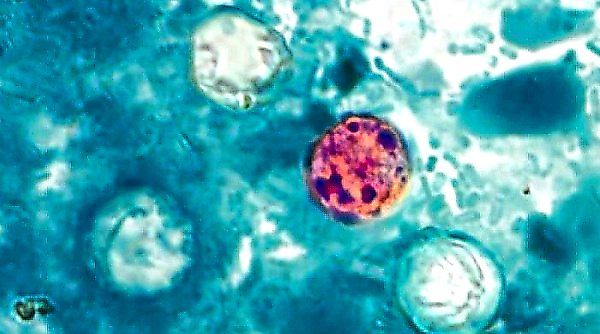
The thousands of suspected infections stemming from Cyclospora contamination across five American states underscore a troubling reality in global food safety: some of the most dangerous pathogens are also the hardest to catch. The parasite has exposed critical vulnerabilities in tracing contaminated products through complex international supply chains, a problem that directly affects Southeast Asian consumers and food importers who rely on similar agricultural networks. Understanding why Cyclospora presents such an exceptional challenge offers important lessons for Malaysia and the region as we depend increasingly on cross-border produce sourcing.
The particular difficulty with Cyclospora lies in its biological nature, which renders it fundamentally resistant to the sophisticated testing methods that work for more familiar foodborne threats. Unlike bacteria such as Salmonella or E. coli, which scientists can culture and grow in laboratory settings, Cyclospora is a parasite that simply cannot be cultivated through conventional means. This absence of culturable biology means investigators lose access to the most powerful detection tool in modern food safety: whole genome sequencing. Researchers cannot generate large quantities of genetic material through laboratory growth, forcing them instead to extract minimal amounts of DNA directly from contaminated samples and artificially amplify it—a process prone to producing false positives, as happened when the FDA tested Taylor Farms' products at the US-Mexican border.
The incubation period compounds the detection challenge dramatically. Whereas typical bacterial foodborne illnesses announce themselves within days of consumption, Cyclospora can take up to two weeks to produce symptoms. This temporal gap creates an investigative nightmare: by the time infected individuals remember what they ate and where they ate it, the contaminated produce has likely vanished from retail shelves and restaurant kitchens. Fresh produce moves through distribution networks with remarkable speed, and perishable items like lettuce are replaced constantly. Epidemiologists must therefore rely on detailed patient interviews rather than straightforward product testing—a labour-intensive methodology that depends on human memory and cooperation rather than definitive laboratory evidence.
The investigation into the multistate outbreak demonstrates both the capabilities and the limits of this interview-based approach. Working together, FDA scientists and epidemiologists conducted extensive questioning of infected patients across Michigan, Indiana, Kentucky, Ohio and West Virginia, eventually tracing a significant cluster of cases to shredded iceberg lettuce supplied to Taco Bell restaurants from Taylor Farms operations in Mexico. However, even this success proved partial: Taco Bell accounts for only approximately 60 percent of cases in the multistate outbreak, suggesting that other contamination sources remain unidentified and that parallel outbreaks may be occurring simultaneously. The CDC continues investigating these additional suspected clusters, indicating that the full scope of the problem remains unclear.
The testing failure at the US-Mexican border illustrates how Cyclospora detection can mislead even sophisticated regulatory agencies. The FDA's initial positive result for Cyclospora in Taylor Farms' product appeared to confirm the epidemiological trail, but subsequent quality-control verification revealed it to be a false positive—a consequence of the artificial DNA amplification process. Despite this setback, investigation and outbreak data continue pointing toward shredded lettuce from the Taylor Farms facility in central Mexico, prompting the company to recall all iceberg lettuce products from that region. Yet the inability to generate definitive laboratory confirmation reflects a broader inadequacy in current food safety infrastructure.
Former FDA Commissioner Scott Gottlieb articulated the core problem with striking clarity: the absence of whole genome sequencing capability for Cyclospora leaves investigators without their most effective investigative tool. Whole genome sequencing allows public health authorities to create a genetic fingerprint of a pathogen and match it precisely to contaminated sources, linking specific outbreaks to specific growers with high confidence. This molecular detective work has revolutionized food safety responses for bacterial pathogens. Without it, officials fall back on epidemiological detective work—interviews and pattern recognition—which is far less definitive and cannot exclude false leads or confirm contamination sources with scientific certainty.
The urgent call from the CDC for physicians to test patients for Cyclospora reflects an attempt to expand detection through increased clinical vigilance. More testing could theoretically identify additional cases, improve outbreak data, and potentially link disparate infections to common sources. However, this public health measure carries unintended consequences. As food safety expert Craig Hedberg from the University of Minnesota notes, heightened media attention and public awareness will likely drive many more people to seek testing—not because the outbreak is necessarily expanding, but because awareness has increased. This diagnostic surge could create an artificial impression that Cyclospora infections are multiplying, when the actual contaminated produce has likely already cycled through distribution networks and disappeared from commerce.
For Malaysia and Southeast Asia, these challenges carry particular relevance. The region imports significant quantities of fresh produce from Mexico and other tropical agricultural regions, creating potential vectors for Cyclospora and similar parasitic pathogens. Malaysia's food safety authorities must contend with the same detection limitations that confounded American regulators, yet with potentially fewer laboratory resources and less established epidemiological infrastructure. The outbreak demonstrates that tracing contamination across international borders remains exceptionally difficult even for the world's most advanced food safety system. Malaysian importers and retailers cannot rely on testing to guarantee safety; they must instead establish rigorous supplier verification protocols and maintain detailed sourcing records.
The broader implication is that certain pathogens may simply evade detection within the constraints of current technology and methodology. Cyclospora represents a category of threat—parasitic rather than bacterial, slow-acting rather than acute, invisible to conventional laboratory cultivation—that existing food safety frameworks struggle to contain. As global supply chains lengthen and fresh produce travels ever greater distances before reaching consumers, the risk calculus shifts unfavourably. Contamination can become widely distributed before becoming apparent, and investigators must work backwards from patient data rather than forwards from contaminated sources. This inversion of the normal investigative process leaves authorities perpetually reactive rather than preventive.
The Taylor Farms case, while contained to some degree through recall and investigation, ultimately resolved through epidemiological inference rather than definitive laboratory proof. Public health officials achieved a reasonable level of confidence that Mexican lettuce was responsible, but they could not marshal the kind of molecular evidence that transforms uncertainty into certainty. For consumers and food safety officials across Malaysia and the region, the lesson is sobering: some contamination events will never be fully understood, and some outbreaks will continue to spread undetected until sufficient clinical cases accumulate to reveal a pattern. Strengthening international cooperation on food safety standards, improving laboratory capacity for parasite detection, and developing new technologies for Cyclospora identification must become priorities for regional health authorities seeking to protect public health in an interconnected food system.

