The physical infrastructure underpinning the global artificial intelligence boom produces something rarely discussed in tech circles: an omnipresent, inescapable sound. To those living nearby, it resembles a helicopter perpetually hovering overhead, or the rumbling of a heavy-duty truck that runs without pause, day and night. This acoustic reality has become so intolerable in certain communities that residents are taking legal action, filing lawsuits specifically targeting data centres and their noise emissions across the United States.
The American landscape now hosts more than 3,000 operational data centres, according to analysis by the Pew Research Center, with a further 1,500 facilities in various stages of development. These sprawling industrial complexes have been largely invisible to the general public for decades, operating as essential but unglamorous pillars of the information economy. However, the accelerating demand for artificial intelligence computing power has triggered a construction surge that is bringing data centre operations far closer to residential neighbourhoods than ever before. Roughly 40 per cent of American homes now sit within eight kilometres of at least one operational facility, and this proximity continues to tighten as new infrastructure comes online.
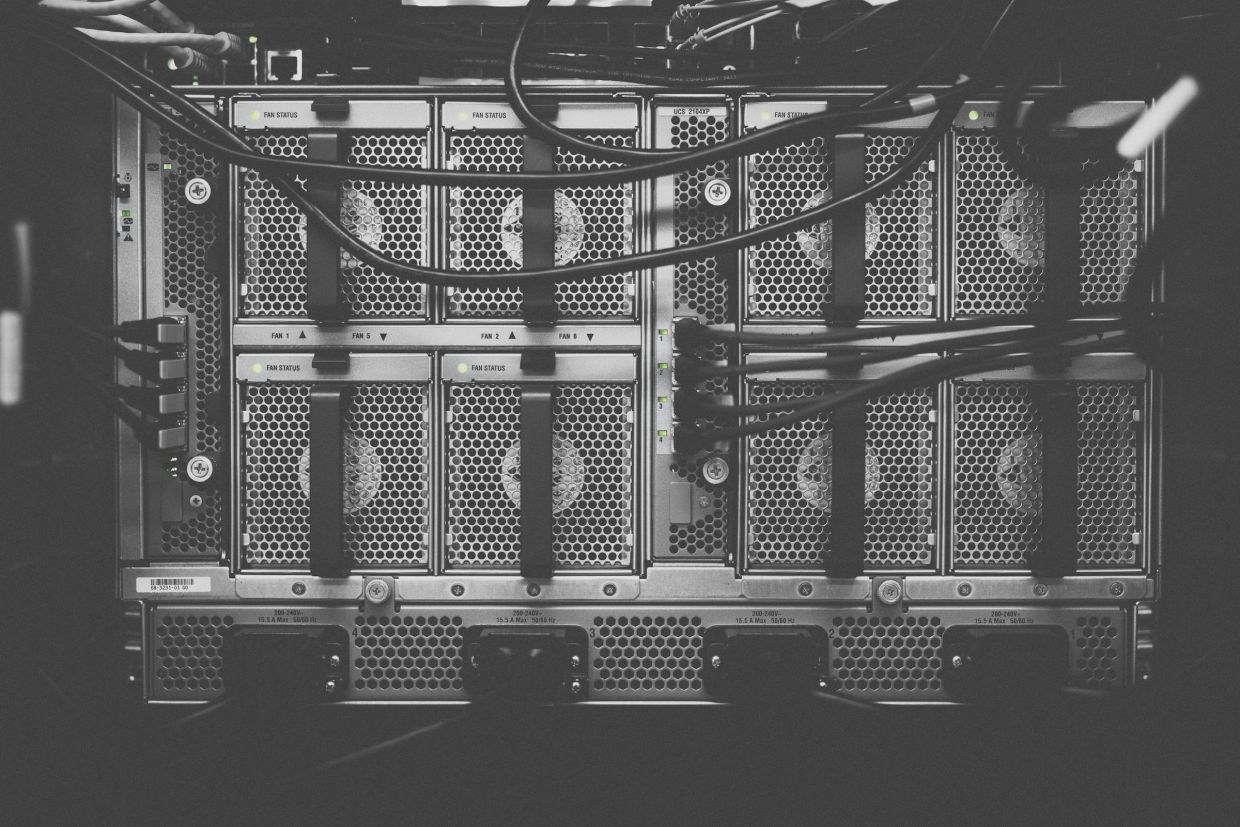
The technological reason for the noise is straightforward. Massive server farms generate extraordinary amounts of heat that must be continuously expelled through industrial-scale cooling systems. Giant fans operate constantly; many facilities also rely on diesel-powered generators because electrical grids lack sufficient capacity to handle the draw. The combined effect of cooling systems, generators, and ventilation equipment produces a low-frequency drone that travels hundreds of metres or even up to a kilometre from the facility boundary. What makes this particularly troubling is that much of the acoustic output falls below the threshold of normal human hearing, entering what scientists call the infrasound spectrum. Rather than hearing these ultralow frequencies, people physically experience them as pressure fluctuations and vibrations, analogous to feeling the bass resonance of a subwoofer at a concert reverberating through one's body.
Les Blomberg, executive director of the nonprofit Noise Pollution Clearinghouse, emphasises that the acoustic footprint of modern data centres differs by orders of magnitude from traditional industrial facilities. Scott Hamilton, a consultant on data centre projects and member of the Acoustical Society of America, explains that this infrasound phenomenon renders conventional noise measurement tools and soundproofing solutions inadequate for addressing the problem. The vibrations bypass normal hearing mechanisms entirely, making the disturbance both unavoidable and invisible to standard regulatory approaches. Residents living in the vicinity of these facilities consistently report a cluster of health complaints: chronic insomnia and sleep deprivation, persistent headaches, sensations of pressure inside the ear, and elevated anxiety levels.
The legal vacuum surrounding data centre noise stems from America's fragmented approach to environmental regulation. Noise pollution is addressed through patchwork local zoning ordinances originally crafted to handle discrete nuisances like loud parties, barking dogs, or temporary construction activity. No regulatory framework exists specifically for the round-the-clock industrial hum of data centre operations. More fundamentally, there is no federal enforcement mechanism whatsoever. During the early 1980s, the Reagan administration defunded the Environmental Protection Agency's Office of Noise Abatement and Control, a decision that has left the federal government essentially unable to address noise pollution even where regulations technically exist. Richard Neitzel, a professor of environmental health sciences at the University of Michigan, notes that the political framing of noise regulation as government overreach—the notion that authorities should not dictate acceptable lawnmower decibel levels—has calcified into permanent institutional absence at the EPA level.
Three separate lawsuits have emerged to challenge this regulatory impasse. Residents argue that while data centres frequently comply with existing local zoning codes, the perpetual humming and vibrations constitute a substantial taking of property value and a deprivation of the fundamental right to enjoy one's home. The plaintiffs are seeking financial compensation for damages and court orders compelling companies to implement more stringent soundproofing measures. In Vineland, New Jersey, homeowners filed suit in federal court against DataOne USA, which operates three server rooms at the location and is expanding dramatically. The testimony of resident Stefanie Bartiromo captures the lived experience: a constant mechanical drone most audible at night when attempting to sleep, sounding simultaneously like a helicopter frozen in place and a perpetually running heavy truck. Upon completion of its expansion, DataOne's Vineland campus will occupy 2.6 million square feet and demand 300 megawatts of electrical power—sufficient to supply a medium-sized city.
DataOne has responded to the lawsuit by stating that it has already implemented noise reduction measures and intends to continue improving sound management as expansion work proceeds. The company's official statement emphasises its commitment to constructive engagement and responsible community stewardship over the long term. However, this response mirrors the public relations strategy adopted by other data centre operators facing similar litigation in Dowagiac, Michigan, and Lowell, Massachusetts. In each case, the companies being sued have converted former industrial sites and justified their operations on economic grounds: job creation, local tax revenue, and the revitalisation of abandoned properties. This economic argument carries weight in communities often seeking industrial investment, but it does not address the health and quality-of-life concerns animating the lawsuits.
For Malaysian readers and Southeast Asian observers, these American legal and regulatory battles carry significant implications. As data centre demand surges globally—driven by cloud computing, artificial intelligence, and digital transformation—similar infrastructure is being developed across Asia, including in Malaysia, Singapore, Thailand, and Indonesia. These three lawsuits represent an early warning signal that communities worldwide will eventually demand stronger protections against the environmental and health costs of data centre operations. Malaysia's development of its own data centre industry, particularly in support of regional AI initiatives, will need to anticipate these emerging standards and community expectations rather than replicating the deferred regulatory approach that has left American residents without recourse.
The broader pattern reflected in these cases reveals a structural tension inherent in the technology economy. The computational infrastructure enabling artificial intelligence, cloud services, and digital connectivity is not weightless or consequence-free, despite its virtual character. It consumes vast quantities of electricity, water for cooling, and physical space. More fundamentally, it generates serious externalities—noise, electromagnetic effects, heat, and traffic—that are borne disproportionately by residents living adjacent to facilities. When regulatory frameworks lag behind technological development, and when companies have limited economic incentive to invest in noise mitigation beyond minimum legal requirements, communities suffer. The three American lawsuits are not anomalies but rather the predictable result of a governance gap.
The cases also illustrate how traditional property law and tort remedies may become essential tools for addressing technological externalities when administrative regulation fails. If DataOne and other defendants are required to pay significant damages or implement expensive soundproofing upgrades, the economic calculation for future data centre development will shift. Companies will face pressure to locate facilities away from residential areas, to invest in superior acoustic engineering from the outset, or to factor remediation costs into their financial projections. For now, three American communities are testing whether courts can compel what regulators cannot enforce. The outcomes will likely ripple outward, shaping how data centre operators approach site selection and design across multiple continents.

