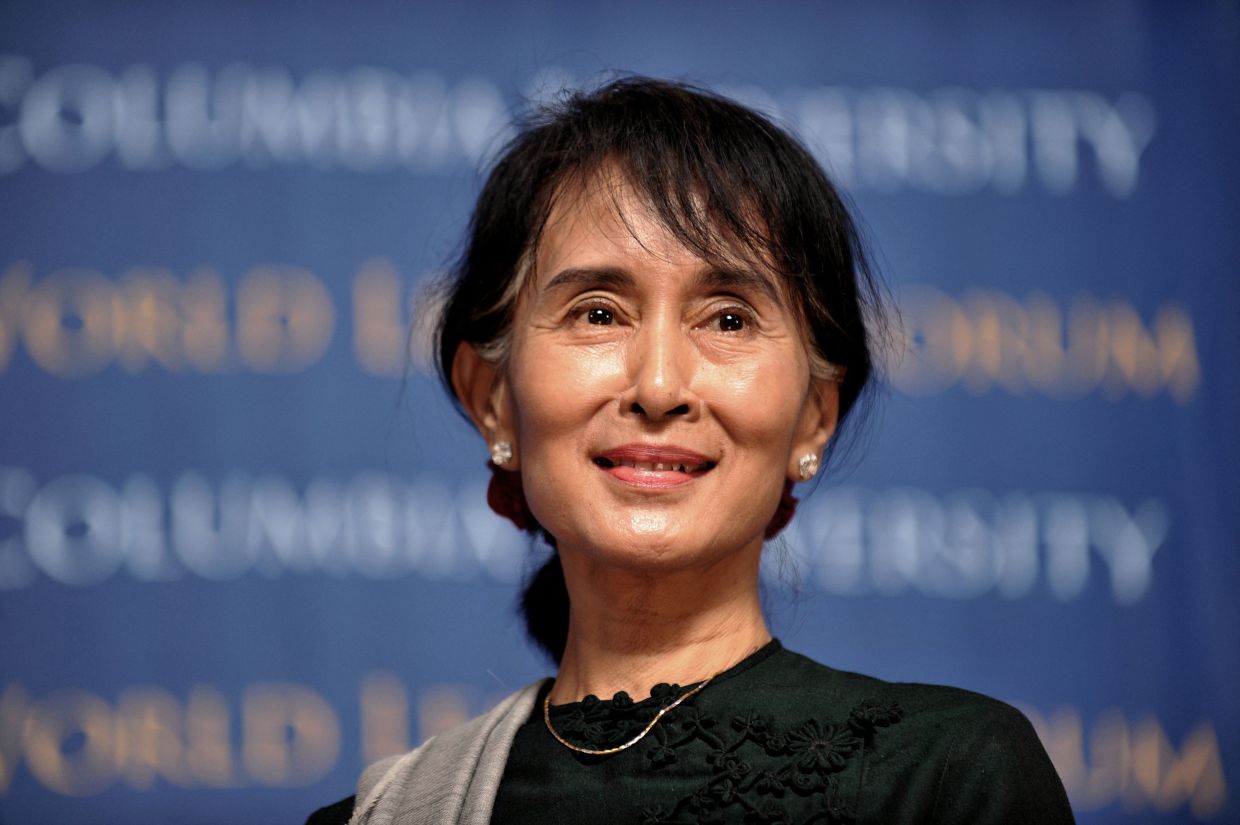
The question haunting Myanmar's corridors of power is deceptively simple: where exactly is Aung San Suu Kyi? The 81-year-old former leader, deposed in Min Aung Hlaing's 2021 coup, officially moved from prison to house arrest in Naypyidaw in April, but even top military figures claim ignorance of her location in a capital city that seems purpose-built to conceal rather than communicate. The ambiguity surrounding her confinement exposes the opacity that defines this unusual metropolis, where conventional logic and urban planning give way to the machinations of authoritarian control.
Naypyidaw presents a landscape unlike any other regional capital. Sprawling across a landmass nine times larger than New York with just one million residents, it functions as a maze of identical compounds connected by eerily vacant highways flanked by jungle and agricultural fields. The city embodies a particular form of state architecture, where space itself becomes a tool of governance. Traffic along these colossal 20-lane avenues is sparse, and pedestrians are scarce, lending the entire municipality an otherworldly quality that unsettles visitors and residents alike. Urban theorist Galen Pardee of Columbia University describes the experience as akin to house arrest itself—a space engineered to disorient rather than facilitate human interaction or community life.
The origins of Naypyidaw trace back to 2005, when former military strongman Than Shwe designated the inland city as Myanmar's new capital, abandoning the cosmopolitan port city Yangon. Military planners justified the relocation through narratives of centrality and development, but experts recognize a deeper motivation: insulation from the urban populations that have historically mounted challenges to authoritarian rule. The shift away from Yangon and Mandalay reflected calculated paranoia regarding mass uprisings and external pressure. Construction began in the early 2000s, transforming jungle and farmland into a vast administrative complex marked by monumental architecture and meticulous landscaping designed to project power while minimizing public presence.
The physical infrastructure itself speaks volumes about governance priorities. Myanmar's parliament occupies an 800-acre campus—among the world's largest—despite the nation's uninterrupted history of military or authoritarian control. Mobile internet jammers disrupt navigation applications, and maintenance crews of gardeners often exceed the number of visible citizens, manicuring identical lawns that stretch beyond the horizon. A 25-year-old resident, speaking anonymously for security reasons, captures the disorientation perfectly: locals frequently lose their bearings within their own city, unable to distinguish one neighbourhood from another. The cityscape deliberately resists orientation, transforming geography itself into a mechanism of control and secrecy.
Min Aung Hlaing's announcement that Suu Kyi had transitioned from prison to house arrest was presented as humanitarian gesture, evidence of his supposed transformation from military autocrat to civilian president following elections in January. The narrative suggested a nation progressing toward normalcy, yet the reality remains starkly different. Critics interpret the move as a strategic rebranding exercise—a method of laundering the military's global image while keeping Suu Kyi equally confined and isolated. Her confinement now operates within the language of civilian legality rather than military detention, yet the substance remains unchanged: isolation in an undisclosed location within a city designed to frustrate transparency.
The mystery of Suu Kyi's whereabouts extends beyond mere bureaucratic secrecy. Thein Tun Oo, a spokesman for the pro-military Union Solidarity and Development Party that won the controlled elections, stated plainly that even he does not know her location. His candour is striking: he is not permitted this information precisely because the military apparatus reserves ultimate knowledge for itself. More remarkably, police special branch officers from different jurisdictions indicated that Suu Kyi had been moved to areas off-limits even to them. One source claimed that even generals lack access to her information, suggesting her confinement transcends normal prison administration and instead represents an exercise in state control so absolute that it excludes conventional chains of command.
Suu Kyi's life trajectory underscores the significance of her current disappearance. The daughter of independence hero Aung San, she spent much of her life abroad before returning to Myanmar in 1988 to lead the democracy movement. Her early activism resulted in 15 years of house arrest in her family's Yangon mansion, which became a beacon for pro-democracy demonstrators until her release. She received the Nobel Peace Prize in 1991, cementing her international status as a symbol of resistance to authoritarianism. The generals eventually permitted a decade-long democratic transition, during which Suu Kyi served as elected leader. The 2021 coup reversed this arrangement entirely, subjecting her to fabricated charges that international human rights organizations uniformly condemn as politically motivated.
The physical evidence of her former status has been systematically erased. One villa in Naypyidaw where Suu Kyi resided before assuming office has been demolished, removing even architectural reminders of her elected leadership. When she was entitled to government residences as leader, these were located behind security checkpoints requiring clearance even for officials. Her current house arrest, however, exists at a location so classified that checkpoints and barriers seem almost mundane by comparison. The secrecy surrounding her confinement transcends standard security protocols; it suggests a deliberate intention to render her absence from public life so complete that even confirmation of her existence becomes difficult.
Her son Kim Aris, speaking from London, rejects the distinction between her former imprisonment and current house arrest as meaningless. He argues that any residential space where his mother is held without freedom of movement constitutes a private prison rather than a home. The distinction between incarceration in a prison compound and confinement in a civilian residence evaporates when basic liberties remain suspended. Aris's observation highlights the performative nature of Min Aung Hlaing's purported clemency: the change in terminology and location masks the continuity of control and isolation. Suu Kyi remains a prisoner in all substantive respects, held in a capital city that has become her jailer.
The pro-military Union Solidarity and Development Party, victorious in January's carefully controlled elections, has begun cultural erasure efforts within government spaces. Though parliament libraries retain magazines honouring Suu Kyi from previous eras, party figures like MP Aye Chan confidently declare that her political era has concluded. This rhetorical move attempts to establish finality—to cast Suu Kyi as a historical artifact rather than a living political force. The military has calculated that combination of her physical isolation, the city's inherent opacity, and institutional messaging can accomplish what overt violence cannot: the social death of Myanmar's most recognizable opposition figure. By hiding her in plain sight within a capital designed for concealment, the junta transforms an 81-year-old woman into a ghost haunting a ghost city.
For Malaysia and Southeast Asia more broadly, Suu Kyi's predicament carries sobering implications about the fragility of democratic institutions and the durability of authoritarian networks. Myanmar's descent from democratic experiment to renewed military rule occurred within a decade, suggesting that constitutional frameworks and electoral processes offer limited protection against determined military actors. The surgical precision with which the junta has neutralized Suu Kyi—combining legal fiction, spatial control, and information management—demonstrates how modern authoritarianism operates through sophisticated means rather than crude repression alone. Regional observers must reckon with the reality that Myanmar's trajectory, though extreme, reflects vulnerabilities present throughout Southeast Asia where military institutions retain substantial power and weak democratic cultures cannot easily resist determined takeovers.

