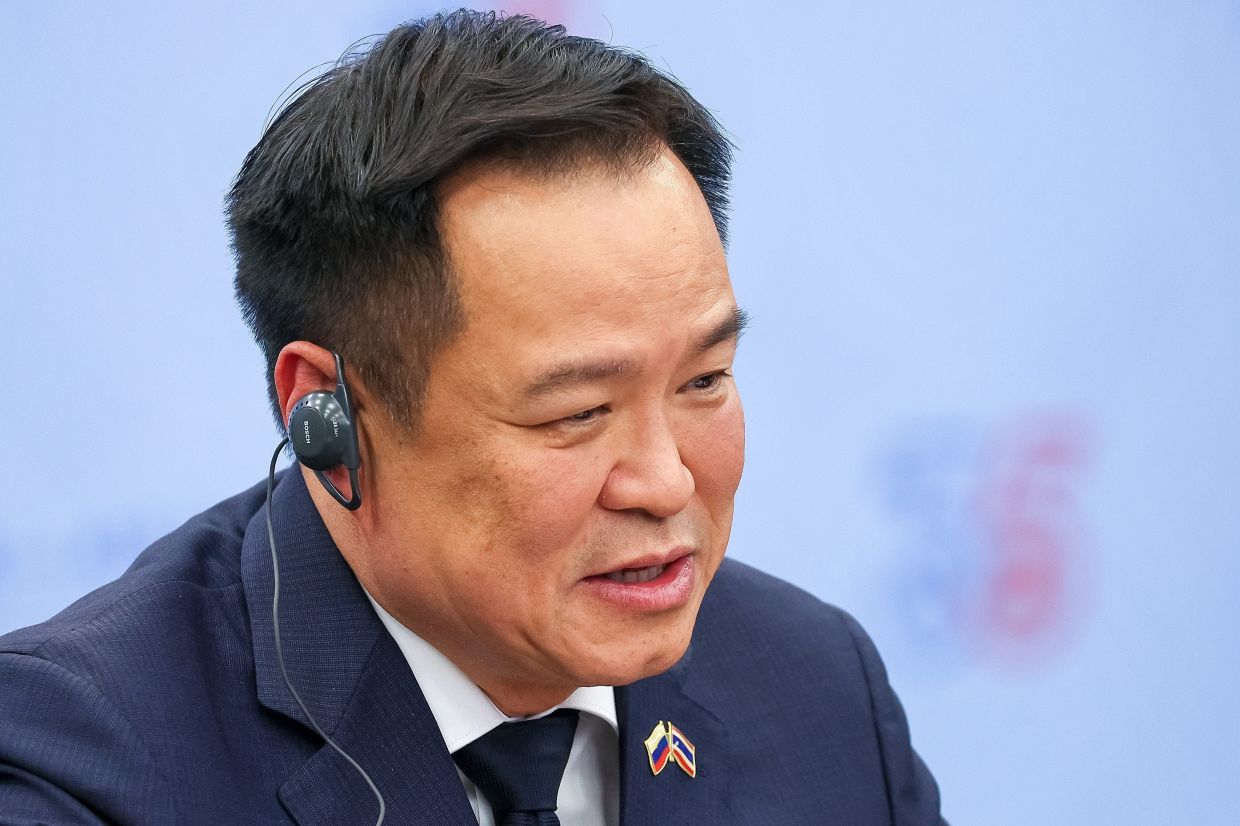
Bangkok's political establishment drew a collective sigh of relief when Prime Minister Anutin Charnvirakul completed 100 days in office on June 27, having taken the oath on March 20 following his February 2026 election victory. The 59-year-old leader's tenure marks the latest chapter in Thailand's turbulent political history—a return to the premiership barely nine months after his previous government under Paetongtarn Shinawatra collapsed in September 2025. Early assessments from regional analysts suggest Anutin has successfully managed immediate crises threatening national stability, yet shows minimal inclination to address the deeper structural weaknesses undermining Thailand's economic prospects in a competitive Southeast Asia.
The new government faced its baptism by fire almost immediately. Escalating conflict in the Middle East, culminating in coordinated US-Israel attacks on Iran on February 28, sent shockwaves through global energy markets and exposed Thailand's dependence on petroleum imports. Crude oil prices surged above US$100 per barrel as shipping through the Strait of Hormuz faced repeated disruptions, triggering panic buying at petrol stations across the kingdom where supply chains struggled to keep pace with demand. The government's rapid response—tapping Thailand's Oil Fuel Fund to subsidise fuel prices, ordering coal-fired power plants to operate at maximum capacity, and diversifying energy purchases from the United States, Malaysia and Brunei—prevented the kind of acute shortages and public unrest that might have destabilised his nascent administration.
Mathis Lohatepanont, a political science researcher at the University of Michigan, noted that the government "managed to avoid further instability" despite early supply disruptions and sharp price increases. While Thai households continue complaining about elevated fuel costs at the pump, the absence of mass street protests suggests the administration successfully communicated its crisis response to voters. The energy crisis, though serious, proved manageable through orthodox government intervention rather than a systemic challenge to Anutin's political survival.
Another early victory came from following through on campaign pledges that energised his Bhumjaithai Party's electoral base. His government rolled out the "Thais Help Thais Plus" subsidy scheme beginning June 1, a popular consumption-boosting programme offering eligible citizens goods at just 40 per cent of retail price. Budgeted at 176 billion baht (US$5.27 billion), the initiative targets approximately 30 million Thai adults aged 18 and above, excluding those already receiving state welfare. The scheme represents precisely the kind of visible, immediate relief that appeals to voters struggling with living costs, and demonstrates Anutin's willingness to deploy resources on politically rewarding initiatives.
Yet analysts caution against viewing such programmes as evidence of serious economic stewardship. Puangthong Pawakapan, a political scientist at Chulalongkorn University, observed that while Thais recognise the subsidy scheme provides temporary respite from rising costs, it "absolutely nothing to solve the underlying economic crisis." The programme exemplifies what critics describe as the government's preference for short-term symptomatic relief over addressing root causes of Thailand's economic malaise. This distinction matters profoundly when considering Thailand's medium-term trajectory against regional competitors.
Thailand's economic performance presents a sobering backdrop to Anutin's crisis management credentials. The International Monetary Fund projects just 1.5 per cent growth this year—the slowest pace across Southeast Asia, trailing Vietnam's projected 7.1 per cent, Cambodia's four per cent, and even conflict-ravaged Myanmar's three per cent. Over the preceding five years, Thailand has failed to achieve annual growth exceeding three per cent, indicating structural stagnation rather than temporary cyclical weakness. This sluggish expansion compounds an already serious challenge: household debt levels remain elevated whilst the population ages, shrinking the proportion of working-age citizens and straining pension systems. These interconnected problems require coordinated policy responses extending far beyond energy subsidies or consumer rebates.
When pressed on economic transformation, Anutin articulates aspirations around digital technology, artificial intelligence and clean energy as potential growth engines. Yet analysts detect no credible roadmap translating these sector-level ambitions into concrete policy, institutional reform or resource allocation. Stithorn Thananithichot from Chulalongkorn University's Political Science Faculty argues the government's "energies have gone into routine administration and day-to-day management rather than into any initiative aimed at meaningful economic or political change." This observation captures the fundamental distinction between crisis management—keeping the ship steady through immediate storms—and structural governance, which requires sustained commitment to long-term institutional transformation despite fluctuating political pressures.
The question of constitutional reform particularly illustrates this governance gap. A February 8 referendum conducted alongside the general election revealed that nearly 60 per cent of voters—approximately 20 million citizens—wish to revise the 2017 Constitution, widely regarded as undemocratic because it was drafted under former Prime Minister Prayut Chan-o-cha following the 2014 military coup. This mandate for constitutional change represents extraordinary popular consensus in a country accustomed to political fragmentation. Yet Anutin's government has advanced the reform agenda scarcely at all, suggesting deliberate strategic choices rather than mere organisational delays. Stithorn notes that administrations genuinely committed to reform typically signal structural intent early through concrete measures; the conspicuous absence of such signals indicates calculated restraint.
Anutin's cabinet appointments further suggest cautious pragmatism over transformative vision. Rather than assembling an administration explicitly tasked with constitutional overhaul and institutional renewal, the government constructed coalitions around familiar political configurations. This approach maintains stability—essential after Thailand's recent political turbulence—yet simultaneously forecloses the kind of administrative renewal that genuine reform demands. The prime minister appears to have calculated that his political coalition cannot sustain simultaneous management of economic challenges, energy crises and constitutional upheaval, necessitating prioritisation of immediate stability over systemic change.
The governing challenge facing Anutin reflects deeper structural constraints within Thai politics. Two decades of military coups and short-lived civilian governments have prevented policy continuity, allowing fundamental economic weaknesses to compound unchecked. This pattern creates a vicious cycle: weak institutions cannot implement long-term strategies, preventing economic modernisation, which in turn destabilises the political system and invites renewed intervention. Breaking this cycle requires governments willing to invest political capital in institutional reform despite short-term costs. Whether Anutin's administration possesses either the capacity or determination to undertake such transformation remains profoundly uncertain.
For Malaysia and other Southeast Asian economies monitoring Thailand's trajectory, Anutin's hundred-day record offers both reassurance and concern. The reassurance comes from demonstrated crisis management competence; energy shocks and political instability in Thailand have regional implications, and Anutin's steady hand prevented escalation. The concern stems from Thailand's visible economic deceleration relative to regional peers. If Thailand continues underperforming on growth whilst its neighbours capture greater shares of regional investment and trade flows, the resulting economic divergence could gradually shift Southeast Asia's economic geography. Thailand's challenges—structural rather than circumstantial—require the kind of sustained governmental commitment to reform that Anutin's first hundred days suggest he is not yet prepared to undertake.
Looking ahead, the immediate question is whether Anutin will shift from crisis management toward strategic economic reform. His first hundred days established credibility in navigating acute challenges, yet analysts universally note the absence of meaningful progress on long-term structural issues. The government's appetite for the difficult, politically costly reforms necessary to restore Thailand's competitive position remains unclear. Meanwhile, window of opportunity continues narrowing as regional competitors advance and demographic shifts accelerate. Anutin has proven himself a capable administrator in turbulent circumstances; whether that proves sufficient to address Thailand's deeper challenges will determine not merely his government's legacy but Thailand's regional standing for years to come.

