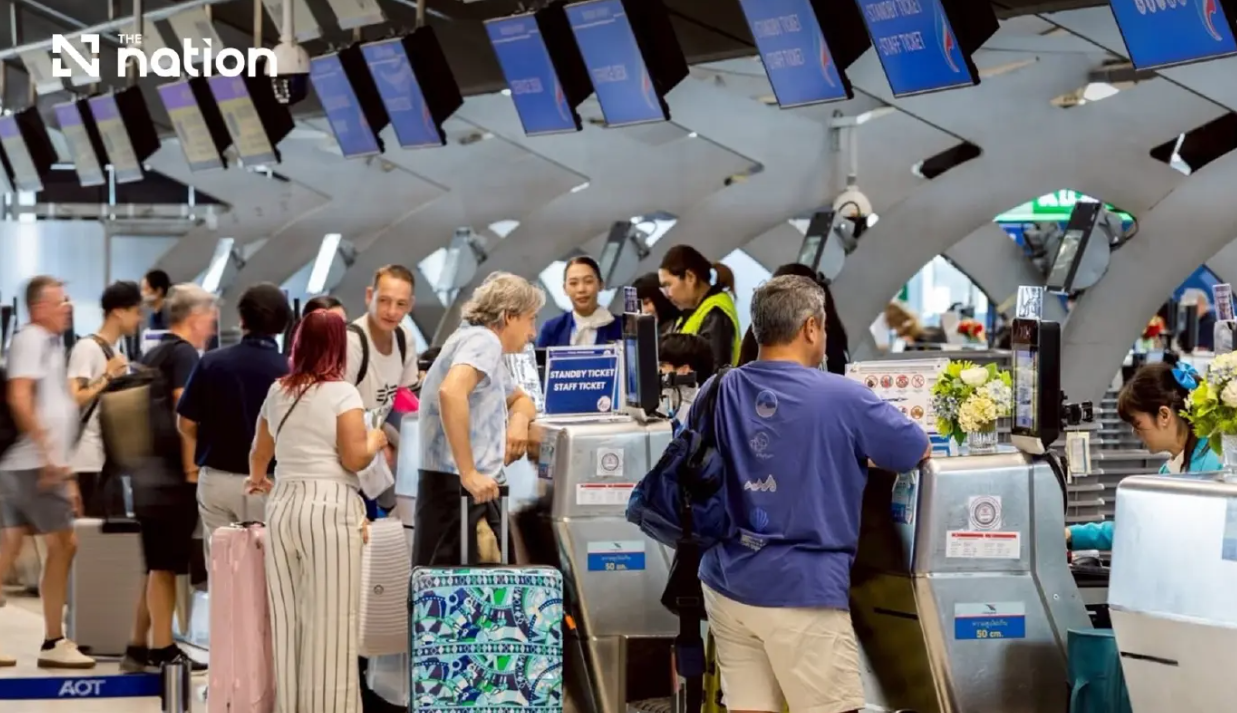
Thailand's government is moving ahead with two significant tourism initiatives designed to stimulate domestic travel spending and generate dedicated funding for sector-wide improvements. The Tourism and Sports Ministry has announced plans to roll out the Thai Travel Thai Plus subsidy programme starting in September, coinciding with the country's Green Season tourism peak, while simultaneously proposing a new levy on international arrivals to establish a dedicated tourism development fund.
The domestic subsidy scheme represents an ambitious effort to inject substantial purchasing power directly into Thailand's tourism economy. Preliminary allocations total 1.75 billion baht channelled through a co-payment structure that would reach approximately 500,000 eligible participants via the Pao Tang application operated by Krungthai Bank. The mechanics of the programme involve government cost-sharing, with the state covering half of verified tourism expenditure subject to a 3,000-baht ceiling per entitlement. Participants can accumulate up to five entitlements during the initial four-month trial period, theoretically allowing maximum government assistance of 7,500 baht per person.
What distinguishes this initiative from previous domestic stimulus efforts is its deliberately broad eligibility criteria for merchant participation. Rather than concentrating subsidy benefits narrowly within the food and accommodation sectors, the revised framework explicitly encompasses museum admissions, guided tours, car rental services, community-based products and locally manufactured tourism goods. This architectural choice reflects government recognition that tourism spending generates cascading economic benefits across interconnected supply chains, and that smaller operators in secondary cities and rural communities risk exclusion from stimulus programmes designed around major hotel and restaurant chains.
Financial Minister Surasak Phancharoenworakul clarified that the scheme includes an expandable voucher component, with plans to increase the per-entitlement voucher allocation from 500 baht to 1,000 baht. This voucher component, which maintains separate redemption flexibility from other subsidy tranches, enables participants to access services across the broader ecosystem of tourism-related businesses nationwide. The administration projects that the programme could catalyse more than 26 billion baht in total economic circulation when accounting for multiplier effects flowing through supply chains and service providers.
Parallel to the domestic initiative, Thailand's government is advancing a complementary revenue mechanism targeting international visitors. The proposed foreign visitor fee would establish a dedicated Thailand Tourism Promotion Fund supported entirely by incoming tourist levies. Officials have articulated three primary expenditure categories for this fund: expanding capacity at established attractions and constructing new purpose-built facilities, particularly in secondary destination cities positioned for regional growth; funding visitor insurance coverage and enhanced safety infrastructure to address documented concerns about tourist welfare; and financing environmental remediation projects targeting ecosystems degraded by intensive tourism activity.
The foreign visitor fee proposal remains deliberately preliminary at this juncture, with government officials declining to specify collection mechanisms, fee quantum or implementation timelines. This cautious approach reflects both the political sensitivity surrounding new tourist taxation in a competitive Southeast Asian marketplace and the need to coordinate implementation methodology across multiple government agencies and international carriers. The proposal's progression through bureaucratic channels will require extensive stakeholder consultation involving private tourism operators, transport companies and hospitality industry representatives who harbour legitimate concerns about unintended consequences or implementation inefficiencies.
These initiatives received formal endorsement at an August 10 meeting of the Subcommittee on the Development of Trade, Tourism and the Community Economy, chaired by Deputy Prime Minister and Commerce Minister Suphajee Suthumpun. The subcommittee functions as a coordinating mechanism for aligning tourism development with broader economic policy objectives under a framework explicitly linking tourism sector competitiveness to national trade and services growth targets. Participation encompassed Culture Minister Sabeeda Thaised, senior Tourism and Sports Ministry permanent secretary Natthriya Thaweevong and representatives across relevant government agencies, reflecting the administration's intention to integrate tourism planning across multiple policy domains.
The Thai Travel Thai Plus programme addresses a strategic government priority to distribute tourism benefits beyond traditional coastal and metropolitan destinations toward smaller cities and rural communities designated as "Must-Visit Cities." This geographical redistribution strategy responds to longstanding concerns that tourism concentration in Bangkok, Phuket and Krabi generates localized congestion while leaving inland provinces unable to capture visitor spending. By structuring subsidy eligibility to encompass diverse service categories and explicitly encouraging participant spending in secondary destinations, the administration hopes to incentivize visitors toward less-visited regions while enabling community-based enterprises to capture tourism revenue.
Financing details indicate that the preliminary 1.75-billion-baht budget will derive from government borrowing rather than budget reallocation, reflecting the administration's commitment to treating tourism stimulus as additional economic support rather than redistribution from competing priorities. Ministry officials acknowledge that outstanding negotiations with the Finance Ministry continue regarding funding modalities and implementation conditions affecting participation across different tourism sectors. This ongoing dialogue suggests that final programme specifications may differ materially from current preliminary parameters as technical and fiscal realities crystallize during the coming weeks.
Administration officials have signalled expectations that detailed policy conclusions will crystallise within approximately one week, enabling final government approval and merchant preparation ahead of the targeted September launch window. The pilot four-month duration creates a defined evaluation period allowing the government to assess programme effectiveness, identify implementation obstacles and calibrate subsequent expansion phases. Minister Surasak explicitly contemplated programme continuation beyond the initial trial period should positive economic indicators and stakeholder feedback support extension, suggesting this initiative constitutes a potential cornerstone of tourism policy rather than a temporary expedient.
For Malaysia and other Southeast Asian economies, Thailand's dual initiatives signal intensifying regional competition for tourism market share alongside growing sophistication in using fiscal instruments to shape visitor distribution patterns. The foreign visitor fee proposal particularly merits Malaysian attention, as Thailand's potential experience implementing such levies could influence policy discussions within ASEAN regarding sustainable tourism financing and burden-sharing between tourism beneficiaries and destination communities. The Thai government's explicit targeting of secondary destination development and community-inclusive tourism benefits also provides a counterpoint to more traditional concentration-of-investment models that neighbouring nations might evaluate critically.
The Creative Economy and Visitor Economy working group, chaired by Weerasak Kowsurat under Suphajee's broader economic policy framework, has received explicit instructions to identify "quick win" outcomes within six to twelve months. This accelerated implementation timeline prioritises regulatory simplification and competitive enhancement measures that bypass legislative amendment procedures. The working group's mandate to eliminate administrative obstacles while preserving policy objectives reflects recognition that tourism competitiveness increasingly derives from bureaucratic efficiency and visitor experience quality alongside traditional attractions and price positioning.

