Thailand's government is moving swiftly to introduce tougher gun control legislation following a tragedy at Debsirin Nonthaburi School on Friday that claimed seven lives and left over two dozen others wounded. Prime Minister Anutin Charnvirakul, who also holds the interior ministry portfolio, has committed to working with the national police chief to develop comprehensive firearms restrictions aimed at preventing similar incidents in the future.
The proposed regulatory framework centres on severely limiting civilian access to firearms, a departure from Thailand's existing permissive approach to gun ownership among the general public. Under the new regime, Anutin indicated that only government officials engaged in official duties would retain the right to carry weapons in public spaces. This represents a fundamental shift in policy that acknowledges the risks posed by widespread civilian gun ownership in an increasingly unstable society.
The prime minister emphasised that current law already prohibits ordinary citizens from carrying firearms outside their residences or in public areas, yet enforcement has proven inadequate. To address this enforcement gap, Anutin announced a directive requiring police to conduct systematic firearm checks at checkpoints nationwide, with immediate legal consequences for those found carrying weapons unlawfully. This hands-on approach to implementation reflects official recognition that legislative frameworks alone have failed to prevent tragedies.
The shooting occurred when a 14-year-old student opened fire at the school around 10 in the morning, fatally shooting three educators and three fellow students before taking his own life. The rampage sent shock waves through Thailand's educational system and triggered urgent questions about school safety protocols and youth access to firearms. Police investigations into how the teenager obtained the weapon and what precipitated the violence are ongoing, though preliminary reports suggest possible access to family firearms.
Twenty-one people sustained injuries in the attack, with eight hospitalised in critical condition. The scale of casualties underscores the lethality of allowing firearms to circulate among young people with inadequate safeguards. Medical teams worked through the day to stabilise the injured and coordinate their treatment across multiple hospitals in the Bangkok metropolitan region.
While announcing his commitment to legislative reform, Anutin rejected certain security measures that he deemed disproportionate or unnecessary. He specifically dismissed suggestions that schools should install X-ray screening equipment for students entering campus, characterising such an approach as abnormal and excessive. Instead, the government intends to task the Education Ministry with developing practical safety protocols that reassure parents without creating an atmosphere of militarised security within educational institutions.
The balance Anutin sought to strike reflects broader global tensions in school safety policy. Nations across Asia, including Malaysia and Singapore, have grappled with similar questions about how to protect young people without transforming schools into fortress-like environments that undermine their fundamental purpose as spaces for learning and development. Thailand's approach appears to target the root cause—uncontrolled civilian firearm access—rather than symptomatic responses like intensive screening.
For Malaysia and other regional neighbours, the Debsirin Nonthaburi incident serves as a cautionary illustration of the consequences when gun ownership regulations remain insufficiently stringent or poorly enforced. Malaysia itself maintains strict firearms laws that effectively prevent most civilians from obtaining weapons, a regulatory regime that has largely insulated the country from mass shooting incidents. Thailand's announcement of tighter controls aligns it more closely with regional norms around civilian gun ownership.
The timing of the tragedy coincides with growing concerns across Southeast Asia about youth violence and the accessibility of weapons to minors. Police forces throughout the region have expressed alarm at increasing incidents involving young perpetrators and stolen or illegally obtained firearms. Thailand's decisive governmental response, while necessary, also underscores systemic failures in previous gun regulation that allowed a minor to access a firearm without intervention.
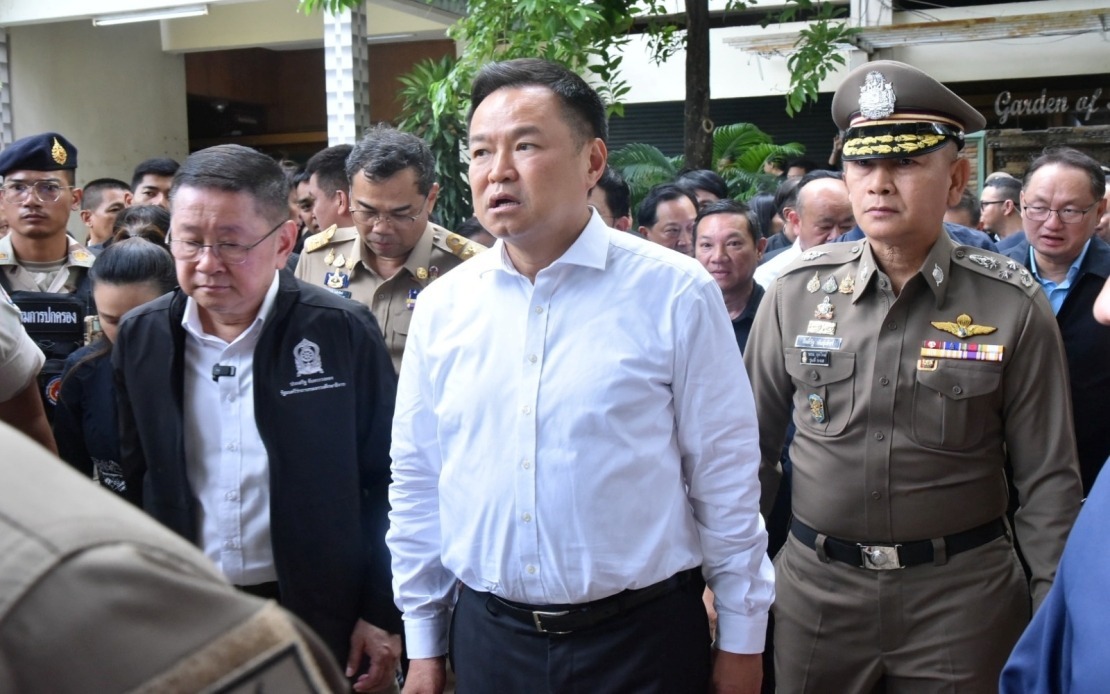
Anutin's dual role as prime minister and interior minister positions him to drive implementation of new firearms controls across police and government agencies. His personal visit to Debsirin Nonthaburi School on Friday signalled executive commitment to the issue and allowed him to receive briefings directly from Royal Thai Police officials investigating the incident. This high-level engagement suggests the government recognises the political and social significance of moving quickly to prevent recurrence.
The path forward for Thailand involves translating rhetorical commitment into legislative reality. Discussions with the national police chief will determine whether new laws focus solely on restricting civilian carry or whether they also tighten the requirements for initial firearm ownership through enhanced background checks, psychological evaluations, or secure storage mandates. Regional observers will watch closely to see whether Thailand's post-incident legislative momentum translates into substantive regulatory change or whether existing loopholes persist.
For families of the seven victims and the broader Thai public, the government's swift response offers some measure of accountability, though it cannot undo the tragedy. The coming weeks will reveal whether Anutin's pledges translate into concrete action that meaningfully reduces civilian access to weapons and creates meaningful barriers preventing minors from obtaining firearms. How thoroughly Thailand pursues these measures may influence other regional governments considering their own firearms policies.

