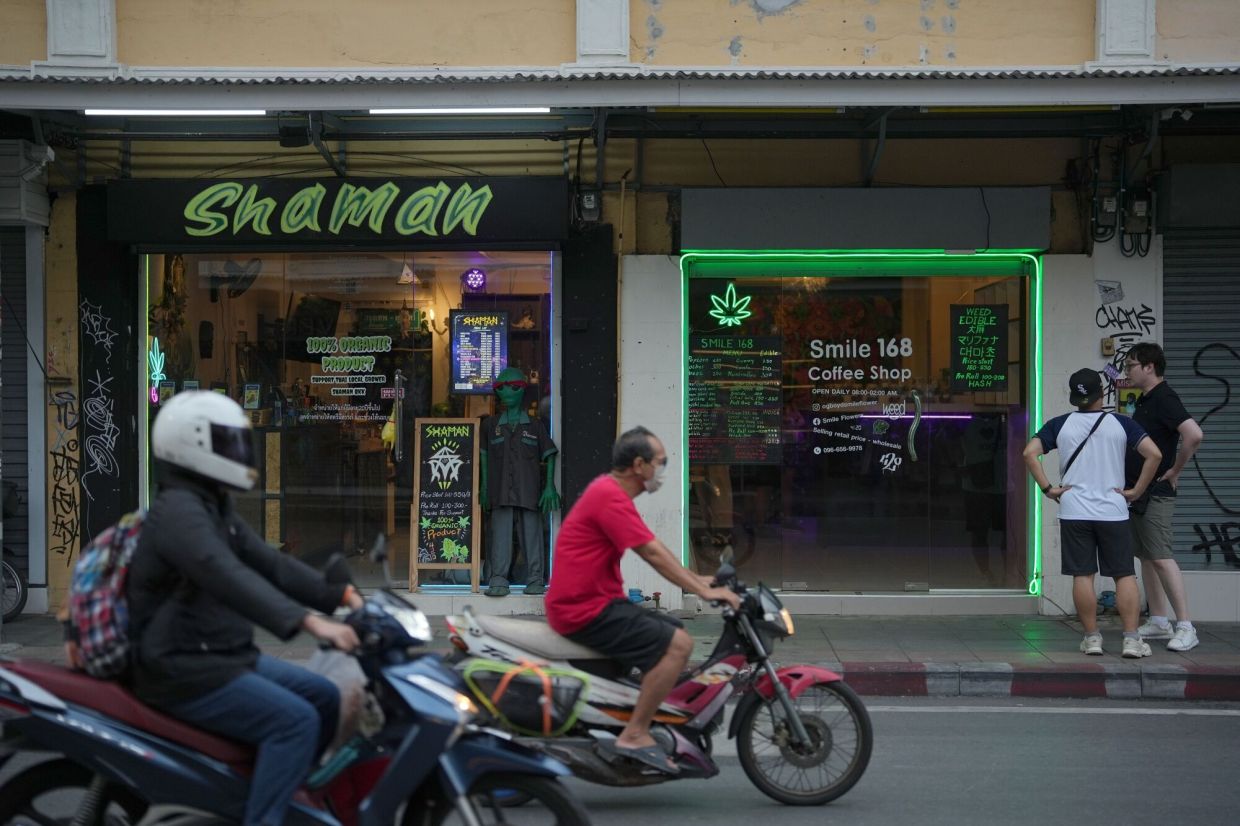
Thailand is moving forward with stricter regulations on cannabis use as Public Health Minister Pattana Promphat advanced a comprehensive draft Cannabis and Hemp Act designed to confine the substance to medical applications. Speaking on Tuesday, July 7, 2026, the minister signalled the government's determination to establish clear boundaries around cannabis cultivation, distribution, and consumption following concerns about illegal trafficking and fraudulent licensing practices that have undermined existing controls.
The push for formal legislation comes as Thailand faces mounting challenges in managing cannabis that was previously decriminalised for medical and research purposes. Under the current regulatory framework, authorities rely on scattered provisions embedded within the Act on the protection and promotion of herbs alongside various ministerial regulations governing sales, transfers, and extraction. A critical gap in these existing rules is the absence of oversight at the cultivation stage, leaving producers largely unsupervised and creating opportunities for diversion into unregulated channels. The new comprehensive act is designed to plug this vulnerability by extending government control throughout the entire supply chain from seedling to dispensary counter.
A particular concern driving the legislative effort is the documented flow of Thai cannabis into international markets where it remains classified as a controlled narcotic. Pattana acknowledged that while Thailand has moved away from treating cannabis as a narcotic substance domestically, the situation differs substantially in destination countries where Thai cannabis shipments have been interdicted. This regulatory mismatch has complicated enforcement efforts and created legal complications for Thai exporters and travellers. The ministry has been coordinating intensively with the Customs Department and Airports of Thailand to intercept illicit shipments, while simultaneously transitioning to electronic licensing systems that provide superior audit trails compared to paper documents that have been counterfeited in previous cases.
The government's most immediate enforcement priority, however, concerns the sprawling network of unlicensed cannabis retailers operating throughout the country. An estimated 6,000 outlets were operating without valid authorisation as of the most recent assessment, representing roughly one-third of the 18,000 registered premises that had opened since 2023. Only approximately 1,500 of the shops with expiring licenses had sought renewal, suggesting either regulatory fatigue or deliberate avoidance of compliance obligations. With additional tranches of licences set to expire in 2026 and 2027, the ministry anticipates the unlicensed population will continue growing unless enforcement intensity increases substantially.
To combat illicit retail operations, the ministry has implemented a publicly accessible GPS-based registry displaying the precise location and licence expiry date for every authorised outlet. This transparency mechanism essentially creates a searchable map that citizens and enforcement personnel can consult to identify which establishments operate legally and which do not. Any shop absent from this database is automatically deemed unregistered and subject to immediate enforcement action without requiring preliminary investigation or warnings. The strategy reflects a shift toward more proactive and efficient enforcement by front-loading the identification process and lowering procedural barriers to prosecution.
Crucially, the new regulatory regime under the draft legislation will require properly licensed cannabis retailers to transform into medical facilities staffed with licensed doctors responsible for supervising all dispensing transactions. This structural requirement directly addresses concerns about cannabis being supplied repeatedly to individual consumers in quantities inconsistent with genuine medical need, a pattern that suggests diversion for recreational use or resale. By mandating physician oversight, the government aims to create an additional checkpoints preventing recreational consumption while maintaining legitimate access for patients with documented medical conditions. Any suspicious dispensing patterns will trigger detailed examination and potential legal consequences for non-compliant operators.
The legislative proposal, formally titled the Cannabis and Hemp Control Act, has already undergone public consultation in early June 2026 but did not reach parliamentary deliberation during the most recent legislative session. The Bhumjaithai Party, which championed Thailand's initial shift away from cannabis prohibition, has reconfirmed its commitment to a medical-only policy framework. This apparent recalibration reflects shifting political consensus around cannabis governance, with the party emphasising that its original advocacy supported therapeutic applications rather than recreational liberalisation.
Pattana also addressed the possibility of returning cannabis to narcotics status entirely, suggesting that any future legislative reversal would likely proceed through narcotics law administered by the Ministry of Justice rather than through public health statutes. This institutional distinction carries significance for enforcement culture and personnel training, as narcotics enforcement operates under different procedural frameworks and investigative authorities compared to public health regulations. The statement appeared designed to signal that the government has not foreclosed the option of full recriminalisation if medical cannabis regulation proves unmanageable.
The enforcement expansion strategy involves dramatically increasing the number of authorised inspection officers empowered to conduct investigations and make arrests. The ministry has coordinated with police and local administrative organisations to create what Pattana characterised as "tens of thousands" of authorised personnel capable of conducting compliance checks. This decentralised enforcement approach distributes responsibility across multiple agencies, potentially accelerating responses to unlicensed retailers while reducing reliance on national-level institutions that may face resource constraints. However, the effectiveness of such a dispersed enforcement model depends substantially on consistent training, inter-agency coordination, and alignment of enforcement priorities across different administrative levels.
For Malaysia and other Southeast Asian nations observing Thailand's regulatory experiment, the emerging framework offers important lessons about the practical challenges of implementing medical cannabis policies. Thailand's experience demonstrates that even well-intentioned regulatory structures can create perverse incentives favouring unlicensed operators, particularly when legitimate licensing requires expensive infrastructure investments such as physician staffing and physical facility standards. The 6,000-outlet unlicensed population represents a substantial enforcement challenge and suggests that rapid retail proliferation following initial legalisation can outpace regulatory capacity. Malaysian policymakers considering similar liberalisation models would be prudent to strengthen licensing infrastructure and inspection capacity before implementation rather than attempting retrospective enforcement against established networks, as Thailand is now attempting.
The GPS-based registry system that Thailand has deployed warrants particular attention as a potentially transferable regulatory innovation. By creating real-time transparency about licensed premises and licence expiry dates, the system reduces information asymmetries and enables decentralised enforcement actors to make independent compliance determinations without requiring centralised authorisation. This technological approach could potentially be adapted for other regulated industries across the region where informal or unlicensed operators undermine policy objectives. However, the system's effectiveness ultimately depends on consistent enforcement follow-through once unlicensed premises are identified, and Thailand's experience suggests that identifying problematic operators represents only the first step in building functional regulatory systems.
Moving forward, Thailand faces the substantial challenge of transforming its cannabis retail landscape from a loosely regulated market with widespread unlicensed operations into a genuinely medical-focused distribution system. Success will require not only passage of the comprehensive Cannabis and Hemp Control Act but also sustained commitment to enforcement implementation across multiple government agencies and administrative levels. The government's timeline for achieving this transformation remains unclear, but the legislative effort suggests recognition that current arrangements have become unsustainable and that clearer legal frameworks and stricter enforcement protocols represent necessary policy responses.

