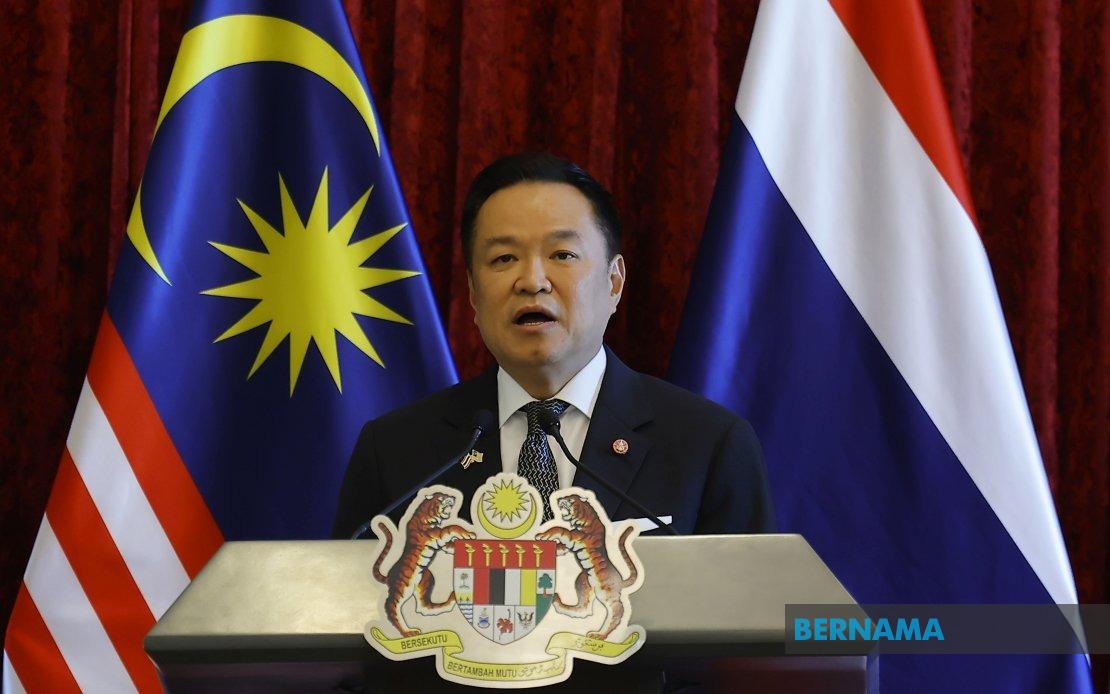
Thailand's Prime Minister Anutin Charnvirakul has publicly extended his backing to Malaysian counterpart Datuk Seri Anwar Ibrahim ahead of the Johor state election scheduled for this Saturday, underscoring the warm bilateral relationship between the two Southeast Asian neighbours. The gesture came at the conclusion of a joint press conference held in Putrajaya on July 9, where Anutin remarked, "I wish you the best of luck for your upcoming election in Johor," signalling Thailand's goodwill as Malaysia approaches a significant electoral test in one of its most politically consequential states.
Anwar reciprocated the warmth, characterizing his discussions with the Thai leader as both productive and distinctly informal in tone. The Malaysian Premier suggested the encounter had the quality of a meeting among longtime confidants rather than a formal diplomatic engagement, telling Anutin: "Come again soon to Malaysia, because you make us so comfortable and happy and very relaxed. I mean, my colleagues would certainly agree with me when I say this meeting is just like among old friends." Such language reflects the broader trajectory of Malaysia-Thailand relations under Anwar's leadership, marked by a deliberate cultivation of personal rapport alongside substantive cooperation on regional matters.
Anutin's visit represents his first return to Malaysia since his reappointment as Thailand's Prime Minister in March 2026, making it a significant symbolic moment in the bilateral relationship. The two-day official trip was extended at Anwar's specific invitation, emphasizing the Malaysian government's commitment to maintaining robust ties with its northern neighbour. The timing of the visit, coinciding with the Johor election campaign, also subtly reinforces Bangkok's interest in a stable and predictable Malaysia, particularly given the economic and security interdependencies that bind the two nations across their shared maritime and land borders.
The Johor election represents a crucial political battleground, with 172 candidates competing for 56 state assembly seats. Anwar's Pakatan Harapan coalition has committed to fielding candidates across all available constituencies, fielding a carefully balanced slate comprising experienced party figures alongside fresh political talent drawn from its three constituent parties: PKR, DAP, and Amanah. The outcome of Saturday's polling will significantly influence the political complexion of Johor, Malaysia's second-largest state by population and a long-standing stronghold of the Barisan Nasional coalition, offering insight into the durability of federal-level political alignments and voter sentiment regarding the Anwar administration's performance.
The substance of Anutin and Anwar's discussions focused on broadening bilateral cooperation across multiple dimensions of mutual interest. While the official statements released following their meeting did not specify particular sectors or initiatives, Malaysia-Thailand collaboration traditionally encompasses trade and investment, maritime boundary management, cross-border labour mobility, security coordination, and cultural exchange. The emphasis on "further strengthening bilateral relations and deepening cooperation" suggests both nations are committed to expanding their engagement beyond traditional frameworks, potentially including technology partnerships, digital economy initiatives, and collaborative approaches to regional challenges such as managing migration flows and combating transnational crime.
For Malaysian policymakers, Anutin's explicit expression of support carries geopolitical significance that extends beyond mere ceremonial courtesy. Thailand, as the broader ASEAN anchor in mainland Southeast Asia and a major economy in the region, carries substantial weight in regional calculations. Its publicly positive stance toward Anwar's government reinforces Malaysia's standing within ASEAN structures and signals to other regional powers that Bangkok views the current Malaysian administration as a reliable and legitimate partner. This becomes particularly relevant given Malaysia's ongoing efforts to reassert its role in regional architecture following internal political turbulence in previous years.
The bilateral relationship between Malaysia and Thailand has historically experienced periods of tension rooted in maritime disputes, cross-border security challenges, and competing claims to regional influence. However, the tenor of this interaction between Anwar and Anutin suggests a deliberate effort to transcend these historical friction points and build a relationship characterized by personal chemistry and institutionalized cooperation. The informal nature of their public exchanges reflects a diplomatic style that prioritizes relationship-building, which can sometimes translate into smoother resolution of practical difficulties and faster implementation of cooperative initiatives.
From a domestic Malaysian perspective, Thailand's public endorsement of Anwar carries subtle but meaningful implications for the Johor election campaign. In an environment where state-level contests often turn on perceptions of federal government stability and international standing, visible backing from a neighbouring state leader provides the ruling coalition with a form of external validation. Opposition parties, meanwhile, may struggle to counter such gestures effectively, as regional diplomatic realities constrain their ability to cultivate comparable high-level foreign support.
Looking forward, Anutin's visit and his expressed support for Anwar suggest that Thailand views a PH-led government in Johor as preferable to potential alternatives, likely motivated by considerations of regional stability and the desire to maintain predictable relations with a Malaysian administration that has demonstrated pragmatism and openness to bilateral engagement. The implications for Southeast Asian regionalism are nuanced: strong Malaysia-Thailand ties contribute to ASEAN cohesion and create frameworks for addressing transnational challenges more effectively. Should the Johor election outcomes modify the federal political balance, the depth of relationship established between Anwar and Anutin may prove instrumental in maintaining continuity in Malaysia's regional engagements regardless of domestic political shifts.

