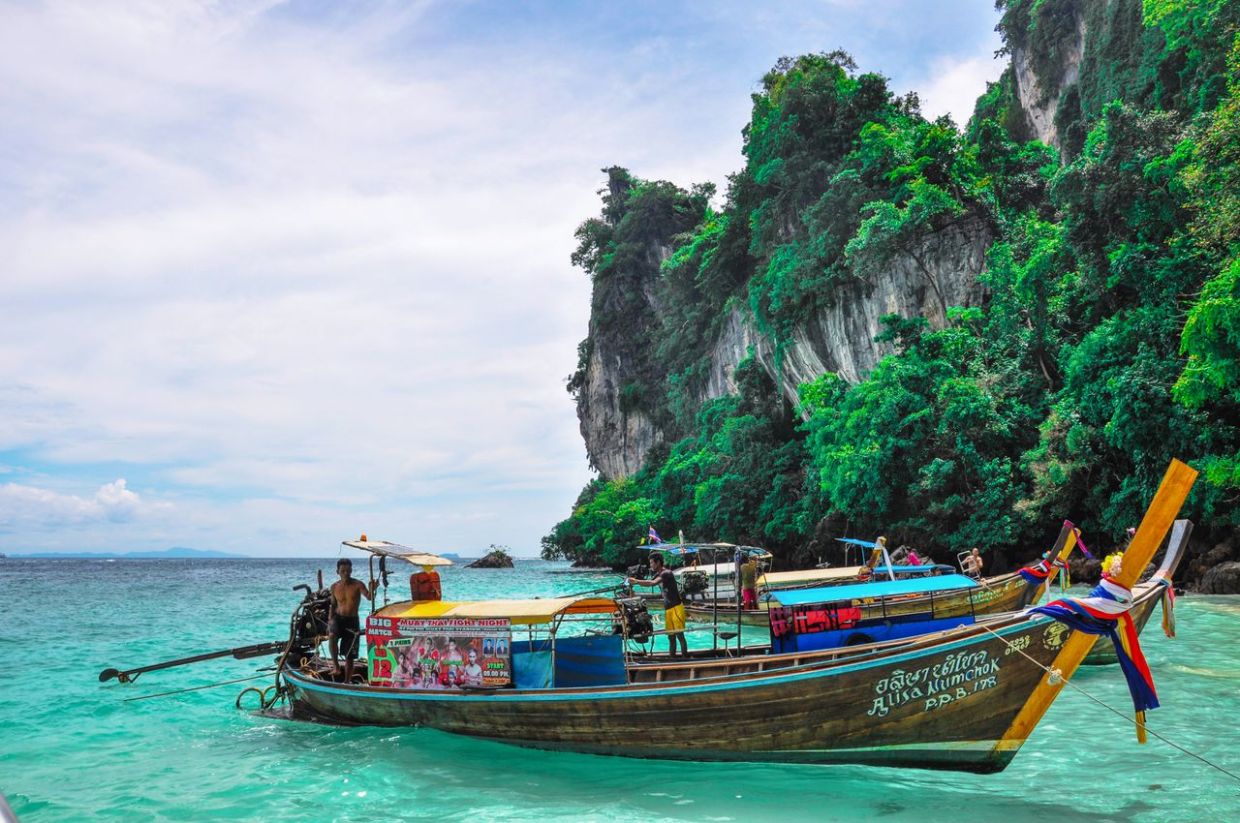
Thailand is fundamentally reshaping its tourism sector, turning away from the decades-long obsession with maximising visitor numbers in favour of a deliberate strategy to extract greater revenue from each traveller. The shift marks a decisive break from a tourism model that once defined the kingdom's economic identity, reflecting both pragmatic constraints and strategic recalibration in a more competitive regional landscape.
The mathematics of this shift are striking. Thailand is aiming for approximately 33 million foreign visitors in the current year, a significant contraction from the nearly 40 million who entered the country in 2019 before the pandemic reshaped global travel patterns. More telling still, if arrival figures dip below the 32.97 million recorded last year, Thailand will experience its first consecutive year-on-year decline in tourist numbers since at least 1995—excluding the pandemic disruption period. This represents not merely a cyclical adjustment but a deliberate policy choice to prioritise value over volume.
The rationale behind this strategic reorientation is rooted in both external pressures and internal recalibration. According to Tourism Authority of Thailand Deputy Governor Nithee Seeprae, intensifying geopolitical tensions and mounting regional competition have made the old high-volume approach increasingly untenable. Rather than chasing visitor statistics in a crowded marketplace where neighbouring nations like Vietnam and Indonesia have become formidable competitors, Bangkok has recognised that cultivating a more selective, affluent visitor base offers greater economic resilience and sustainability. "We're not too worried about the number of tourists because we want to generate more revenue from each visitor," Seeprae explained, highlighting the fundamental philosophical shift embedded in Thailand's new tourism positioning.
Central to this recalibration is an ambition to elevate average per-visitor expenditure from approximately US$1,500 to roughly US$2,400 per trip. This 60 percent increase in spending per arrival would theoretically offset the anticipated reduction in total visitor numbers while generating greater economic benefit across the tourism ecosystem. The tourism authority's marketing efforts now concentrate on niche segments that historically demonstrate higher spending patterns: medical tourism, wellness retreats, concert venues, cultural festivals, golf, and sporting events like marathons. These categories of travellers tend to extend their stays, venture beyond typical tourist zones, and consume more premium services.
The shift is evident in the tourism authority's international marketing pivot. Recent promotional campaigns in British cities—Oxford, Manchester, and elsewhere—underscore Thailand's repositioning as a destination for sophisticated, experience-oriented visitors rather than budget-conscious mass tourists. The authority's updated website imagery and messaging emphasise healing, wellness, and personal transformation, deliberately cultivating an aspirational rather than accessible brand identity. This represents a stark departure from Thailand's historical marketing as an affordable, hedonistic escape for backpackers and volume travellers.
Perhaps the most revealing indicator of Thailand's new approach is its reversal of pandemic-era visa liberalisation policies. The post-Covid relaxation of entry requirements—designed to stimulate tourism recovery through greater accessibility—has been methodically unwound as authorities linked eased visa rules to increases in illegal employment, visa overstaying, and foreign-involved criminal activity. This hardening of entry protocols, while ostensibly driven by security and immigration enforcement concerns, simultaneously serves the strategic objective of deterring low-spending visitors and budget travellers who might not meet elevated per-capita expenditure thresholds.
Yet this transition confronts a fundamental structural challenge. Tourism now accounts for approximately one-fifth of Thailand's entire economy, and the vast infrastructure built around this sector—hotels, restaurants, food markets, transport operators, dive operators, tour companies—developed specifically to accommodate high volumes of visitors. Cities like Phuket and Chiang Mai, essentially constructed as mass-tourism destinations, face genuine difficulties in pivoting toward a model predicated on fewer arrivals. The hospitality workforce, supply chains, and operational economies of scale that evolved under volume-based tourism may struggle to sustain themselves under a scarcity model.
Thailand's competitive position has simultaneously weakened in the global mass-tourism marketplace it once dominated. Vietnam and Indonesia have emerged as increasingly compelling alternatives for budget-conscious travellers, offering comparable experiences at lower price points. Additionally, the Thai baht's appreciation in recent years has eroded the currency advantage that historically made Thailand an exceptional value destination. Where Thailand once benefited from a weak baht coupled with global cultural exposure from films and television, plus a China-driven tourism boom, those structural advantages have largely dissipated since the pandemic.
The revenue projections attached to this strategic reorientation suggest modest optimism at best. International tourism receipts are projected to reach THB1.55 trillion (RM190.17 billion) this year, only marginally improved from THB1.54 trillion (RM188.95 billion) in 2025. These figures suggest that the hoped-for uplift in per-visitor spending may not fully compensate for declining arrival volumes—at least not immediately. Achieving the aspired US$2,400 average spending per visitor will require sustained success in attracting and retaining the specific high-value segments targeted in the new strategy.
Nithee emphasises that Thailand's redefined approach does not constitute a blanket rejection of budget tourism. Rather, the authority is reframing the concept of luxury itself. "For Thailand, luxury is about meaningful experiences and exclusive experiences," he stated, suggesting that the new model seeks to stratify the market by experience quality rather than price point alone. This rhetorical positioning attempts to reconcile the strategic shift toward wealthier visitors with the reality that tourism infrastructure cannot be instantly dismantled.
The ultimate success of Thailand's tourism recalibration depends on whether the kingdom can effectively implement a sophisticated segmentation strategy in a hyperconnected world where destination marketing reaches all demographic strata simultaneously. The challenge extends beyond marketing messaging to encompassing infrastructure, workforce training, service delivery standards, and pricing strategies that must accommodate both the explicitly targeted high-value segments and the inevitable continuing arrival of budget travellers. Whether Thailand can sustain profitability with fewer visitors while maintaining employment and economic vitality across regions dependent on tourism volume remains the central test of this strategic pivot.

