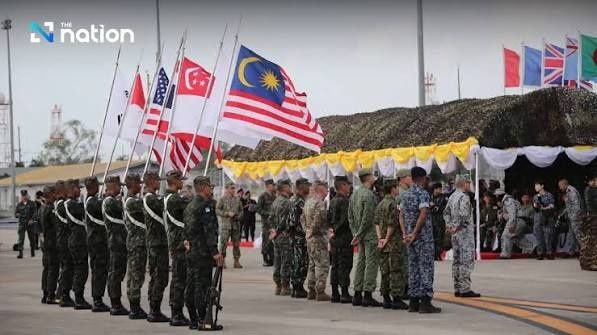
Thailand is preparing to signal to the Trump administration that punitive American tariffs could jeopardise decades of military cooperation, including the flagship Cobra Gold exercises that represent the backbone of Washington's security presence in mainland Southeast Asia. The strategy, confirmed by an official privy to ongoing discussions, represents an unusually direct attempt to intertwine security matters with trade disputes as Bangkok seeks more favourable terms in negotiations set to resume later this month.
The Thai government intends to present this position as part of a broader counterproposal in the talks, though the language will remain deliberately ambiguous rather than issuing explicit threats. Officials have indicated that while Thailand remains committed to military partnership with the United States, participation in joint defence activities could face reconsideration if tariffs inflict substantial economic harm to the kingdom's export sector. This approach underscores how trade disputes increasingly blur into geopolitical calculations across the region.
Thailand's leverage position rests on substantial economic ties with America. Last year, the kingdom recorded a trade surplus of US$51.4 billion with the United States, placing it among numerous nations scrambling to mitigate the impact of Washington's newly imposed 12.5 per cent tariff on most exports, implemented through Section 301 provisions that the Trump administration invokes to counter what it deems unfair trading practices. Bangkok finds itself caught between a desire to maintain its privileged security relationship with Washington and the pressing need to protect its export-dependent economy from trade restrictions.
To sweeten negotiations, Thailand has already tabled several concessions. Bangkok has offered to eliminate tariffs on American goods and adopt US standards for imports of beef, lamb and alcoholic beverages, demonstrating flexibility on market access. The government has also pledged to accelerate legislation banning the importation of goods manufactured using forced labour, directly addressing longstanding American concerns about labour standards in global supply chains. These measures signal Thailand's willingness to move significantly towards American positions, even as it calibrates its military cooperation card carefully.
The Thai government has taken a whole-of-government approach to these negotiations, involving the Commerce Ministry alongside the Foreign and Defence ministries, as well as private sector representatives. Commerce Minister Suphajee Suthumpun has been particularly vocal in recent weeks, explicitly arguing that Thailand merits preferential treatment owing to its strategic partnership with Washington, the bilateral Treaty of Amity, and substantial Thai investment across the American economy. Such rhetoric attempts to reframe the trade dispute as one between strategic partners rather than mere commercial competitors.
Thai negotiators are targeting a tariff ceiling of no higher than 19 per cent, a figure that emerged from preliminary discussions in an earlier framework agreement. This represents a significant concession from the current 12.5 per cent rate, yet remains substantially lower than some other trading partners face. The specificity of this number reflects months of preliminary positioning and suggests that Thailand believes it has room for further negotiation before reaching a final settlement.
Thailand's willingness to invoke its military partnership reflects the historical depth of their security relationship. The kingdom stands as one of only two formal United States treaty allies in Southeast Asia, alongside the Philippines, and this distinction has long anchored American military influence across mainland Asia. The alliance has enabled Washington to maintain crucial forward-deployed capabilities and intelligence gathering operations in a region where Chinese influence has expanded dramatically over recent decades.
The centrepiece of this military cooperation, Cobra Gold, represents one of Asia's most significant annual multinational military exercises. Co-hosted by Thailand and the United States, the drills draw roughly 8,000 personnel from approximately 30 countries, making them Washington's largest annual military exercise across mainland Asia. The exercise serves multiple purposes: it maintains readiness, reinforces multilateral partnerships, and signals American commitment to regional security architecture at a time when many Southeast Asian nations harbour anxieties about great power competition.
The bilateral defence relationship has proven resilient through previous political turbulence. After Thailand's 2014 coup, Washington initially scaled back Cobra Gold and suspended several military engagement programmes in response to democratic governance concerns. However, the alliance gradually rebuilt momentum, demonstrating the underlying strategic importance both capitals place on their partnership. This history suggests that military cooperation will likely withstand trade friction, though Thailand's current negotiating posture tests the limits of this resilience.
Defence Ministry spokesman Surasant Kongsiri has adopted a cautious public stance, declining to confirm details of the proposal while emphasising that negotiations are more likely to focus on strengthening rather than constraining cooperation. This diplomatic hedging reflects bureaucratic sensitivity around appearing to threaten American interests, even as Thai officials privately leverage the relationship. The Pentagon and Thai Commerce Ministry have similarly declined immediate comment, suggesting that discussions remain at delicate preliminary stages.
The underlying geopolitical calculus favours eventual resolution. Neither Washington nor Bangkok has incentive to substantially damage their alliance, which provides the United States with strategic depth against Chinese expansion and gives Thailand valuable security guarantees in a volatile region. The Trump administration has publicly emphasised the alliance's strength, with Undersecretary of Defense Elbridge Colby reaffirming the "renewed strength of the US-Thai alliance" during a recent Bangkok visit, even as tariff negotiations continue.
For Malaysian observers and policymakers, Thailand's negotiating approach carries important lessons. As Malaysia pursues its own commercial relationships with Washington while maintaining distinct security priorities, the Thai example demonstrates how smaller nations can strategically deploy their geopolitical value to shape trade outcomes. Simultaneously, it reveals the limits of such leverage: military partnerships ultimately rest on foundations deeper than tariff rates, suggesting that Bangkok's negotiating tactic, while potentially productive on margins, cannot fundamentally alter American trade policy calculus. The outcome of these talks will shape how regional nations approach similar challenges with Washington in coming months.

