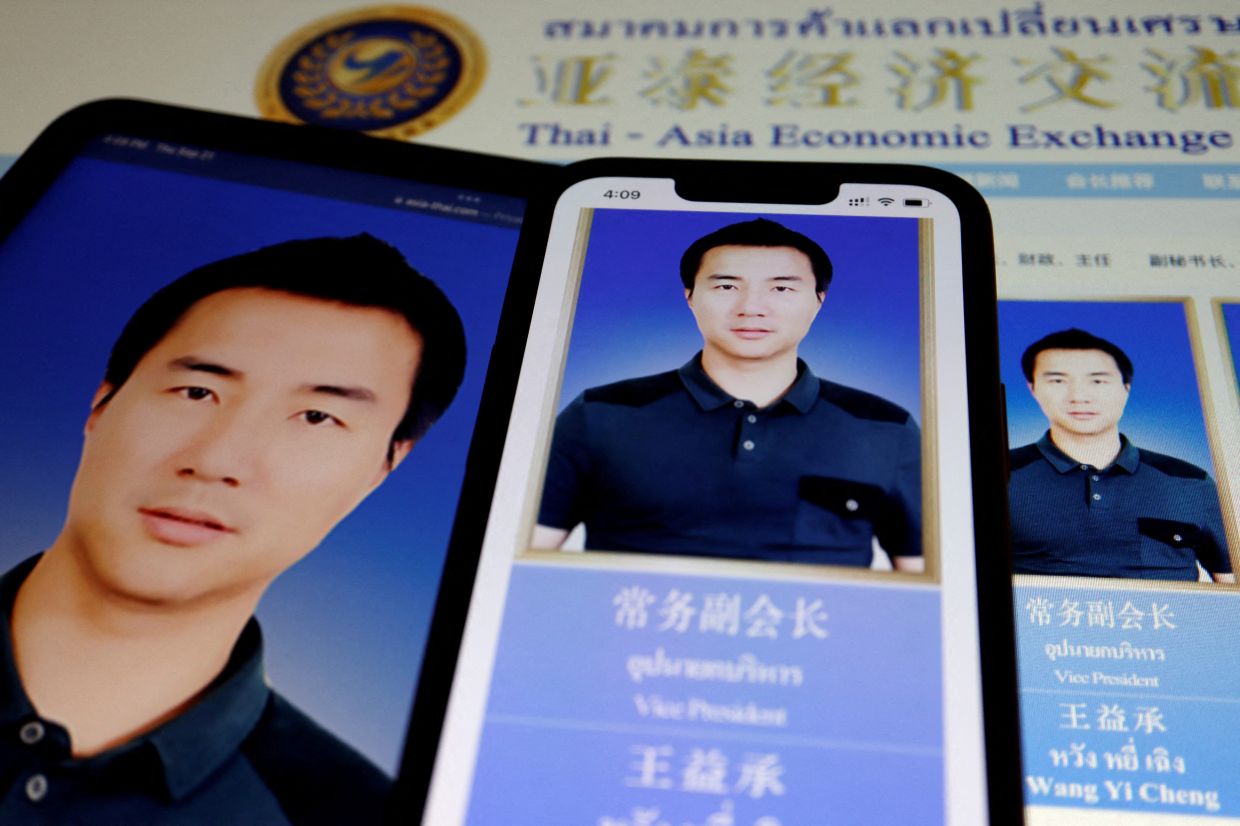
Thailand's Department of Special Investigation has issued an arrest warrant for Wang Yicheng, a Chinese businessman implicated in a sophisticated transnational crime network that channelled proceeds from online fraud schemes through illegal cryptocurrency mining operations. The DSI spokesman Major Woranan Srilam confirmed on Tuesday, June 23, that Wang was charged in November with theft and violations of the Computer Crimes Act, noting that the suspect is believed to have departed Thailand and that authorities are coordinating with international partners to track him down.
Wang's involvement in the scheme came to public attention through a 2023 Reuters investigation that documented how financial accounts registered in his name received substantial sums from cryptocurrency wallets linked to "pig-butchering" scams—elaborate confidence schemes in which victims are lured into fake investment opportunities and defrauded of their life savings. The investigation traced at least US$9.1 million flowing into Wang's identified crypto wallet between 2021 and 2022 from accounts that blockchain analysis firms connected to this particular type of fraud operation. One documented victim, a 71-year-old California resident, lost his entire US$2.7 million retirement fund after being manipulated by a fraudster posing as a romantic interest online.
The illicit mining operation itself represented one of the region's most significant cases of electricity theft, with investigators determining that Wang's network illegally consumed approximately US$28 million worth of power to fuel their cryptocurrency production. This energy consumption alone provides a tangible measure of the operation's industrial scale. Transnational organised crime groups employ crypto mining specifically because it creates a mechanism for converting stolen funds into digital assets that can be transferred across borders with relative difficulty for law enforcement to track, while simultaneously generating legitimate-appearing income streams that obscure the criminal origins of the money.
Wang's position at the helm of the Thai-Asia Economic Exchange Trade Association, a Bangkok-based organisation promoting business ties between Thailand and China, enabled him to cultivate relationships with prominent Thai political and police officials. At the time the fraudulent funds were flowing into his accounts, he served as vice president of this trade association, whose leadership maintained close connections with senior law enforcement figures from both countries. Subsequent reporting suggests that some Thai police officials were listed as "advisers and friends" to the organisation, raising questions about whether these relationships facilitated the network's operations or inadvertently provided cover for illegal activities.
The DSI's investigation has expanded beyond Wang, with authorities issuing arrest warrants for four unnamed Chinese nationals and four Myanmar nationals allegedly involved in the same criminal ecosystem. This broader network appears integrated with operations at KK Park, an industrial complex straddling the Myanmar-Thailand border that has emerged as a major hub for scam syndicates predominantly run by Chinese criminal organisations. United Nations assessments have documented that these operations generate billions of dollars in annual proceeds while relying substantially on trafficking victims coerced into performing fraud roles within fortified compounds.
Southeast Asian governments have intensified enforcement actions against these transnational scam networks in recent months, recognising both the scale of financial harm and the connection to human trafficking. Thailand, in particular, has prioritised dismantling operations that exploit vulnerable workers and victimise individuals across multiple continents. The prevalence of these schemes—which target victims in North America, Europe, and within Asia itself—has made international cooperation essential for any meaningful progress in disrupting the networks.
U.S. law enforcement independently identified Wang as a suspect in digital-asset fraud cases, and American authorities seized approximately US$500,000 in cryptocurrency from accounts in his name in June 2023, having traced stolen funds from a Massachusetts victim through the blockchain. The U.S. Department of Justice has declined to provide further comment regarding the ongoing Thai investigation or arrest warrant. This transatlantic criminal dimension underscores how modern fraud networks operate without geographic boundaries, with perpetrators in Asia stealing from victims across Western countries and moving proceeds through international financial channels.
Major bitcoin mining equipment supplier Bitmain confirmed in 2023 that Wang was a significant customer and close business partner, though the company stated it had supplied equipment through legitimate commercial transactions. Notably, neither Bitmain nor the Thai-Asia Economic Exchange Trade Association has responded to subsequent inquiries from Reuters regarding the Thai arrest warrant or their ongoing relationships with Wang. The trade association's post-investigation statement claimed that background checks had revealed no criminal history and that Wang had voluntarily departed from its board, though it did not address the specific allegations of money laundering or illegal mining operations.
The question of whether Wang directly orchestrated the fraud accounts or whether his identity was misappropriated by others remains unresolved. Reuters' blockchain analysis could not definitively establish Wang's personal involvement in running the scams themselves, though his receipt of substantial sums from known scam-linked wallets suggests either active participation or knowledge of the funds' illicit origin. This ambiguity has become common in cryptocurrency investigations, where the pseudonymous nature of digital wallets allows criminals to exploit legitimate businesspeople's identities or create plausible deniability regarding fund origins.
For Malaysian and broader Southeast Asian readers, the Wang case exemplifies how regional criminal networks exploit weak enforcement coordination and lax cryptocurrency regulation to conduct large-scale fraud and money laundering. The involvement of officials in trade organisations and the cultivation of relationships with law enforcement figures point to systemic vulnerabilities in oversight mechanisms. As Thailand and neighbouring nations continue strengthening their responses to transnational crime, the disappearance of key suspects like Wang highlights the difficulty of apprehending perpetrators who maintain resources to flee and hide across the region's porous borders.

