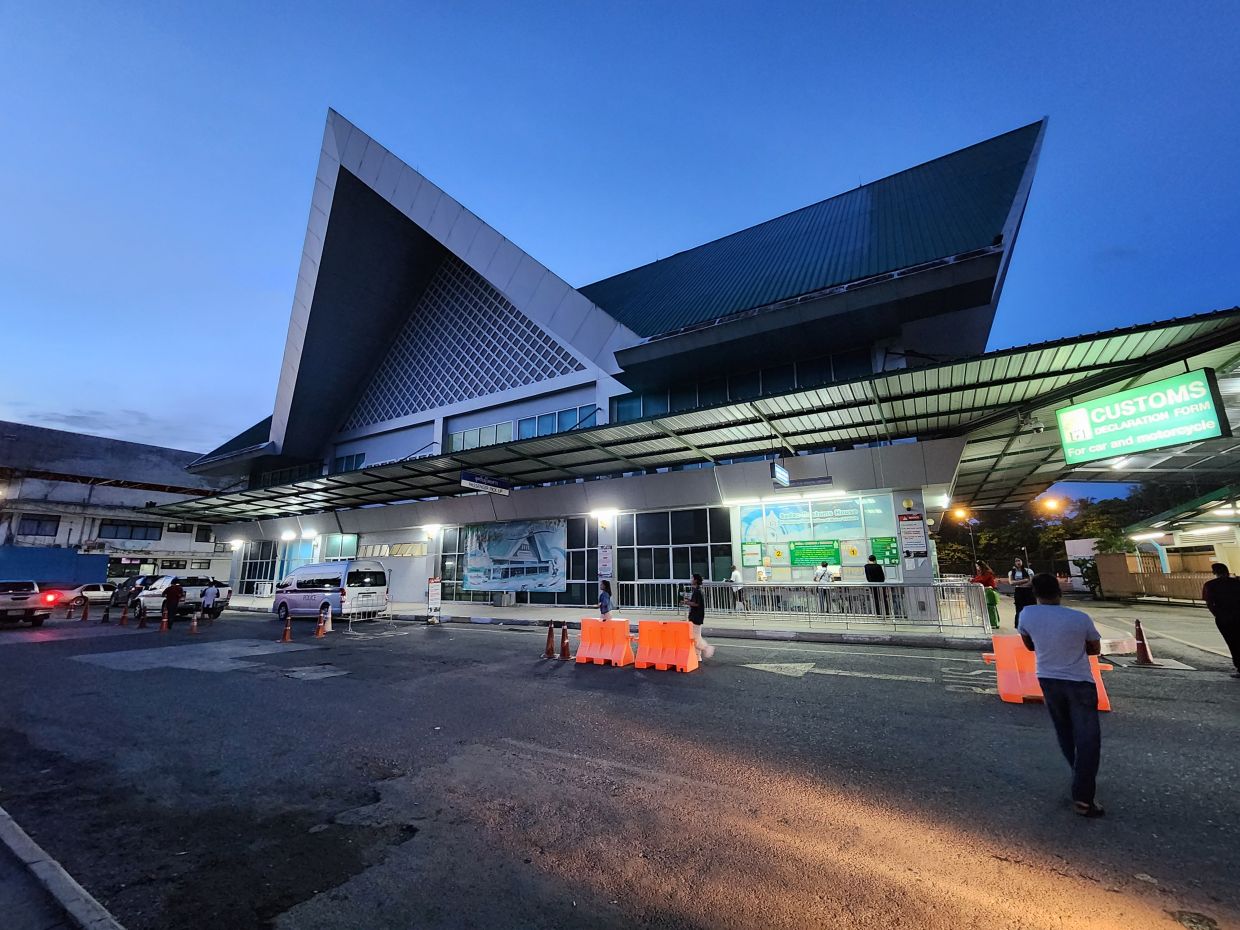
Thailand's cabinet has approved the establishment of a new permanent border crossing at Sadao, which will become operational on July 11 and represent a significant infrastructure development for the country's southern frontier. The decision underscores both nations' commitment to deepening economic integration and facilitating seamless movement of goods, services, and people across one of Southeast Asia's busier trade corridors. The checkpoint will replace the existing crossing located at boundary markers 22–23, with the new facility positioned between markers 23/9 and 23/10 to better accommodate growing traffic volumes and streamline customs procedures.
The new crossing will operate on extended hours, beginning at 05:00 and closing at 23:00 daily, a schedule designed to accommodate business operations across time zones and maximise the throughput of commercial vehicles and tourists. This operational timeframe reflects pragmatic planning based on regional demand patterns, particularly for logistics companies managing supply chains that span multiple ASEAN nations. By extending operating hours compared to many existing land borders in the region, Thai authorities are signalling their intent to position Sadao as a modern, efficient gateway rather than merely a bureaucratic checkpoint.
The Thai government has tasked its agencies with accelerating infrastructure improvements on the Thai side of the border, specifically focusing on constructing connecting roads and eliminating traffic bottlenecks that currently impede efficient movement. These complementary measures reveal an understanding that a modern checkpoint alone cannot succeed without supporting transportation networks. Songkhla province, which administers the border area, has been given responsibility for monitoring implementation progress, ensuring accountability and coordination among various government departments involved in this multi-layered initiative.
Recognising that infrastructure and logistics alone cannot guarantee success, Thai authorities have also mandated extensive public communication efforts to build stakeholder buy-in. Government agencies must disseminate detailed information to the private sector, business operators, and local residents about revised traffic routing, customs procedures, and immigration protocols that will accompany the checkpoint's opening. Such transparency helps prevent confusion, reduces delays from misunderstanding, and allows businesses to plan their cross-border operations more effectively. The government has also committed to publicising the specific measures it is implementing to facilitate trade and tourism, demonstrating a proactive approach to managing expectations.
The decision to establish this new crossing arrives as Thai and Malaysian leaders prepare for deeper engagement on bilateral matters. Prime Minister Anutin Charnvirakul is scheduled to visit Malaysia on July 9–10 at the invitation of his counterpart Anwar Ibrahim, a visit that will occur just days before the Sadao checkpoint becomes operational. The timing suggests careful coordination between the two governments to leverage the visit for announcing and endorsing infrastructure improvements that benefit both nations.
During the upcoming bilateral visit, Anutin and Anwar are expected to sign a joint statement that will establish a framework for cooperation across several critical domains. The partnership encompasses border development and improved connectivity, reflecting recognition that physical infrastructure linkages form the foundation for deeper economic ties. Beyond immediate trade considerations, the statement will address security cooperation, particularly efforts to combat transnational crime that has historically affected the southern border region. This multifaceted approach indicates that both governments view their relationship through a comprehensive lens rather than treating trade and security as separate issues.
Food and energy security feature prominently in the proposed cooperation framework, highlighting shared vulnerabilities within Southeast Asia. Both Thailand and Malaysia depend on complex supply chains for agricultural inputs and energy resources, with disruptions affecting domestic stability and economic growth. By formalising cooperation in these sectors, the two nations can coordinate responses to supply shocks, establish preferential trade arrangements, and potentially develop joint initiatives that strengthen regional resilience. Such collaboration carries implications for other ASEAN members, as Thai-Malaysian coordination on food and energy could influence broader regional policies and standards.
The Sadao crossing occupies strategic importance within Thailand's broader southern development agenda and Malaysia's efforts to integrate Peninsular Malaysia more closely with its ASEAN neighbours. For Malaysian business, the checkpoint offers improved access to Thai markets, particularly in the industrial heartland of southern Thailand. For Thai exporters, the crossing facilitates faster movement of goods into Malaysia and onward to regional markets. Tourism operators on both sides stand to benefit from simplified border crossing procedures that reduce friction and travel time for leisure travellers.
From a logistics perspective, the new crossing addresses long-standing bottlenecks that have constrained regional supply chains. Trucking companies operating routes between Thailand, Malaysia, and beyond have complained for years about congestion and administrative delays at existing crossings. By introducing modern facilities and extended operating hours, the Sadao checkpoint could serve as a model for other cross-border infrastructure improvements throughout ASEAN. Reduced transit times translate directly into lower shipping costs and more competitive pricing for goods sourced across the region, ultimately benefiting consumers and businesses throughout Southeast Asia.
The initiative also reflects competitive pressures within the region, as multiple Southeast Asian countries vie to position themselves as logistics hubs and trade facilitators. Vietnam's investments in port infrastructure and road connectivity, Singapore's role as a financial and transshipment centre, and Indonesia's geographic positioning all create incentives for Thailand and Malaysia to improve their own infrastructure attractiveness. By modernising the Sadao crossing, both countries acknowledge that efficient borders are not merely convenient but essential for remaining competitive in an era where supply chain optimisation determines corporate investment decisions.
Looking forward, the success of the Sadao checkpoint will likely depend on sustained commitment from both governments to maintain infrastructure, prevent corruption, and respond promptly to operational challenges. Private sector participation in managing or advising on checkpoint operations could enhance efficiency and customer responsiveness. The crossing may also serve as a proving ground for new technologies, such as automated customs clearance systems or biometric identification, that could subsequently be deployed at other ASEAN borders.
The broader significance of this border initiative extends beyond Thailand and Malaysia alone. The ASEAN region has long struggled with fragmented infrastructure and inconsistent standards at land borders, constraints that undermine the bloc's stated goal of seamless regional integration. Successful implementation of the Sadao crossing could demonstrate that bilateral cooperation on infrastructure can be achieved through political will and strategic planning, potentially inspiring similar projects elsewhere. For Malaysian readers and businesses, the crossing represents both opportunity and necessity—opportunity to access Thai markets more efficiently, and necessity to keep pace with competitors from other nations pursuing similar connectivity improvements.

