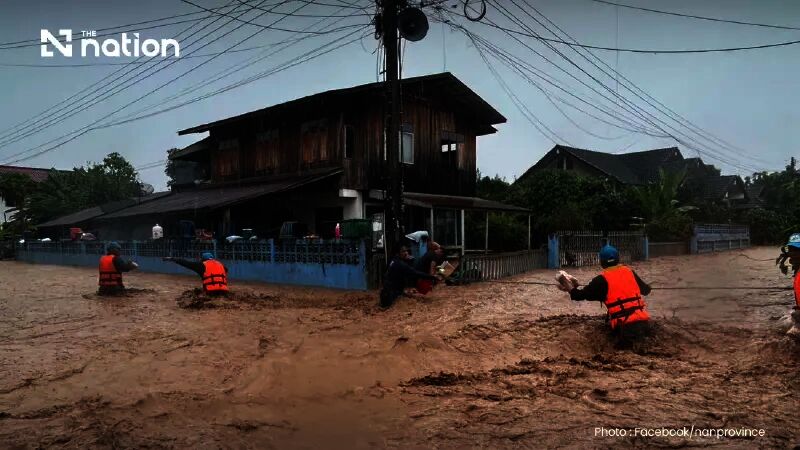
Thailand's government has activated disaster protocols in Nan province and elevated alert levels across two neighbouring regions as torrential downpours unleashed flash flooding that has severed transportation routes and triggered mass evacuations on Wednesday. The declaration reflects mounting concern over the country's vulnerability to seasonal water-related catastrophes, which continue to pose significant challenges to infrastructure and public safety even as climate patterns grow more unpredictable.
Prime Minister Anutin Charnvirakul, currently attending official engagements in Australia, has maintained close oversight of the unfolding crisis and directed a comprehensive inter-agency response mobilizing military units and civilian emergency services. Government spokesperson Rachada Dhnadirek conveyed the premier's instruction to rapidly position response teams and heavy excavation equipment in zones identified as particularly susceptible to inundation, with immediate priority assigned to water drainage operations in low-lying areas with recurring flood histories.
The prime minister's strategic emphasis places humanitarian protection at the centre of contingency planning, signalling particular concern for vulnerable populations including elderly residents, immobilized hospital patients, young children and families residing in flood-prone zones. Official communications stress the necessity of swift damage assessments combined with continuous environmental monitoring—specifically tracking rainfall accumulation and water level fluctuations—to enable timely public warnings should precipitation intensify or hydrological conditions deteriorate markedly.
The flooding threat extends well beyond Nan's borders, with meteorological authorities cautioning residents across the northern, north-eastern and central regions to remain vigilant against cascading hazards through the week's conclusion. Flash inundation, surface runoff and mountainside collapses represent interconnected dangers amplifying the overall disaster risk profile for communities downstream of heavy precipitation zones or situated on unstable terrain.
Deputy Prime Minister Yodchayan Wongsawat, who holds responsibility for orchestrating flood mitigation across Thailand's northern territory, has issued emergency preparation mandates to provincial governors in Nan, Phayao and Lamphun. These directives represent a precautionary measure designed to establish coordinated readiness protocols across administrative boundaries before conditions potentially deteriorate further.
The Meteorological Department's extended seasonal outlook for August projected widespread thunderstorm activity accompanied by concentrated rainfall episodes and gusty wind conditions—meteorological signatures historically associated with flash flooding events and river overflow incidents. This technical forecast provided the scientific foundation for government agencies to escalate preparedness measures and implement protective policies in advance of peak rainfall periods.
Thailand's recurrent struggle with monsoon-season inundation reflects broader geographical and climatic realities facing mainland Southeast Asia. The region's topography, seasonal precipitation patterns and rapid urbanization create compounding vulnerabilities that continue testing governmental disaster response capabilities. Neighbouring countries including Malaysia, Myanmar and Laos confront similar challenges during their respective wet seasons, making regional experience-sharing and coordinated preparedness increasingly relevant for the broader community.
For Malaysian audiences, Thailand's emergency response mechanisms offer instructive comparisons to domestic flood management protocols. Like Thailand, Malaysia faces recurring inundation threats particularly affecting northern and eastern states during monsoon seasons. The proactive deployment of heavy machinery, emphasis on vulnerable population protection, and integration of military assets into civilian relief operations represent strategic approaches that resonate with Malaysian emergency management frameworks developed through decades of accumulated flood experience.
The economic implications of extended flooding across Thailand's northern agricultural belt warrant serious consideration, as disrupted transportation networks and waterlogged farmland threaten regional supply chains and seasonal harvests. For Malaysia's cross-border commerce and regional supply networks, Thai infrastructure disruptions create secondary economic pressures that may propagate through the wider Southeast Asian economy if flooding persists or expands geographically.
The coordination between civilian government agencies and military units in Thailand's response demonstrates how security sector resources can contribute meaningfully to humanitarian emergencies outside traditional defence contexts. This integration approach—increasingly adopted across the region—acknowledges that modern disaster response requires the logistical capacity, equipment resources and organizational discipline that armed forces uniquely provide, particularly in mountainous or remote terrain where civilian infrastructure proves insufficient.
Authorities have established sustained environmental monitoring regimes anticipating continued dangerous conditions through the coming weekend, suggesting that crisis conditions may persist longer than initially anticipated. Residents in designated high-risk areas should anticipate extended alert periods and possible evacuation requirements, with emergency supply stockpiling and family communication planning representing prudent preparatory steps for households in vulnerable locations.

