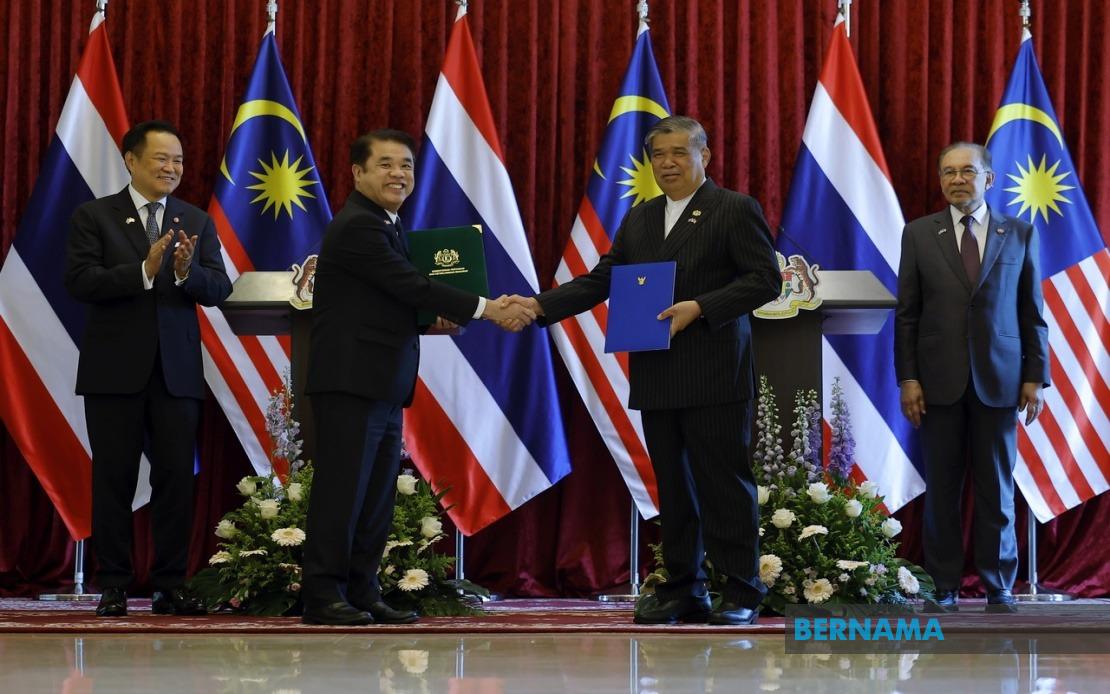
Prime Minister Datuk Seri Anwar Ibrahim and visiting Thai counterpart Anutin Charnvirakul have signed a comprehensive memorandum of understanding during bilateral talks in Putrajaya, marking a significant step forward in regional agricultural collaboration and food security coordination. The agreement addresses pressing concerns in both nations' farming and fisheries sectors while establishing a framework for joint advancement in crop and livestock production, research initiatives, and personnel training across the agricultural spectrum.
The resolution of contentious market access disputes represents perhaps the most tangible outcome of the engagement between the two Southeast Asian neighbours. Outstanding disagreements surrounding the cross-border trade of shrimp and barramundi—commodities of considerable economic importance to fishing communities in both jurisdictions—have been formally settled through the accord. This breakthrough addresses years of bilateral friction in seafood commerce and opens pathways for enhanced exports that benefit producers on either side of the border, particularly small-scale operators who have faced significant barriers to market entry.
Beyond fisheries, the memorandum encompasses broader cooperation in agricultural research, technology dissemination, and workforce development. These elements prove especially relevant for Southeast Asian farmers confronting mounting challenges from climate variability, evolving pest pressures, and the need to boost productivity on limited arable land. Joint research initiatives and knowledge-sharing mechanisms could accelerate the adoption of sustainable farming practices and modern cultivation techniques across the region, benefiting millions of smallholders dependent on agriculture for their livelihoods.
The agreement carries implications extending well beyond Bangkok and Kuala Lumpur. Both governments have tasked their respective agriculture ministers with expediting implementation measures and ensuring that lingering trade obstacles are dismantled swiftly. This directive underscores political will at the highest levels to translate diplomatic language into practical improvements affecting farmers, traders, and consumers throughout Malaysia and Thailand. The emphasis on addressing agricultural sector concerns suggests genuine recognition of farming communities' economic vulnerability and importance to domestic political constituencies.
Within the context of broader bilateral ambitions, the agricultural compact forms one pillar of a comprehensive partnership expansion. Thai and Malaysian officials simultaneously reaffirmed their intention to pursue a $30 billion bilateral trade target, a figure reflecting confidence in expanding economic interdependence across sectors spanning investment, tourism, infrastructure development, and security cooperation. This expansive agenda positions food systems and agricultural productivity as integral to the region's economic architecture rather than peripheral concerns.
Particularly noteworthy is the emphasis on food security cooperation at a regional moment when supply chain vulnerabilities have attracted unprecedented attention. Southeast Asia, despite its agricultural richness, remains acutely aware of its capacity constraints and export dependencies. Enhanced coordination between Thailand—long Asia's rice export powerhouse—and Malaysia could fortify the region's collective food security posture while reducing individual vulnerabilities to global market disruptions. Joint efforts in this domain signal recognition that prosperity and stability hinge partly on collaborative management of essential commodity flows.
Anutin's visit carries additional significance as his first bilateral engagement with Malaysia since his reappointment in March 2026, suggesting renewed momentum in Thai-Malaysian relations after potential periods of reduced diplomatic engagement. The timing and substantive outcomes indicate both nations are investing political capital in reactivating partnership mechanisms and preventing friction from festering unaddressed. Such high-level attention typically accelerates bureaucratic implementation and signals to subordinate agencies the importance of fulfilling commitments made at the prime ministerial level.
The two leaders have scheduled a joint infrastructure inauguration at Bukit Kayu Hitam in Kedah on July 10, where they will officially open a road linking Malaysia's Immigration, Customs, Quarantine and Security complex with Thailand's corresponding Customs, Immigration and Quarantine facility in Sadao. This connectivity project exemplifies how agricultural cooperation increasingly depends on cross-border logistics infrastructure. Smoother movement of perishable goods across the border reduces spoilage, accelerates market delivery, and ultimately improves returns for farmers while keeping consumer prices competitive.
The bilateral framework also demonstrates Thai and Malaysian resolve to conclude additional pending memoranda ahead of 2027, when the nations will commemorate seven decades of diplomatic relations. This anniversary milestone provides both governments incentive to crystallise current cooperative momentum into formalised arrangements. The orchestration of multiple agreements timed to convergence with this historical marker suggests strategic planning aimed at showcasing substantive achievements and deepened institutional ties.
For Malaysian policymakers, the agricultural accord addresses persistent concerns about ensuring stable food supplies for a growing population increasingly dependent on imports. Enhanced cooperation with Thailand, geographically proximate and agriculturally complementary, offers hedging against global food price volatility and supply disruptions. Similarly, joint technology development initiatives could position Malaysian agriculture more competitively in regional markets, supporting rural incomes and reducing urban-rural economic disparities that remain politically salient across Malaysia's diverse landscape.
The agreements also reflect evolving regional dynamics wherein major Southeast Asian economies recognise mutual interdependence while competing for investment and trade flows. By deepening agricultural ties, Thailand and Malaysia essentially acknowledge that cooperation yields superior outcomes to rivalry, particularly in sectors where geographical proximity and complementary production capabilities create natural synergies. This cooperative instinct, if sustained and expanded to encompass other domains, could contribute to broader regional stability and prosperity at a moment when geopolitical tensions and supply chain fragmentation pose significant challenges to Southeast Asian development trajectories.

