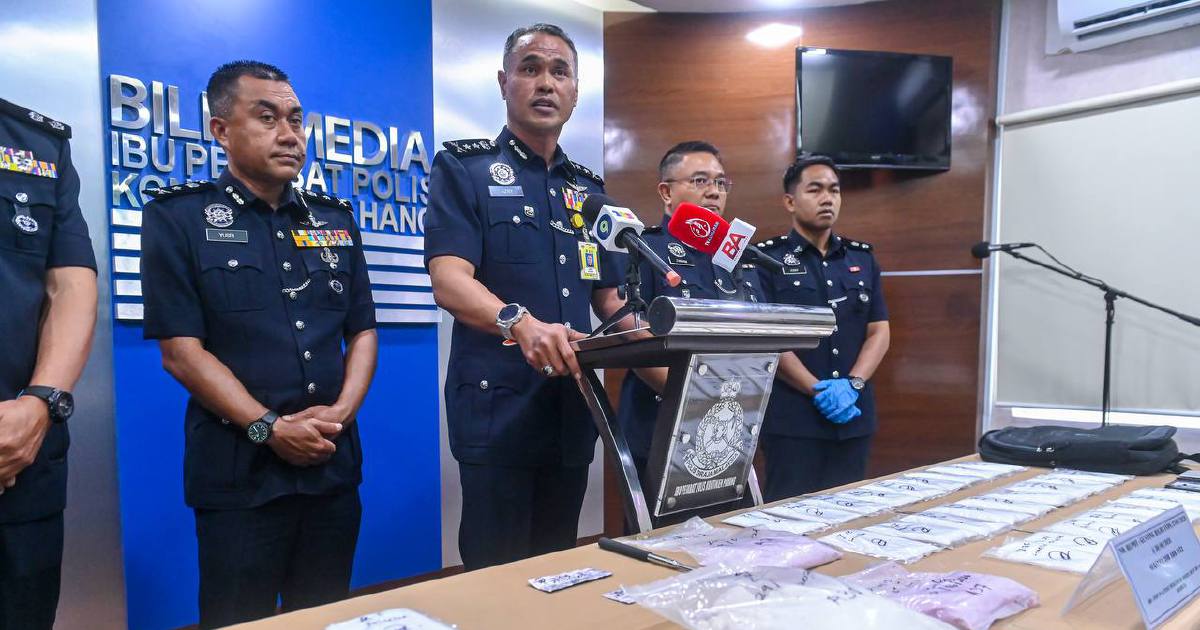
Authorities in Pahang have made a substantial narcotics seizure following the arrest of a Thai national and her Malaysian partner in Bentong, with investigators alleging the pair operated as drug couriers for an organised syndicate. The operation, which culminated in the Genting Permai area, represents a significant interdiction effort and underscores the persistent challenge of transnational drug trafficking affecting the region.
The arrested suspects allegedly served as couriers distributing narcotics throughout their operational network over a three-month period preceding their detention. Law enforcement sources indicate the investigation into their activities developed considerable evidence of their involvement in coordinating supplies and managing drug movements on behalf of a larger criminal enterprise. The couple's collaboration in these illicit activities suggests a well-established distribution mechanism rather than isolated criminal incidents.
The confiscated drugs, valued at approximately RM728,000, comprise a significant bust by regional standards and represents a notable disruption to trafficking operations in the Klang Valley corridor. The seizure demonstrates the volume of controlled substances moving through Malaysian territory, particularly within routes connecting Kuantan and nearby high-density commercial areas. The specific location in Genting Permai indicates that trafficking networks continue to exploit residential and semi-commercial zones for storage and distribution operations.
Thailand has emerged as both a transit point and source country for narcotics destined for Malaysian and broader Southeast Asian markets. The involvement of a Thai national in this particular case reflects established patterns in which regional trafficking networks recruit members from neighbouring jurisdictions to manage operations, potentially to obscure supply chains and complicate law enforcement investigations. This cross-border dimension presents particular enforcement challenges, as it requires coordination between Malaysian authorities and their Thai counterparts to dismantle operational networks and interdict supplies at source.
The three-month operational window identified by investigators suggests a relatively recent emergence of this particular distribution cell. However, the sophistication of their courier operation—involving supply coordination and management of substantial drug quantities—indicates the individuals likely possessed experience in trafficking operations or received training from senior syndicate members. Understanding the structural hierarchy and identifying higher-level operatives directing their activities will constitute a priority for ongoing investigations.
The Bentong district, positioned strategically between Kuantan and the Klang Valley region, has become an increasingly important corridor for drug movement between production and consumption zones. The district's geographic positioning, combined with its mix of residential development and commercial activity, provides operational advantages for trafficking groups seeking to establish distribution hubs. Previous enforcement operations in the region have consistently revealed the presence of organised drug networks utilising the area for storage, repackaging, and regional distribution purposes.
For Malaysian law enforcement agencies, drug trafficking investigations increasingly require sustained surveillance operations extending beyond single-incident interventions. The three-month investigation preceding these arrests indicates authorities employed systematic intelligence gathering and observation techniques to establish patterns of criminal activity before executing enforcement actions. This methodical approach, while resource-intensive, yields more substantial criminal cases with stronger prosecutorial foundations and greater potential for conviction.
The economic value assigned to the confiscated narcotics reflects current street-level pricing for controlled substances in Malaysian markets. Breaking down the RM728,000 valuation provides insight into trafficking economics and profit margins that incentivise criminal networks to maintain operational presence throughout Southeast Asia. For a courier-level operation, managing drug supplies valued at this level typically generates monthly income substantially exceeding legitimate employment opportunities in regional markets, explaining continued recruitment of individuals into trafficking organisations.
The arrest of both suspects together raises questions about investigation strategy and potential identification of remaining network members. Investigators must now determine whether the couple were operating as independent couriers or whether they maintained contact with higher-level distributors and suppliers. Interrogation of detained suspects typically yields valuable information regarding supplier identities, distribution territories, client networks, and financial arrangements. Such intelligence frequently leads to subsequent operations targeting more significant trafficking operatives.
Regional security cooperation mechanisms remain essential for addressing cross-border drug trafficking effectively. The involvement of a Thai national necessitates information sharing with Thai authorities and potentially joint investigation efforts to trace supply sources and identify transnational trafficking routes. ASEAN member states have recognised drug trafficking as a critical security challenge requiring coordinated enforcement responses, though operational capability disparities sometimes limit effectiveness of such collaborative efforts.
This particular seizure contributes to ongoing statistical evidence documenting drug trafficking volumes circulating through Malaysian territory. The Pahang region, with its port access and transportation networks, continues attracting trafficking networks despite sustained enforcement efforts. Building enforcement capacity through investment in specialised units, intelligence infrastructure, and community cooperation mechanisms remains essential for reducing trafficking activities and disrupting organised crime networks.
The detention of these suspects will generate significant investigative activity as authorities pursue leads concerning the broader syndicate structure, supply channels, and distribution networks. The case exemplifies how sustained intelligence work and systematic surveillance can produce substantive results in combating organised drug trafficking, though addressing the underlying factors that perpetuate these criminal networks requires broader policy interventions beyond enforcement operations alone.

